Learn how solar indoor lights work, from solar panels to batteries and LED output, explained in simple terms so you can understand the full system before buying.
Understanding how the best solar indoor lights for home systems work can help buyers choose the right setup and avoid disappointment. Indoor solar lights take sunlight and turn it into usable light inside a home, shed, cabin or workspace.Instead of wiring into the electrical grid, they generate their own energy during the day and use it later when the sun goes down.
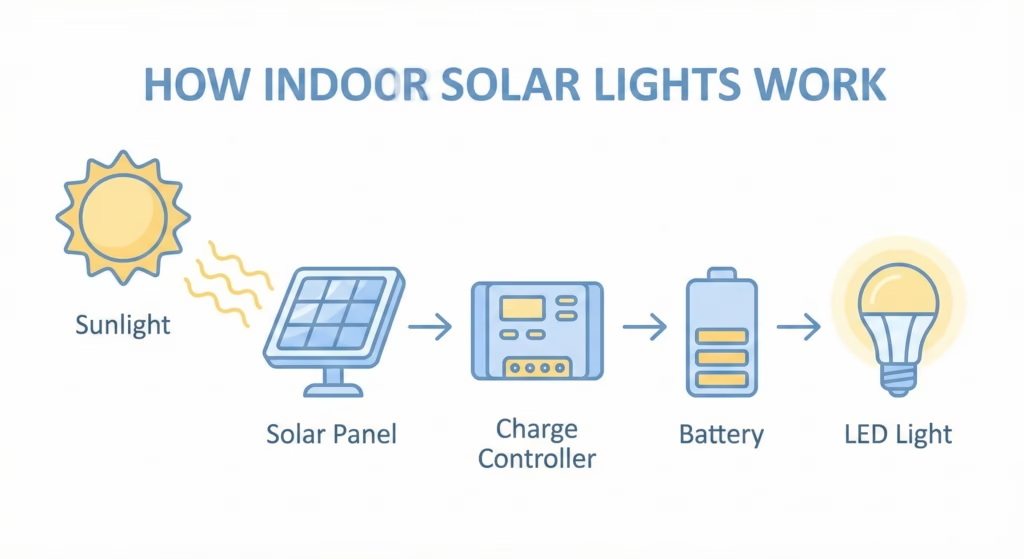
At its core, an indoor solar lighting system converts sunlight into usable electricity to power lights inside buildings or enclosed spaces. The process is straightforward: sunlight hits a solar panel (often mounted outside or near a window), generating direct current (DC) electricity. This energy charges a battery during the day, which then powers energy efficient LED lights when needed typically at night or in dim conditions. A charge controller manages the flow, preventing overcharging or excessive draining of the battery, and often includes sensors to automate activation at dusk.
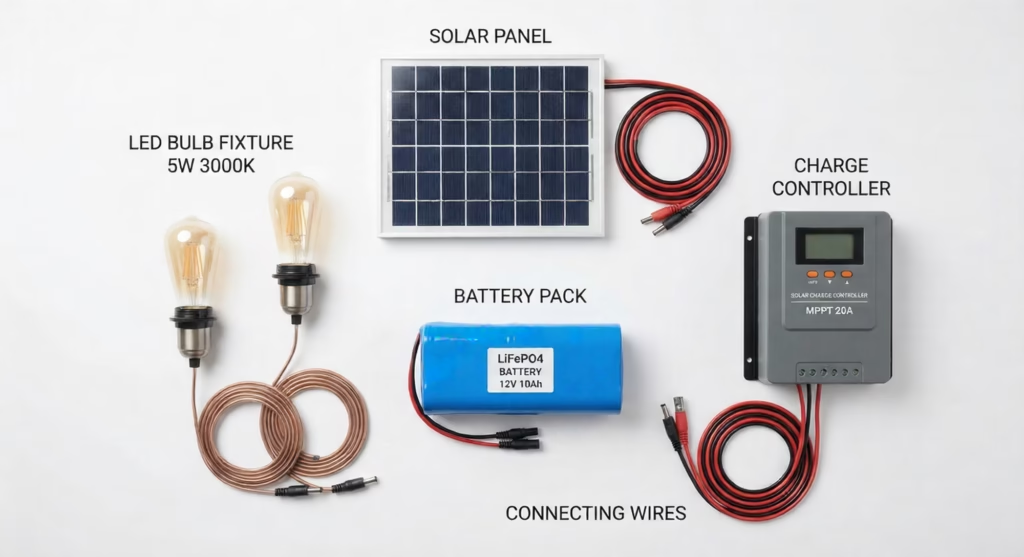
The sequence is simple yet effective: sunlight → photovoltaic (PV) panel → charge controller → battery storage → LED fixture
1. Solar Panel
The solar panel is the starting point for the system.It collects sunlight and converts it into electricity. Most indoor solar lighting kits use small mono or polycrystalline panels.
Common panel wattage
- Small kits: 10 to 20 watts
- Larger off-grid systems: 100 to 300 watts
Efficiency numbers in the real world
- Polycrystalline panels: about 13–16%
- Monocrystalline panels: about 18–24%
- Most commercial kits fall in the 15–22% range
- Experimental indoor PV films have topped 37% under low light, but these are not yet mainstream
The panel is usually placed outdoors on a wall or roof so it faces direct sun. Some users place the panel in a sunny window, but as noted in the complete solar indoor light handbook, output is lower indoors due to window glass blocking some wavelengths and reduced light intensity.
2. Battery Storage
Once sunlight is turned into electricity, the energy needs to be stored.That’s where the battery comes in. It holds the power generated during the day so the lights can run at night or during cloudy weather.
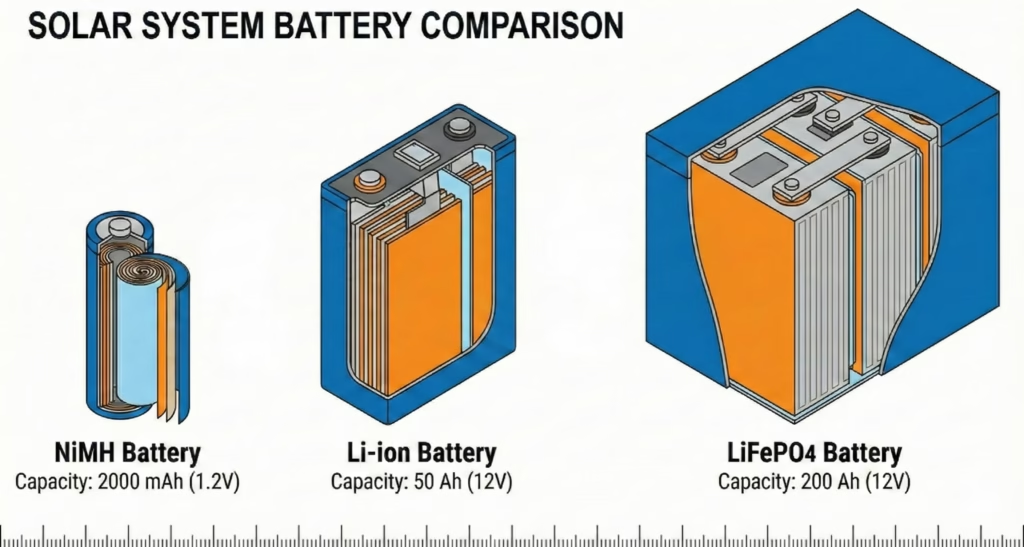
Small batteries (used in basic kits)
- About 3,600 to 6,000 mAh
- Stores roughly 10 to 50 watt-hours
- Can power small LEDs for 6 to 10 hours
Large systems
- Deep-cycle or LiFePO₄ batteries
- 50 to 150 amp-hours
- About 500 to 1,600 watt-hours of usable energy
- Can run multiple fixtures overnight, sometimes 24+ hours
Typical lifespan:
- NiMH: 3–5 years
- Li-ion/LiFePO₄: 5–10 years
- Lead-acid/AGM: 2–4 years
3. Charge Controller
The charge controller is the quiet workhorse of the system.It regulates voltage coming from the panel so the battery charges safely.
What the controller does:
- Prevents overcharging
- Protects against deep discharge
- Turns the lights on automatically at dusk using a built-in sensor
- In some systems, adds dimming and timers
Controller types:
- PWM – simple and affordable
- MPPT – more efficient charging, often found in large off-grid systems
- Without a controller, batteries would wear out quickly or become unsafe.
4. LED Light Fixture
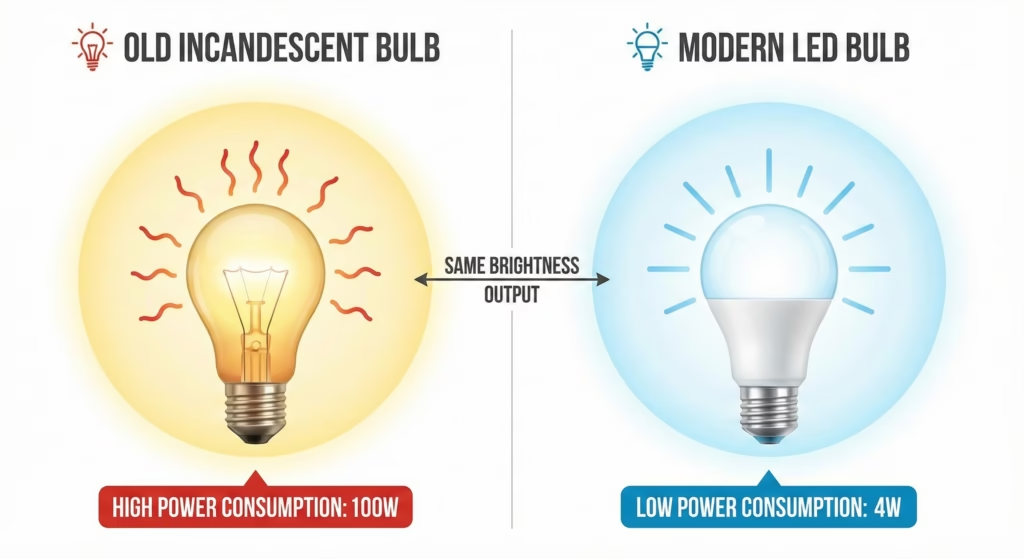
The final link in the chain is the LED light. LEDs use very little power, which is why they work well with solar.
Typical performance:
- Modern LEDs deliver 150–200 lumens per watt
- A 4-watt LED can produce about 800 lumens
- Small shed lights put out 200–500 lumens
- Larger kits can produce 1,000–2,000 lumens per lamp
Because LEDs are efficient, even small batteries can deliver useful lighting for hours.
5. The Energy Cycle: Step-by-Step
Indoor solar lighting follows a simple daily cycle:
Sun rises→The solar panel collects sunlight→Power is generated→Direct current (DC) electricity flows to the controller→Battery charges→The controller protects the battery as it fills→Sun goes down→The controller switches to battery mode→LED turns on→A sensor or manual switch powers lights until the battery runs low.
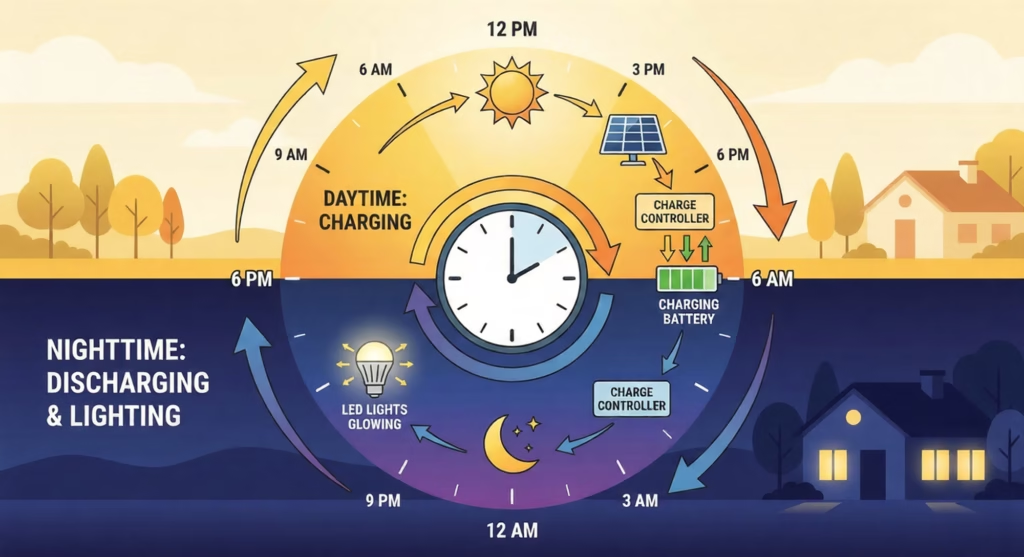
This pattern repeats every day without any grid power.
6. What Determines Light Runtime
A few practical factors affect performance:
- Sun exposure
- Most kits need 6–8 hours of direct sunlight to fully charge.
- Season and weather
- Winter charging in northern states may output 20–40% less than summer.
- Panel placement
- Shade or poor angle reduces power sharply.
- Battery capacity and age
- Older batteries store less energy.
- LED efficiency
- High-quality LEDs stretch runtime further.
7. Typical Real-World Results
Based on current products:
Basic single indoor lamp
- 6–10 hours runtime, 200–500 lumens
Multi-lamp kits or string lights
- 10–14 hours, up to 1,500–2,000 lumens
Whole-room off-grid setups
- 24 hours of light, depending on usage
Even small systems provide meaningful light in spaces that lack wiring.
8. Why Indoor Solar Lights Make Sense
Indoor solar lights work because every part of the system balances efficiency. Solar panels convert sunlight efficiently enough to charge small batteries. Batteries store enough power to run LEDs through the night. LEDs produce strong light from small amounts of energy. The result is usable indoor illumination without a power bill, extension cords or electricians.
Conclusion
Indoor solar lights are simple energy systems that send sunshine through a clear chain:
sunlight → panel → electricity → battery → LED light.
With efficient panels, smart controllers, and long-lasting LEDs, they provide lighting anywhere a cable cannot reach. Whether lighting a shed in rural America or supporting off-grid cabins and RVs, indoor solar lighting systems show how a small amount of sunlight can go a long way.