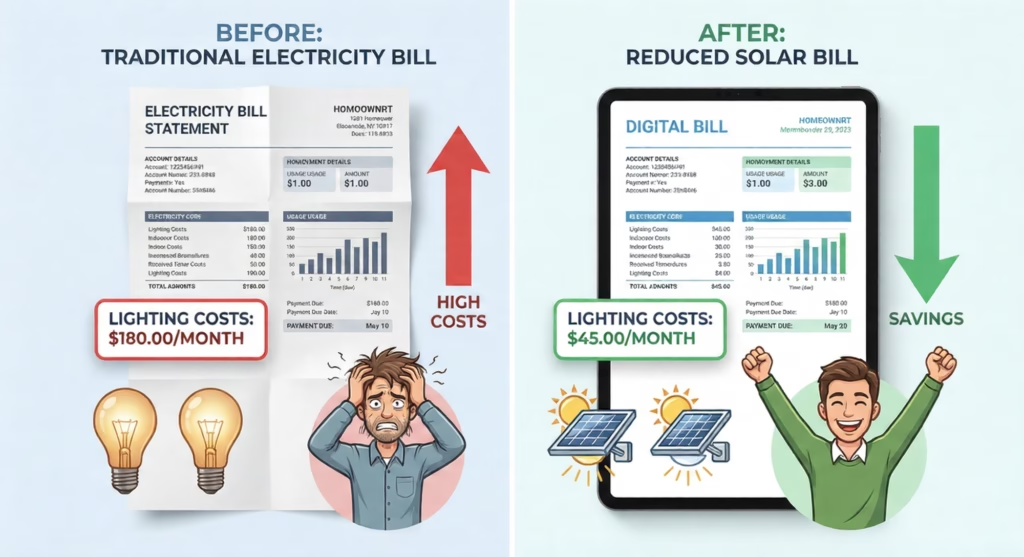
When the Martinez family opened their electricity bill last March, they knew something had to change. Their monthly lighting costs had crept up to $85, accounting for roughly 30% of their total energy expenses. Like many American households, they were spending between $600 and $1,000 annually just to keep the lights on.
Traditional system: A home with ten 60-watt bulbs running ~6 hours nightly uses about 3.6 kWh per day (~1,314 kWh/year). At an average U.S. residential rate of $0.14 per kWh, that’s around $184 per year just for lighting energy.
Eight months later, their lighting bill had dropped to $42 per month a 51% reduction that translated to over $500 in annual savings.
Their secret?
Solar system: Grid electricity cost for these same lights drops to $0 because energy comes from free solar power. The solar system typically pays for itself in 1–3 years depending on local electricity rates and usage patterns.
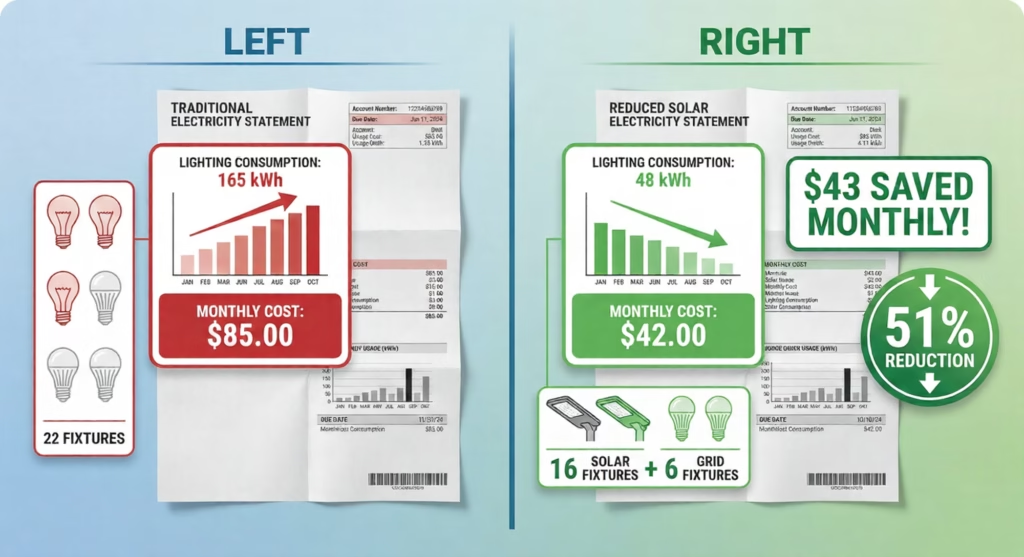
Month One:
They started by installing solar powered LED lights in their living room, kitchen, and dining area the spaces where they spent 70% of their waking hours at home. They purchased four solar panel kits, each including a small photovoltaic panel (typically 5-10 watts), a rechargeable lithium battery, LED bulbs, and a charge controller.
The panels were mounted outside near windows, with thin wires running to interior light fixtures. Each panel cost between $45 and $65, depending on wattage and battery capacity.
Month Two: Bedrooms and Hallways
With the common areas successfully converted, they added solar lighting to three bedrooms and two hallways, investing in another $180 worth of equipment.
Month Three: Outdoor-Indoor Hybrid
For their garage and back porch spaces that opened directly to the outdoors they installed solar motion sensor lights that served double duty, providing security lighting while reducing their reliance on the grid.
The Numbers Behind the Savings
Before their solar conversion, the Martinez family’s lighting breakdown looked like this:
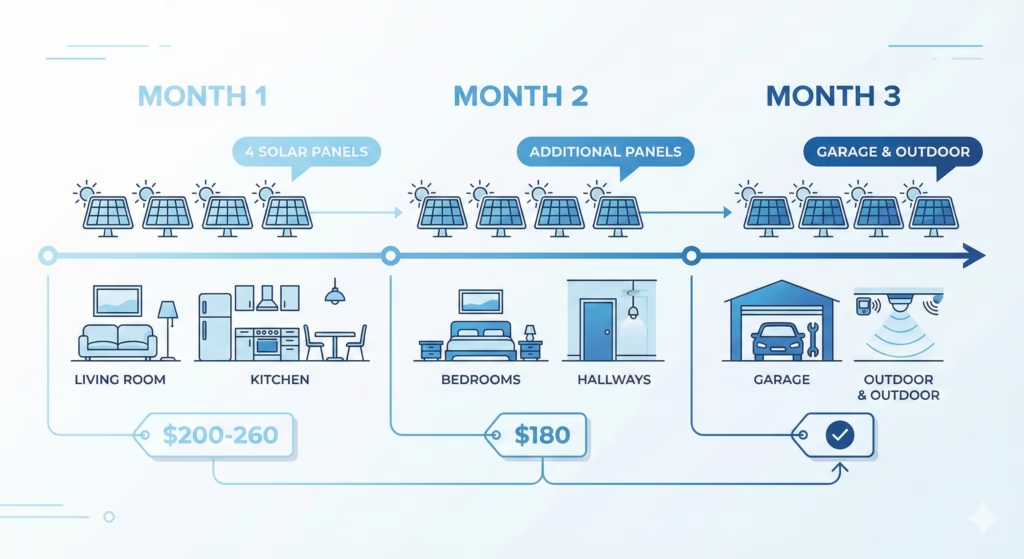
- 22 light fixtures total throughout the home
- Average usage: 5 hours per day
- Mix of 60W incandescent bulbs and 14W LED bulbs
- Estimated monthly lighting consumption: 165 kWh
- Monthly cost at $0.14/kWh: $85
After conversion:
- 16 fixtures converted to solar LED (3-5W each)
- 6 fixtures remaining on grid power in bathrooms and utility areas
- Estimated monthly grid consumption: 48 kWh
- Monthly cost: $42
- Monthly savings: $43 (51% reduction)
The family’s initial investment of $380 meant their payback period was approximately nine months. After that, they’ve enjoyed pure savings more than $500 annually.
Real-World Performance
Robert Martinez tracks their energy usage through a home monitoring system and has documented their results:
“The solar lights perform brilliantly during spring and summer when we get 12-14 hours of sunlight. Even on cloudy days, the batteries store enough charge to power our lights through the evening.
Winter is slightly different we get about 9-10 hours of sunlight, so we occasionally supplement with grid power, but we’re still saving 40-45% even in December.”
The family reports that their solar LED bulbs, rated at 25,000-50,000 hours of use, should last 10-15 years with normal usage, dramatically reducing replacement costs compared to traditional bulbs.
Beyond the Bill
The financial savings were the initial draw, but the Martinez family discovered additional benefits:
Energy Independence: During two brief power outages in their neighborhood, their solar-powered lights continued functioning, providing safety and comfort when others went dark.
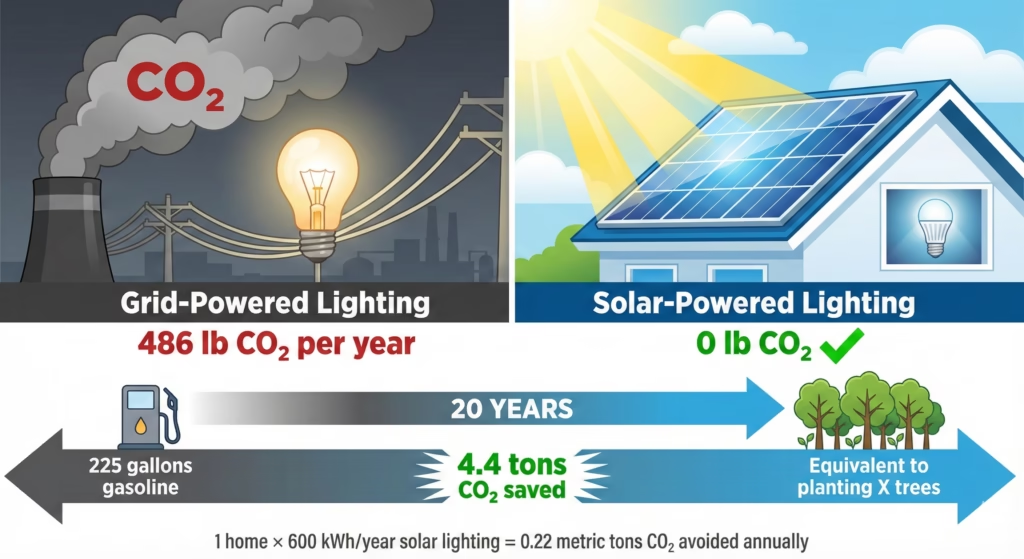
Environmental Impact: By reducing their grid electricity consumption by approximately 1,400 kWh annually, they’re preventing roughly 1,000 pounds of CO2 emissions each year equivalent to not driving 1,100 miles.
Home Value: According to recent studies, homes with solar installations can see property value increases of 3-4%. While indoor solar lighting is a smaller upgrade than rooftop panels, it demonstrates energy efficiency to potential buyers.
Lessons Learned
The Martinez family offers this advice to others considering solar indoor lighting:
Start Small: “Don’t try to convert everything at once. Focus on high use areas first and expand gradually,” Lisa suggests.
Calculate Your Sunlight: They used a solar pathfinder app to map which windows received the most direct sunlight throughout the year, optimizing panel placement.
Invest in Quality: After initially purchasing one budget $30 system that failed within two months, they learned that mid-range products ($45-75) offered the best value and reliability.
Plan for Weather: Their battery capacity allows for 2-3 days of cloudy weather before they need grid backup.
The Bigger Picture
The Martinez family’s experience reflects a growing trend. The global solar lighting market, valued at $170.25 billion in 2023, is projected to reach $287.13 billion by 2030, according to market research firm Grand View Research. While much of this growth comes from outdoor and developing world applications, indoor solar lighting adoption is accelerating in grid connected homes as technology improves and costs decline.
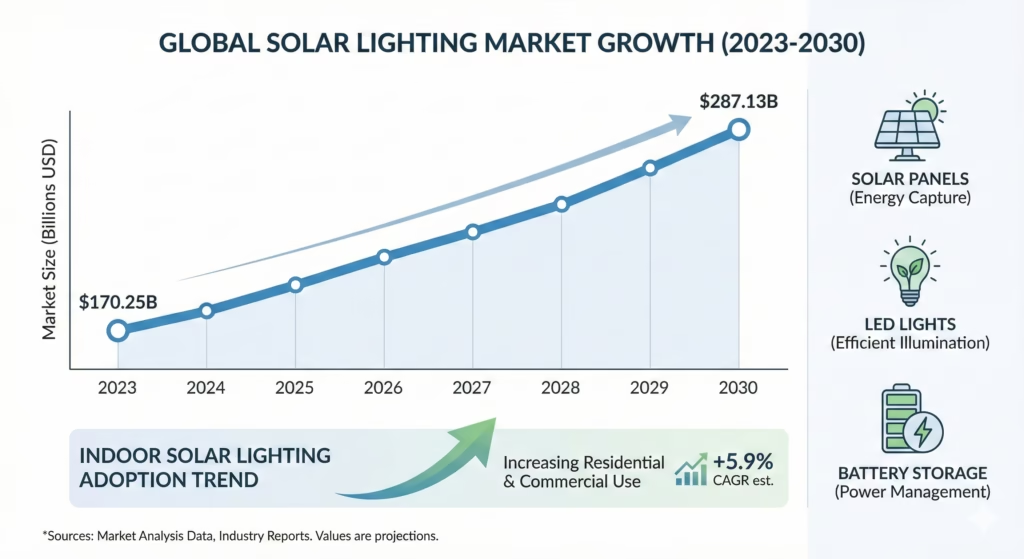
Solar LED technology has advanced significantly in recent years. Modern solar panels can charge effectively even with indirect or diffused sunlight, while LED efficiency has improved to produce 100+ lumens per watt ten times more efficient than incandescent bulbs.
Is It Right for You?
- Solar indoor lighting makes the most sense for households that:
- Receive at least 4-5 hours of direct sunlight daily
- Have south-facing windows or outdoor spaces for panel placement
Want to reduce electricity costs without major renovations
- Live in areas with high electricity rates (above $0.12/kWh)
- Seek energy backup during power outages
For the Martinez family, the decision has proven transformative. “We’re not just saving money,” Robert reflects. “We’re proving to ourselves and our kids that sustainable living doesn’t require sacrifice. It actually makes our lives better.”
As they plan their next project solar water heating they’ve become advocates in their community, helping three neighboring families design their own solar lighting systems. The ripple effect of their $380 investment extends far beyond their monthly electric bill.