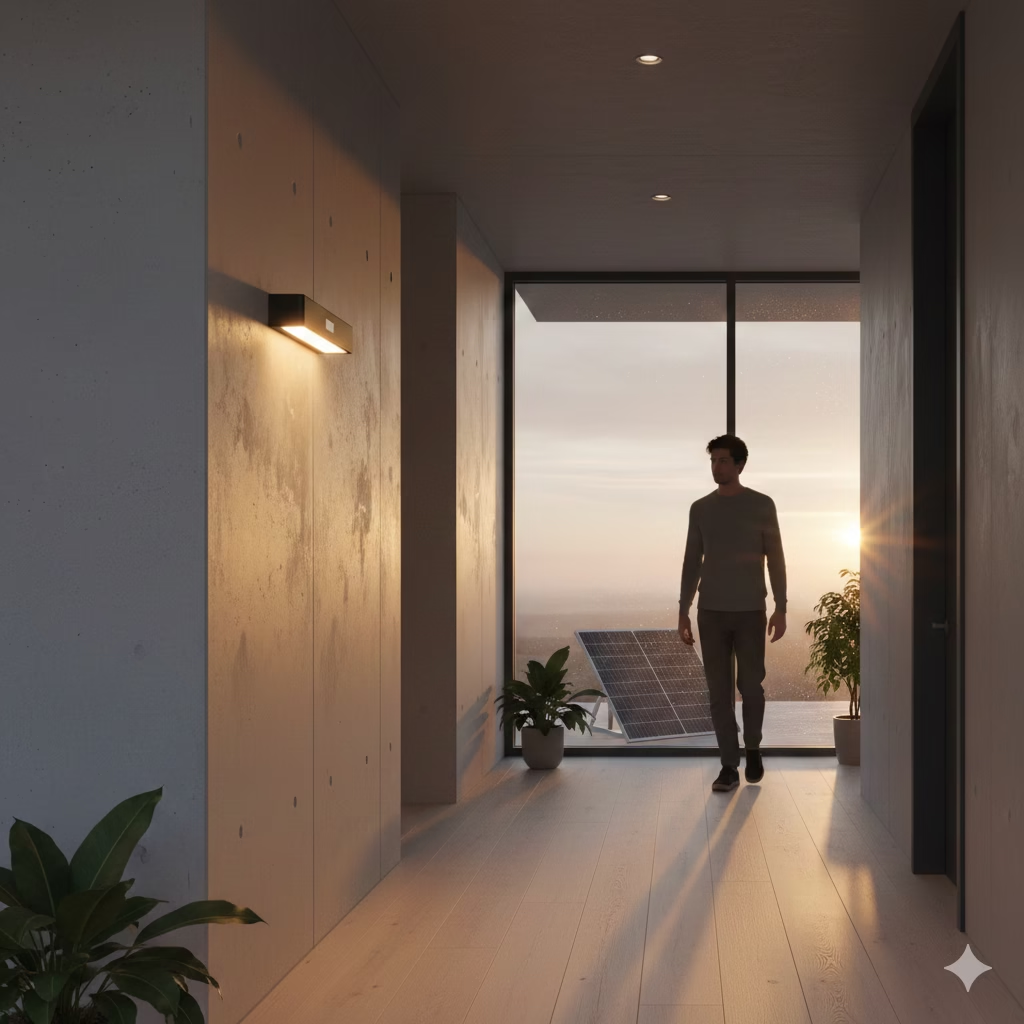
Motion sensor indoor solar lights solves everyday frustrations without adding a penny to your electricity bill. The challenge is matching the right technology to your specific space and that’s exactly what this guide will help you do.
Why Choose a Motion Sensor Indoor Solar Light
- Energy independence meets convenience: Solar-powered motion lights eliminate ongoing electricity costs entirely. Once installed, they run on stored solar energy, triggering bright light only when you need it.
- Installation is simple: Unlike hardwired fixtures that require cutting into walls and dealing with electrical boxes, solar motion lights mount with basic screws or adhesive. No wiring means you can place them wherever they’re needed most, and relocate them if your needs change.
- Perfect for transitional spaces: These lights shine in areas where you need light occasionally but don’t want it constantly burning. Hallways connecting bedrooms, basement stairways, walk-in closets, mudrooms, laundry areas, and small bathrooms all become safer and more convenient. They’re also excellent for rental properties or spaces where permanent electrical work isn’t possible.
For a complete overview of solar lighting options for every room, see our Solar Indoor Light Handbook.
Key Specs You Need to Understand Before Buying
Choosing the right motion-sensor indoor solar light gets a lot easier when you know which numbers matter and what they mean inside a room. Here are the specs every buyer should look at, and how the facts guide your decision.
Brightness (Lumens)
Brightness is one of the first specs you’ll see, but it’s also the easiest to misunderstand.Indoor motion-sensor lighting usually fits into two brightness needs:
- 100 to 300 lumens Ideal for hallways, closets, stairways, and general movement lighting.This level gives enough visibility for safety without glare.
- 700 lumens and higher Used where strong visibility or temporary “flooding” is needed.
- Premium models can reach 3,000 to 4,000 lumens, but that’s usually overkill for indoor rooms unless there is a special purpose.
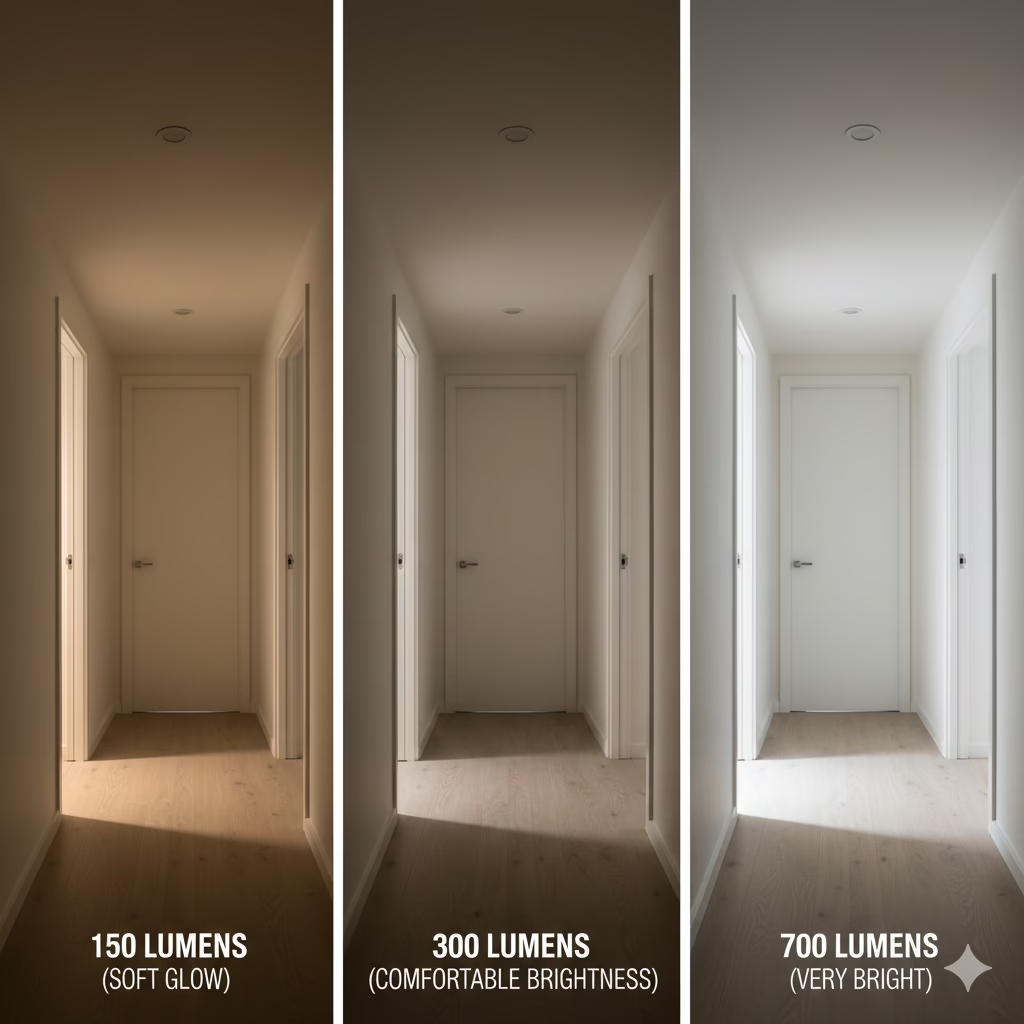
Ambient/pathway recommendation:
- 100–300 lumens
Strong visibility/security lighting:
- 700–4,000 lumens
Match lumen level to the size of the space and how long the light stays on. Bigger numbers aren’t always better indoors.
Beam Angle, Lens Design, and Lux
Lumens tell you total output. Beam angle and lens shape tell you where that light actually goes.
A few key rules:
- A wide beam spreads light into a room but reduces intensity in any one spot.
- A narrow beam puts more light on the floor or wall directly ahead, ideal for hallways or stairways.
This is where lux matters.
Lux is how bright light appears on a surface. A well-directed 200-lumen light can feel brighter than a poorly scattered 600-lumen beam.
Beam angle and optics can make lower lumens more effective than higher lumens in the wrong space.
If a product shares a beam angle or shows a coverage diagram, that’s a good sign. If it only brags about lumens, compare cautiously.
Solar Panel + Battery Capacity
Brightness burns power. Solar lights balance output and stored energy.
Here’s what matters:
Modern LEDs deliver about 150 to 180 lumens per watt. This efficiency is important because solar panels have limited daytime charging hours.
A light claiming very high lumens needs:
- A solar panel big enough to gather energy
- A battery large enough to store it
If either piece is undersized, lights dim or time out early.Factories sometimes inflate lumen claims, so battery size, panel area, and energy-saving modes are a better real-world indicator of performance.
Delivering thousands of lumens requires both a strong panel and substantial battery. With a small battery, some lights throttle brightness to last the night.
Don’t judge lights by brightness alone. Choose models that list:
- Battery capacity
- Runtime estimates
- Multiple modes (dim + motion)
They will be more reliable during cloudy weeks.
Motion Sensor Range
Almost all indoor solar lights use passive infrared (PIR) sensors. Specs matter here, too:
- Typical PIR range: ~10 meters (30 feet) Good enough for most hallways, stairs, and small rooms.
- Higher-end adjustable sensors Offer up to 15 meters on wide coverage or 24 meters in narrow mode (handy in long corridors or open basements).
- Measure the space.
For a short hall, basic sensors are fine. For long corridors, consider extended or adjustable coverage.
Match the Light to the Room
Now that you know what the numbers mean, the next step is choosing the right type of motion-sensor indoor solar light for your space. Different rooms need different specs, especially when you’re working with solar power and stored battery energy.
1. Hallways and Stairways
- Best fit: 100–300 lumens
These are classic motion-light areas. You only need enough brightness to move safely, not light up the whole house. Why this range works:
100–300 lumens is ideal for ambient or pathway lighting.
Look for:
- Beam spread wide enough to cover walking space
- Standard PIR sensor (around 10 meter range)
- Optional dim mode so the battery lasts all night
2. Closets, Cupboards, Pantry Corners
- Best fit: 100–200 lumens
Small spaces don’t need much light. Beam angle matters more here than raw brightness.Use the narrower side of the lumen scale because:
- It avoids glare in tight spaces
- Makes best use of stored battery power
Even a 200-lumen light with a tight beam can feel stronger than a higher output model wasting light into walls.
3. Bedrooms and Living Areas (Night-Only Use)
- Best fit: 150–300 lumens
Most homes don’t need steady light in sleeping spaces. Motion makes more sense here, and modest brightness avoids waking others.
Pick models with:
- Soft or “warm” light setting if offered
- A wide beam so a single fixture covers more area
- Modes that reduce brightness until triggered
4. Large Rooms or Basements
- Best fit: 300–700 lumens
Basements, utility rooms, or open layouts demand more coverage. Still, solar has limits — going above 700 lumens requires bigger batteries and longer charging.
700+ lumens is for larger or security-style illumination.
3,000–4,000 lumens exists in premium models but is usually unnecessary indoors.
Look for:
- Bigger panel or clearly stated battery capacity
- Wide beam optics
- Adjustable sensitivity if multiple walls or entry points exist
5. Garages, Workshops, Indoor Sheds
- Best fit: 300–700 lumens (or higher if part of a security setup)
These areas often act like indoor/outdoor hybrids. You may not be in the room long, but you need good visibility.
What matters most here:
- Motion detection across most entrances
- (~10 meters is common, but extended 15–24 meter sensors exist when needed)
- Energy-saving modes to stretch runtime during winter
- A panel that gets direct sun for several hours, even if the fixture sits inside
Your lumen thresholds and sensor ranges are the simplest way to match a product to a space:
Use lower lumens (100–300) for walking paths and small rooms.
Step into 300–700 where activity or visibility matters.
Only consider 1,000+ lumens if you have a clear need and enough battery and sun exposure to support it.
Getting Motion Sensors and Placement Right
PIR sensors detect heat signatures from moving bodies: They’re the standard for motion-activated lighting because they’re reliable, affordable, and consume minimal power while waiting. They work well in typical indoor temperatures and aren’t triggered by small pets or moving curtains in most cases. Some premium models offer dual-technology sensors combining PIR with microwave detection for even more accuracy, though this adds cost and complexity rarely necessary indoors.
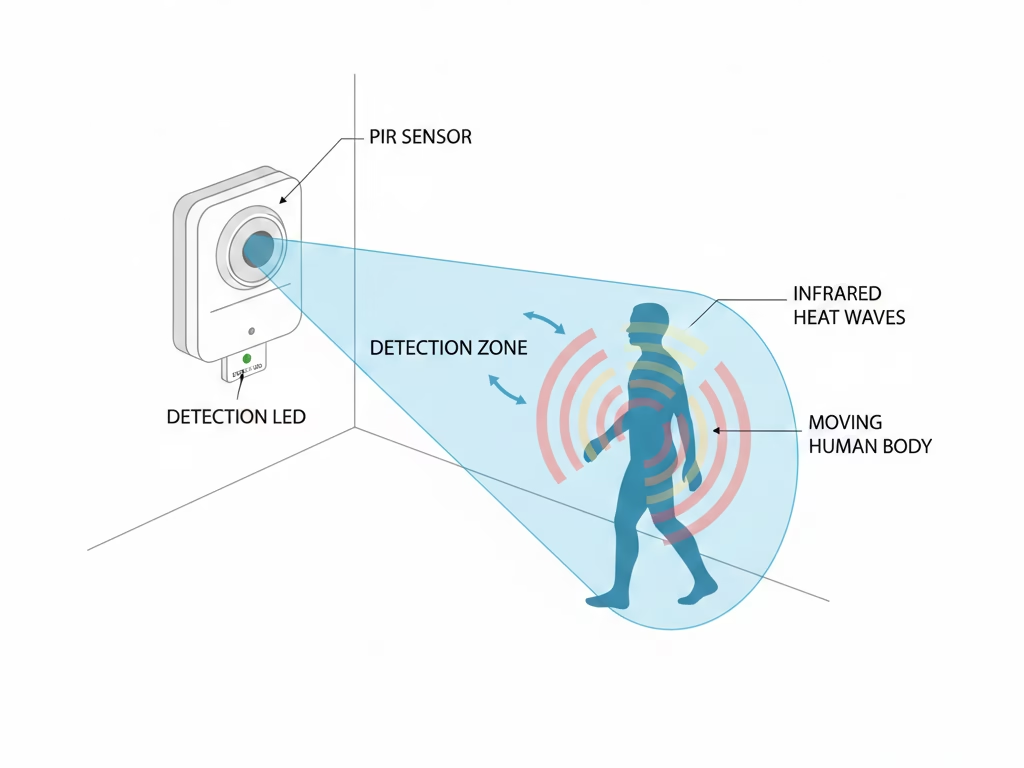
Map sensor coverage to your room layout: Draw a simple overhead view of your space and mark where you plan to mount the light. Visualize the sensor’s cone of detection typically spreading outward and downward from the fixture. Position the sensor so its coverage overlaps all pathways people will use. Corners often work well because they can monitor two walls of approach simultaneously.
Avoid common placement mistakes
Mounting too high reduces sensor sensitivity since PIR detection works best when movement crosses the detection field rather than approaching head-on. Typical optimal height is 6–8 feet for indoor applications.
Pointing the sensor away from traffic paths means people must get unusually close before triggering light.
Check for obstructions shelves, hanging plants, or furniture that block the sensor’s view will create dead zones.
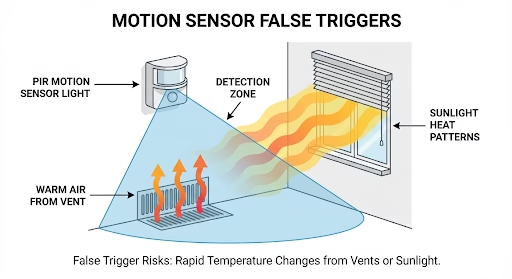
Also watch for false trigger sources: heating vents that blow warm air across the sensor, windows where moving outdoor elements cast changing heat patterns, or high-traffic areas where you’d get excessive activations.
Solar Panel and Charging Realities
Solar panels require direct sunlight to perform this is non-negotiable. Indoor lighting positioned near windows gets ambient light, but ambient light won’t adequately charge even a small battery. Solar panels need actual sun hitting them directly, not filtered through glass or shade from buildings, trees, or overhangs. Think “bright enough to need sunglasses” for several hours daily.
Plan for 6–8 hours of direct sun exposure when possible, though products vary. Some efficient systems with large panels and small loads can get by on less; budget models with minimal panels need every bit of sun they can get. Consider seasonal changes too—a window that gets great sun in summer might be shaded in winter when days are shorter and sun angles are lower.
Separate the panel from the fixture for indoor installations
Here’s the practical solution for motion lights inside your home: mount the fixture where you need light, but run the panel’s wire to place the panel itself outdoors, on a sunny window sill, or attached to an exterior wall with unobstructed southern exposure (northern hemisphere) or northern exposure (southern hemisphere). Many quality systems include extension cables specifically for this purpose. This separation lets you enjoy convenient indoor motion lighting while ensuring the solar component actually charges reliably.
Power Management and Operating Modes
Most motion sensor solar lights offer multiple operating modes that dramatically affect how long they’ll run and how bright they’ll be when you need them.
Full brightness on trigger is the simplest mode: light stays off until motion detected, then blasts full brightness for a set duration (typically 30–90 seconds), then turns off. This maximizes battery life by using power only during actual activations. It works beautifully for closets, storage areas, or any space where you genuinely want light only when present.
Low steady light with motion boost provides dim ambient illumination continuously during dark hours, then increases to full brightness when motion triggers. This mode is excellent for hallways, stairways, or bathrooms where some visibility helps navigation even without motion, but you want full brightness when actively using the space. The constant low drain uses more battery but creates a more welcoming environment.
Motion-only with adjustable duration lets you control how long full brightness lasts after triggering. Longer durations (60–120 seconds) suit activities like laundry sorting or closet organizing where you’ll be present but relatively still. Shorter durations (15–30 seconds) work for quick pass-through spaces where you’re immediately moving along.
Why dimming and mode control extend reliability:
A light running 1,000 lumens for 8 hours nightly will exhaust its battery much faster than one running 50 lumens most of the time with brief 500-lumen bursts on motion. During cloudy weather or short winter days when solar charging is reduced, multi-mode fixtures keep working by automatically managing their power budget. Single-mode, always-bright fixtures often fail first during challenging weather.
The tradeoff is straightforward: higher peak brightness and longer activation times provide more dramatic lighting but reduce how many days the system can operate without good solar charging. Match your mode choice to both your lighting needs and realistic expectations about available sunlight in your location.
Durability, Testing, and Real-World Performance
The motion sensor solar light market has grown dramatically. Recent analysis of solar motion sensor light values the global market at $207 million in 2021, projected to reach $396.1 million by 2031—a 7.2% compound annual growth rate. This growth means more manufacturers, better technology, and increased product variety compared to even a few years ago. You’ll find significantly improved sensors, longer-lasting batteries, and more thoughtful designs than early solar motion lights offered.
Independent testing reveals practical performance levels. Reputable home improvement publications have tested popular models, typically finding that residential indoor solar motion lights deliver around 200–300 lumens with color temperatures near 3000K (warm white, similar to incandescent bulbs). These reviews highlight durability, straightforward setup, and reliable triggering as key factors alongside raw brightness numbers.
Consumer tradeoffs appear even in well-reviewed models. For example, testers note that many affordable and mid-range solar motion lights have fixed motion sensitivity you can’t adjust how close someone must be to trigger the light or how much movement is required. This simplicity reduces cost and complexity but means you can’t fine-tune performance if you get false triggers or find the sensor isn’t responsive enough. Higher-end units often include sensitivity adjustments, multiple sensors, or smartphone app control for customization.
What to look for in product reviews
Seek out reviews that provide actual lumen measurements rather than just repeating manufacturer claims, since real-world output often differs from specifications. Look for information about battery runtime during cloudy periods—does the light still work after three overcast days, or does it fade quickly?
Check whether reviewers mention sensor adjustability and whether the coverage area matches claims. Build quality indicators like weather-sealing (for the panel portion), solid mounting hardware, and clear, user-friendly controls also predict long-term satisfaction.
Making Your Final Decision
Choosing the right motion sensor indoor solar light boils down to matching five key factors to your specific situation: brightness appropriate to room size, sensor coverage that detects movement throughout the space, realistic solar panel placement with genuine sun exposure, adequate battery capacity balanced with smart power management modes, and beam shape that evenly lights your area.
The most common mistake buyers make is chasing the highest lumen number without considering the complete system. A fixture promising 2,000 lumens with a tiny panel and no dimming modes will disappoint when it can’t maintain that output through typical use. A thoughtfully designed 300-lumen system with a proper-sized panel, good battery, and multiple operating modes will outperform it for indoor applications while costing less and proving far more reliable.
Start with your room’s purpose and size, identify where you can realistically place a solar panel in direct sun, then select products that match those parameters rather than shopping by specs alone. The right motion sensor solar light becomes an invisible convenience—reliable light exactly when and where you need it, powered by the sun, adding safety and comfort to your daily routine without touching your electric bill.
Quick Reference: Lumens by Application
Closets, cabinets, under-counter:
- 100–200 lumens
Hallways, stairways, small bathrooms:
- 200–300 lumens
Entryways, laundry rooms, larger bathrooms:
- 300–500 lumens
Garages, workshops, security areas:
- 500–1,500+ lumens
Premium security (usually outdoor):
- 3,000–4,000 lumens