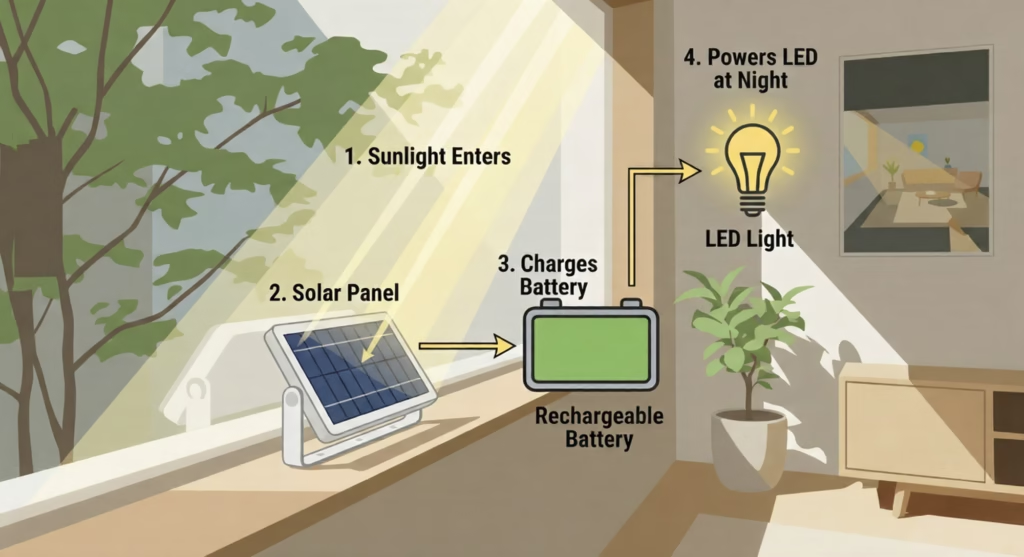
Learn how much sunlight indoor solar lights need to charge properly. See real sunlight hours, window impact, runtime limits, and practical tips for better performance.
Best indoor solar lights sound simple in theory. Put them near a window, let the sun charge them, and enjoy free lighting at night. In reality, many people are surprised when their indoor solar lights look dim, run for only a few hours, or stop working after sunset.That usually leads to one main question: how much sunlight do indoor solar lights need to work properly?
The short answer is that indoor solar lights need more sunlight than most people expect. While they are designed for indoor use, they still rely on solar panels, and solar panels require strong, consistent light to charge efficiently. Sunlight filtered through windows, curtains, or tinted glass is much weaker than outdoor sunlight, which directly affects performance.
Understanding the exact sunlight requirements helps set realistic expectations. It also explains why some indoor solar lights work fine in certain homes but struggle in others. For a comprehensive overview, refer to the complete solar indoor light handbook. In the sections below, the focus is on real numbers, real limitations, and what indoor solar lights can actually deliver when charged indoors.
1. How Much Sunlight Do Indoor Solar Lights Need Per Day?
Most indoor solar lights require around 6 to 8 hours of direct sunlight per day to reach a usable charge. This is not indirect daylight or room brightness. It means strong sunlight hitting the solar panel through a window for several hours.
Manufacturers often base their charging claims on ideal conditions. In real homes, indoor charging is less efficient because window glass blocks roughly 30 to 50 percent of usable solar energy. As a result, indoor solar lights may need the full 8 hours of sun just to reach a partial charge.
Light intensity plays a major role here. Direct outdoor sunlight measures around 100,000 lux, while typical indoor lighting ranges between 50 and 500 lux. Even a bright room during the day provides only a tiny fraction of the energy needed to charge a solar panel effectively. This is why placing the panel near a window matters far more than general indoor brightness.
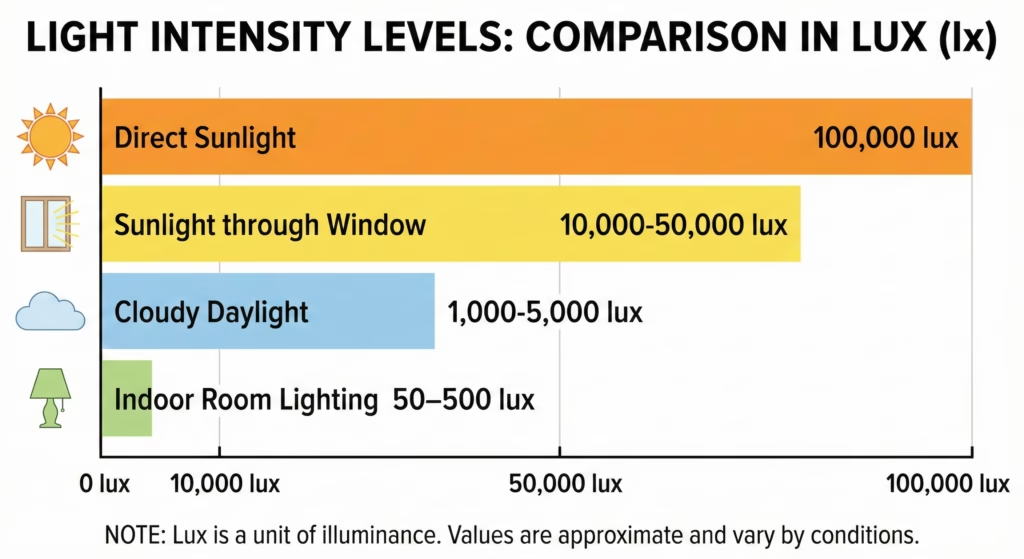
In practical terms, here is what usually happens:
- 6 to 8 hours of strong window sunlight can charge an indoor solar light enough to run for 4 to 10 hours, depending on brightness level
- On cloudy days or shaded windows, charging may drop significantly or fail completely
- Indirect daylight alone is rarely sufficient for reliable performance
- Battery size also affects results. Most indoor solar lights use batteries between 1,000 mAh and 6,000 mAh. Smaller batteries charge faster but offer shorter run times. Larger batteries last longer at night but require more sunlight during the day to fill up. For example, many indoor solar lamps with a 4,000 mAh battery deliver 4 to 8 hours of light after a full day of sun. Decorative solar string lights often last longer because they use less power, while brighter ceiling or shed-style lights drain batteries much faster.
The key takeaway is simple. Indoor solar lights are not low-sun devices. They still need several hours of strong, direct sunlight every day, even when designed specifically for indoor use.
2. Does Sunlight Through Windows Work for Solar Lights?
Yes, indoor solar lights can charge through windows, but the results are limited and highly dependent on window type, direction, and sunlight strength.
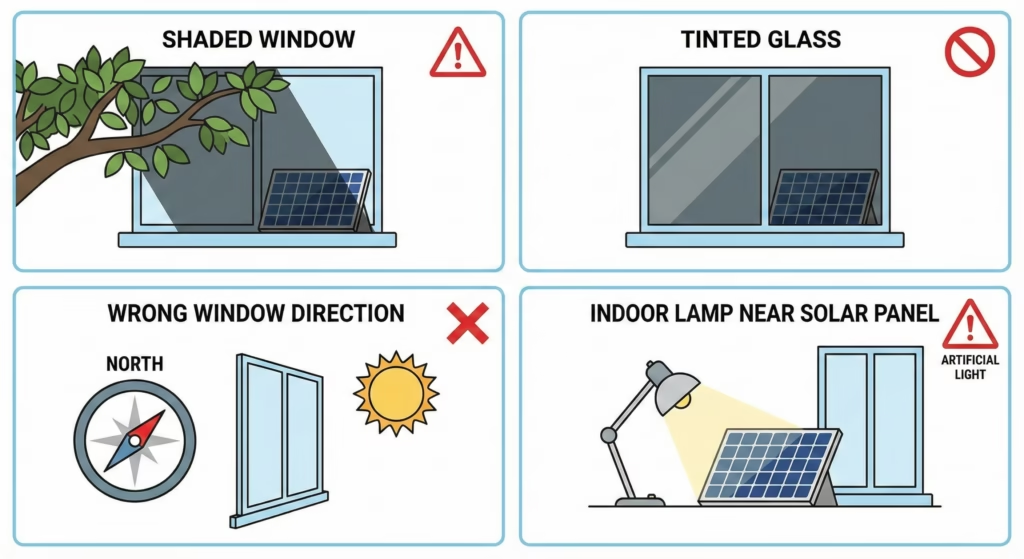
When sunlight passes through glass, a significant portion of solar energy is lost. Most standard residential windows reduce usable solar radiation by 30 to 50 percent. Tinted, double-pane, or low-E windows can reduce it even further. This means a solar panel placed indoors is already working with far less energy than it was designed for.
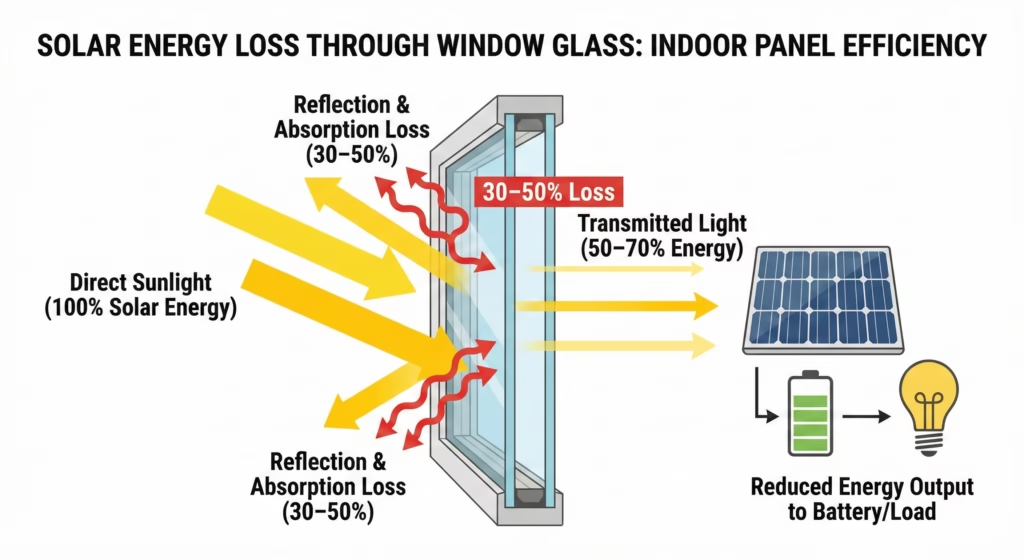
Because of this loss, sunlight through a window takes longer to charge a solar light compared to outdoor exposure. A panel that might fully charge in 6 hours outdoors may need 8 hours or more indoors, and even then it may only reach a partial charge.
Another issue is light angle. Outdoor solar panels are angled toward the sun. Indoors, panels are usually flat against windows or walls, which reduces efficiency further. Any obstruction such as window frames, curtains, grills, or dust on the glass can noticeably reduce charging performance.
Artificial light does not solve this problem. Household lighting produces only a fraction of the light intensity required for solar charging. Typical indoor lighting ranges from 50 to 500 lux, while direct sunlight delivers around 100,000 lux. As a result, charging solar lights under lamps is extremely slow and often impractical.
In short, sunlight through windows does work, but only when:
- The window receives strong direct sunlight for several hours
- The glass is clear and unobstructed
- The solar panel is positioned as close to the window as possible
Even under ideal indoor conditions, charging through glass is slower and less reliable than outdoor solar charging.
3. Best Window Direction for Indoor Solar Lights
Window direction is one of the most important factors in determining whether indoor solar lights will work at all.
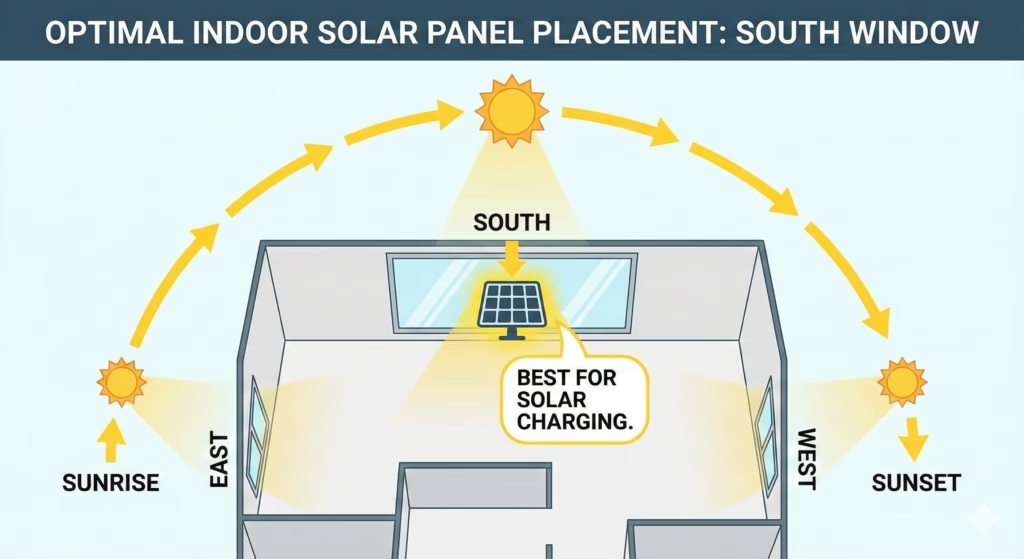
In the Northern hemisphere south facing windows provide the most consistent and longest sunlight exposure throughout the day. These windows receive sunlight from mid-morning to late afternoon, making them the best choice for charging indoor solar lights.
East-facing windows receive strong sunlight in the morning but lose exposure by midday. They can work for low-power solar lights but often fail to deliver enough charging time for brighter fixtures.
West-facing windows receive sunlight later in the day. They can perform reasonably well, especially in summer, but sunlight duration is usually shorter than south-facing windows.
North-facing windows are the least effective. They receive little to no direct sunlight during most of the year and are generally unsuitable for charging indoor solar lights.
Here is how window directions typically rank for indoor solar charging:
- South-facing: Best performance, longest exposure
- West-facing: Good performance, shorter duration
- East-facing: Limited performance, morning-only exposure
- North-facing: Poor or no usable charging
For best results, the solar panel should be placed directly against the glass in the brightest section of the window. Even small shadows from window frames or nearby objects can reduce output significantly.
If the solar panel is detachable, placing it at the best window while keeping the light fixture elsewhere can greatly improve performance.
4. How Long Do Indoor Solar Lights Stay On After Charging?
The runtime of indoor solar lights depends on three main factors: battery capacity, brightness level, and the amount of sunlight received during the day. Even when fully charged, indoor solar lights are designed for moderate, not all-night, illumination.
4.1: Average Runtime After a Full Charge
Under good indoor charging conditions, most indoor solar lights provide:
- 4 to 10 hours of light after 6 to 8 hours of direct sunlight through a window
- Decorative or low-power lights may last longer
- High-brightness lights drain batteries much faster
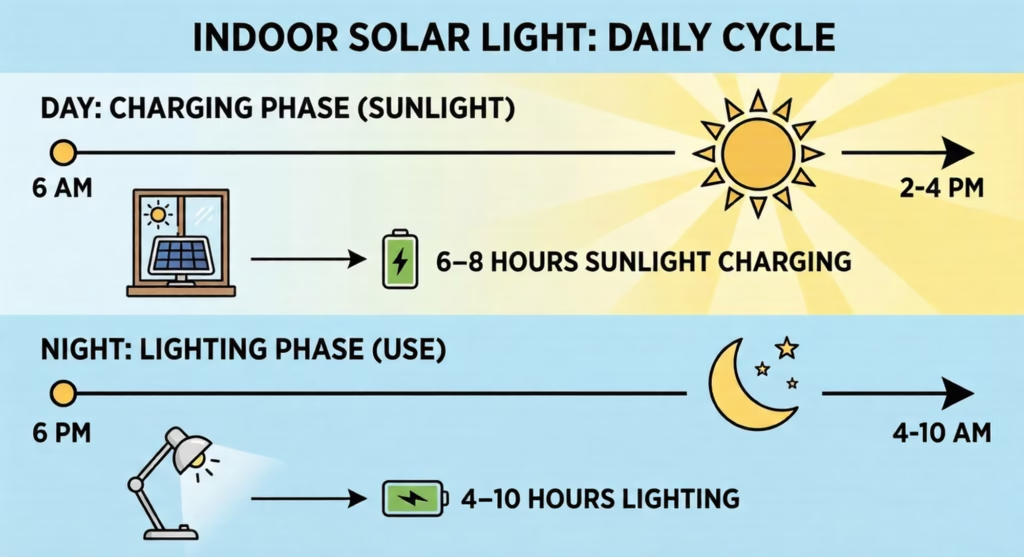
Lights rarely reach their advertised runtime indoors because window-filtered sunlight delivers less energy than outdoor exposure.
4.2: Battery Capacity and Its Impact
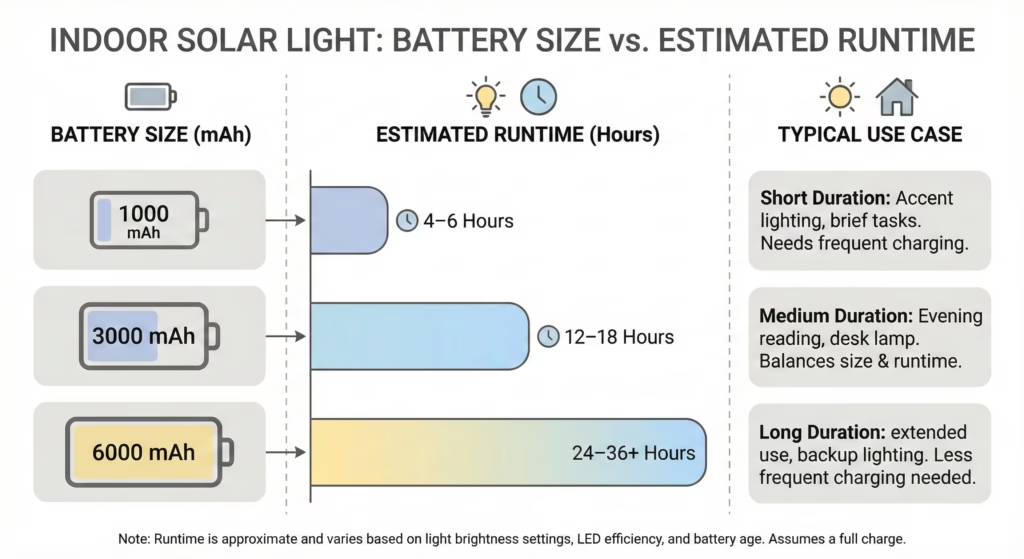
Most indoor solar lights use batteries ranging from 1,000 mAh to 6,000 mAh.
1,000–2,000 mAh batteries
- Common in small lamps and decorative lights
- Typically provide 2 to 4 hours of bright light
3,000–4,000 mAh batteries
- Found in lanterns and medium-size lights
- Usually provide 4 to 8 hours of usable lighting
5,000–6,000 mAh batteries
- Used in ceiling or shed-style solar lights
- Can provide 6 to 10 hours, but only if fully charged
4.3: Brightness Settings Matter
Brightness has a major effect on runtime.
- High brightness modes drain batteries quickly
- Medium or dim modes can double or even triple runtime
- Many string lights last much longer because they operate at low power levels
For example, low-power LED string lights may run 20 to 40 hours, while brighter indoor solar lamps may struggle to stay on past midnight.
Why Runtime Often Falls Short Indoors
Even when placed correctly, indoor solar lights often fail to reach full charge due to:
- Reduced solar intensity through glass
- Shorter sunlight duration in winter
- Cloud cover and indoor shading
This is why indoor solar lights often turn off earlier than expected, even after a full day of daylight.
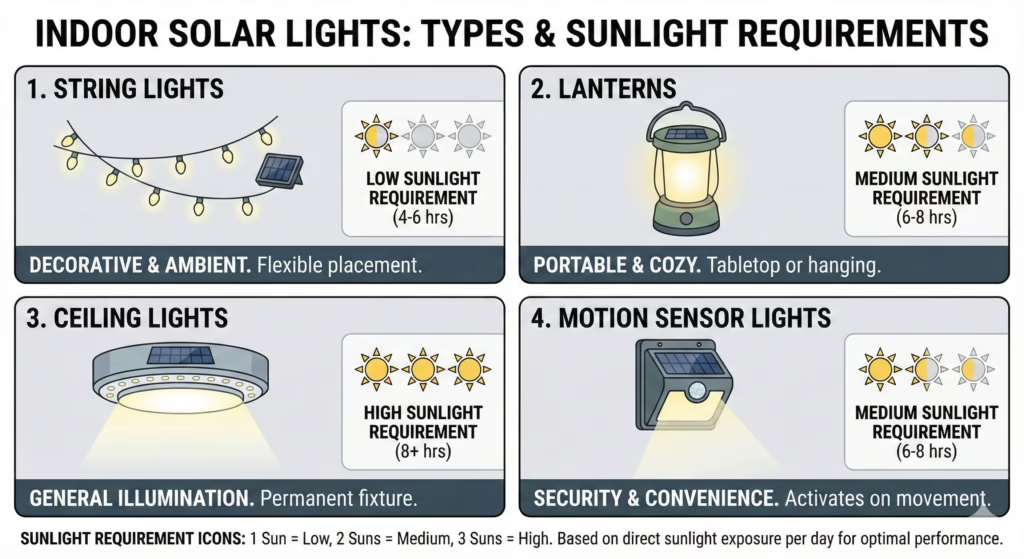
5. Sunlight Needs by Type of Indoor Solar Light
Not all indoor solar lights need the same amount of sunlight. Power consumption varies significantly by design and purpose.
5.1 Solar String Lights
Solar string lights are the most forgiving option for indoor use.
- Very low power consumption
- Smaller solar panels and batteries
- Can work with 4 to 6 hours of strong window sunlight
- Best for decoration rather than task lighting.
Because they use small LEDs and lower brightness, string lights often deliver 8 to 40 hours of runtime, depending on brightness mode.
5.2 Solar Lanterns and Table Lamps
Solar lanterns and table lamps require moderate sunlight.
- Battery capacity usually between 2,000 and 4,000 mAh
- Need 6 to 8 hours of direct sunlight through a window
- Typical runtime: 6 to 10 hours on low or medium brightness
They work best near south-facing windows and are suitable for emergency lighting or accent lighting.
5.3 Solar Ceiling and Shed Lights (Indoor Use)
These lights demand the most sunlight.
- Higher brightness LEDs
- Larger batteries, often 4,000 to 6,000 mAh
- Require 8 hours or more of strong sunlight
Indoors, these lights often fail to fully charge unless the panel is placed directly in intense window sunlight. Runtime typically ranges from 4 to 8 hours at moderate brightness.
5.4 Indoor Solar Motion Sensor Lights
Motion sensor lights are more efficient indoors.
- Light turns on only when motion is detected
- Lower overall energy usage
- Can work with limited sunlight compared to always-on lights
In motion-only mode, these lights can operate reliably even when charging conditions are not ideal. In continuous lighting mode, they behave like standard solar lamps and require longer charging.
6. Can Indoor Solar Lights Charge Without Sunlight?
Indoor solar lights are designed to use sunlight, not general indoor lighting. While some charging may occur under artificial light, it is extremely slow and usually not practical for daily use.
Charging Under Artificial Light
Most household lights produce between 50 and 500 lux. In comparison, direct sunlight delivers around 100,000 lux. This massive difference explains why charging under lamps is inefficient.
Under artificial lighting:
- Charging may take 12 to 24 hours or more
- The battery often never reaches full capacity
- Energy losses are high, reducing overall efficiency
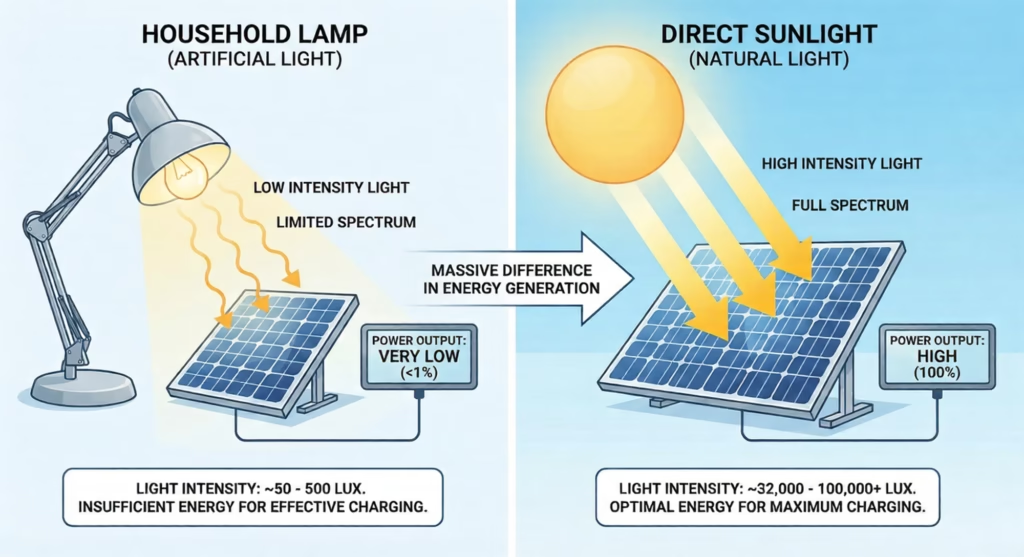
Some manufacturers allow lamp charging as an emergency option, but it is not intended for regular use. Repeated low-level charging can also shorten battery life over time.
Why Is Indoor Light Not Enough?
Solar panels are optimized for high-intensity light. Indoor bulbs spread light in all directions and lack the energy density needed to drive meaningful charging current. Even placing a lamp very close to the panel rarely produces usable results.
Backup Charging Options
Some indoor solar lights include USB charging ports. These bypass solar limitations entirely and allow full charging regardless of weather or window placement. When reliable lighting is required, USB backup charging is often the most practical solution.
7. Common Problems With Indoor Solar Light Charging
Indoor solar lights fail most often because their environment does not provide enough usable sunlight.
Below are the most common issues and why they occur.
1. Lights Do Not Turn On at Night
Many solar lights have built-in light sensors. If the panel is exposed to indoor lighting at night, the light may think it is still daytime and remain off. This commonly happens when:
- The panel is near lamps or ceiling lights
- The panel remains in a bright room after sunset
2. Very Short Runtime
Short runtime is usually caused by partial charging. Common reasons include:
- Less than 6 hours of direct sunlight
- Cloudy weather or seasonal sun angle changes
- Window glass reducing solar intensity
- When batteries are not fully charged, lights may turn off after only 1 to 3 hours.
3. Dim or Weak Light Output
Dim lighting usually means:
- Battery capacity is too small
- The light is operating on a low-charge state
- The solar panel is undersized for indoor use
Indoor solar lights often appear dimmer than expected because they are designed for low-energy efficiency, not high-lumen output.
4. Battery Not Charging or Failing Early
Battery problems can occur due to:
- Continuous undercharging
- Poor-quality rechargeable cells
- Aging batteries after repeated shallow charge cycles
Most indoor solar lights use lithium or NiMH batteries, which degrade faster when they are never fully charged.
5. Inconsistent Performance Between Seasons
Performance often drops in winter due to:
- Shorter daylight hours
- Lower sun angle
- Increased cloud cover
Even a well-placed solar panel may not receive enough energy during certain months.
8. Tips to Maximize Sunlight for Indoor Solar Lights
Indoor solar lights can work reliably, but only when every bit of available sunlight is used efficiently. Small placement mistakes can cut charging performance in half.
1. Place the Solar Panel Directly Against the Window
The closer the panel is to the glass, the more light it captures. Even a small gap between the panel and the window reduces usable sunlight. Avoid placing panels on walls or shelves away from the window.
2. Use South-Facing Windows Whenever Possible
South-facing windows receive the longest and strongest sunlight exposure during the day. This alone can be the difference between a full charge and a weak one. West-facing windows are the second-best option, while north-facing windows should be avoided.
3. Keep the Panel Clear of Shadows and Obstructions
Shadows from window frames, curtains, grills, or nearby objects can reduce solar output dramatically. Even partial shading can drop charging efficiency by more than half.
4. Clean the Solar Panel and Window Glass
Dust and grime block light. Cleaning both the panel and the window glass regularly improves charging efficiency, especially in urban or dusty environments.
5. Adjust the Panel Angle if Possible
If the panel can be tilted, angle it toward the sun rather than leaving it flat. Panels facing the sun directly capture far more energy than those placed at poor angles.
6. Use Detachable Panels Strategically
If the solar panel is detachable, place it at the brightest window and run the light fixture separately. This setup often improves performance more than upgrading the light itself.
7. Consider USB Charging as a Backup
For areas with limited sunlight or during winter months, USB charging provides reliable performance. Solar charging can still be used when conditions allow, but USB ensures consistent lighting.
Conclusion: How Much Sunlight Do Indoor Solar Lights Really Need?
Indoor solar lights are not low-light devices. Despite being designed for indoor use, they still depend on strong sunlight to function properly.
In real-world conditions, most indoor solar lights need 6 to 8 hours of direct sunlight per day through a window. Even then, window glass reduces solar energy by 30 to 50 percent, which limits charging efficiency. When fully charged, indoor solar lights typically provide 4 to 10 hours of illumination, depending on battery size and brightness settings.
They work best in homes with:
- South-facing windows
- Clear, unobstructed sunlight
- Low to moderate lighting needs
Indoor solar lights struggle in shaded rooms, north-facing windows, or during winter months. Understanding these limits helps avoid disappointment and ensures they are used in the right situations.
When set up correctly, indoor solar lights can be useful for decorative lighting, emergency use, and low-power illumination. They are not a replacement for wired lighting, but they can be a practical option when sunlight conditions are favorable.