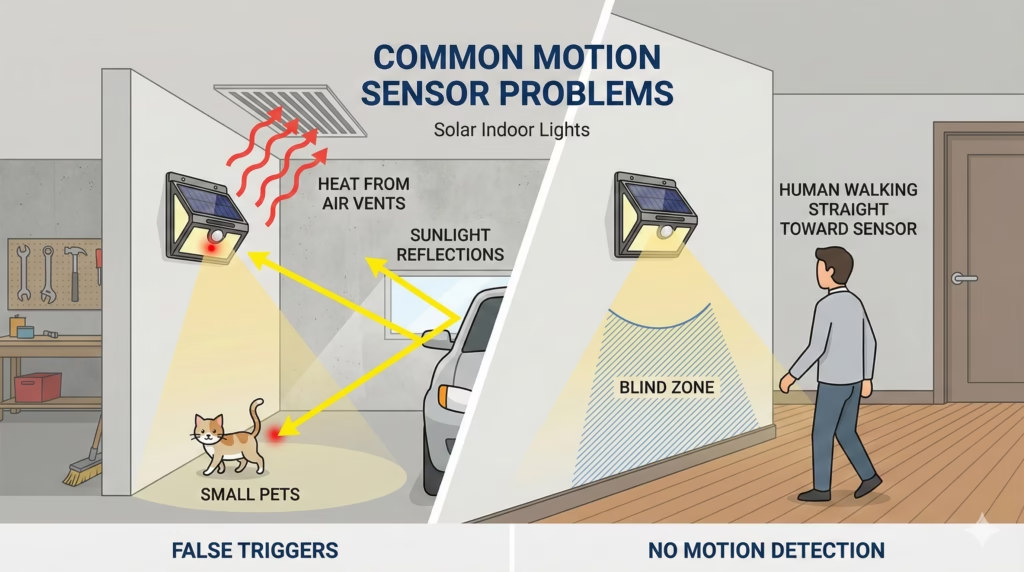
Learn why solar indoor lights trigger randomly or miss motion. Fix PIR sensor issues caused by dirt, settings, mounting height, and heat.
1: Why Motion Sensors Misbehave in Solar Indoor Lights
Motion sensor problems are one of the most common complaints with solar indoor lights. Users usually face two issues:
- the light turns on when nothing is there
- it does not turn on at all when someone walks by.
In most cases, the light itself is not broken. The problem comes from how the motion sensor is working or how it is set up.
Solar indoor lights rely on built-in motion sensors to save power. Since they run on a small battery charged by a solar panel, the system is designed to be sensitive and efficient. That same sensitivity is also why false triggers and missed detection happen more often compared to wired lights. Small setup mistakes, dirt on the sensor, or wrong settings can easily confuse the sensor.
Another reason these issues show up more in solar-powered indoor lighting is power management. When battery voltage drops, the motion sensor may behave unpredictably. It can either become too sensitive and trigger randomly or lose sensitivity and stop detecting motion. This makes proper placement, clean sensors, and correct settings especially important for solar indoor lights used in homes, sheds, garages, workshops, and cabins.
2: How Motion Sensors Actually Work in Solar Indoor Lights
Most solar indoor lights use a PIR (Passive Infrared) motion sensor. A PIR sensor does not detect movement directly. It detects changes in heat. When a warm object, such as a person, moves across the sensor’s field of view, the sensor notices a change in infrared energy and sends a signal to turn the light on.
Inside the PIR sensor are two infrared-sensitive elements. When heat moves from one side of the sensor to the other, the difference between those two signals triggers the light. This is why PIR motion sensors work best when someone walks across the room rather than directly toward the sensor.
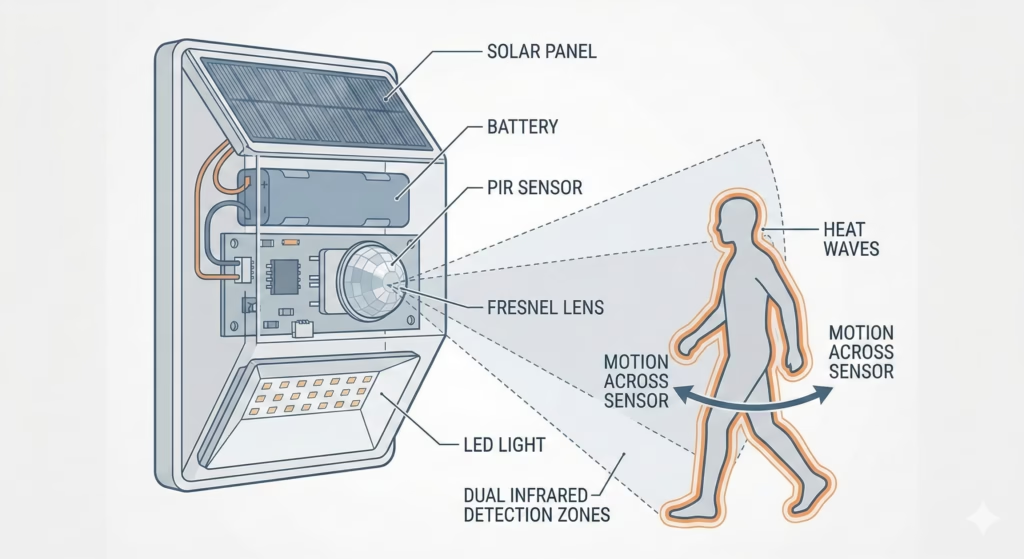
PIR sensors in solar indoor lights usually have a limited detection range and angle to conserve power. Typical indoor detection ranges are around 10 to 20 feet, with a wide but shallow detection pattern. If the sensor is mounted too high, too low, or facing the wrong direction, parts of the room can fall into blind zones where motion is not detected.
Lighting conditions also play a role. Most solar indoor lights include a Lux sensor that tells the light when it is dark enough to activate. If the Lux setting is incorrect, the motion sensor may appear broken even though it is working properly. For example, the sensor may detect motion, but the light will not turn on because it thinks the room is still bright.
3: Why Solar Indoor Lights Are More Prone to Motion Sensor Problems
3.1: Limited Power Budget in Solar Indoor Lights
Unlike wired lighting, solar indoor lights operate on a small rechargeable battery. To conserve power, the motion sensor and control board are tuned to run at very low energy levels. When battery voltage drops, the PIR sensor can become unstable. This is when false triggers or missed detection usually start showing up, even if the sensor was working fine before.
Low battery power can also reduce the sensor’s ability to detect small heat changes. As a result, motion needs to be closer or slower to trigger the light. This is why solar indoor lights often work well when fully charged but behave inconsistently after several cloudy days.
3.2: Smaller and Lower-Cost PIR Sensors
Most solar indoor lights use compact PIR modules to keep costs and power usage down. These smaller sensors usually have:
- Shorter detection range
- Narrower detection zones
- Less accurate heat differentiation
Because of this, they are more sensitive to environmental changes like air movement, temperature shifts, or nearby heat sources. Compared to full-size wired motion sensors, these compact PIR units have less margin for error.
3.3: Battery and Charge Controller Effects
The charge controller inside solar indoor lights manages both the battery and the motion sensor. When charging is weak or the battery is aging, the controller may limit power to the sensor. This can delay detection, shorten active time, or cause the light to shut off unexpectedly. In many cases, users think the motion sensor is failing when the real issue is declining battery performance.
4: Common Setup Mistakes That Cause False Motion Triggers
4.1: Dirty or Obstructed PIR Sensor Lens
One of the most overlooked problems in solar indoor lights is a dirty sensor lens. Dust, cobwebs, insects, or grease on the PIR dome block infrared signals and scatter heat patterns. This makes the sensor react to tiny changes and trigger randomly.Even a thin layer of dirt can cause:
- Lights turning on with no movement
- Repeated on-off cycling
- Reduced detection accuracy
Regularly cleaning the sensor lens with a soft, dry cloth solves a surprising number of false trigger issues.
4.2: Sensitivity Set Too High
Many solar indoor lights include a sensitivity or range setting. When set too high, the PIR sensor reacts to:
- Small pets
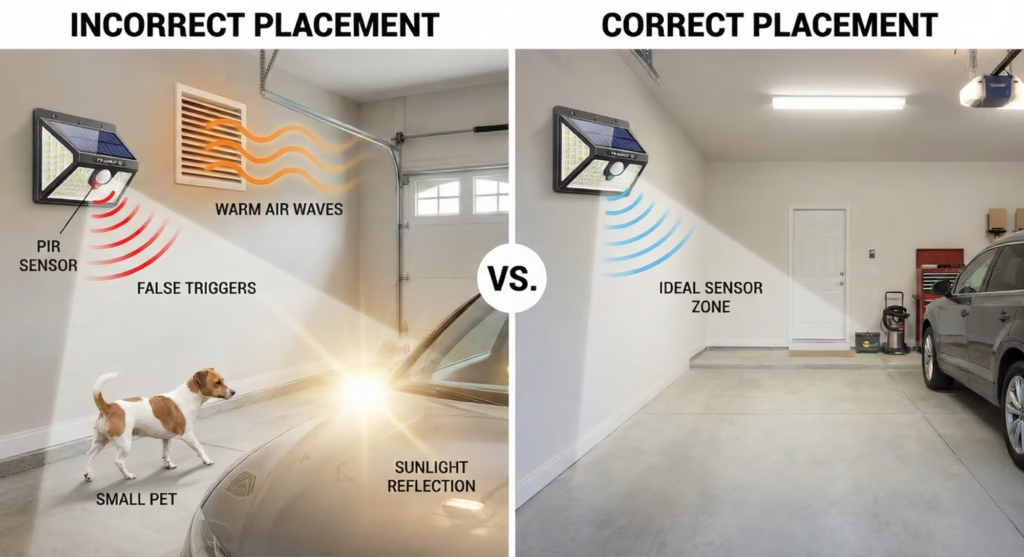
- Moving air from fans or vents
- Warm electronics or appliances
High sensitivity makes the sensor pick up minor heat fluctuations instead of clear human movement. Lowering the sensitivity slightly often stops false triggers while keeping reliable motion detection.
4.3: Heat Sources in the Sensor’s View
PIR sensors cannot tell the difference between a person and other moving heat sources. If the sensor faces:
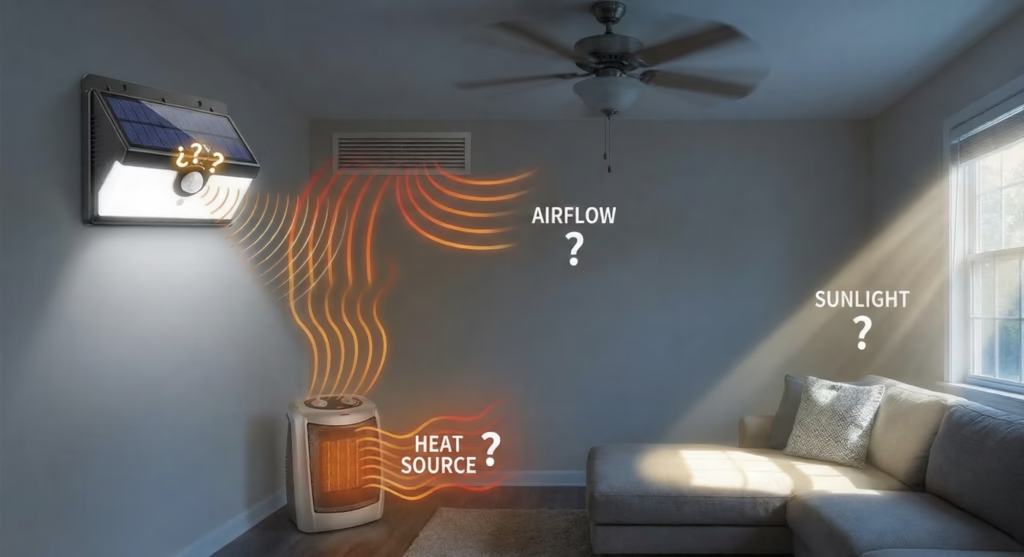
- Heaters or radiators
- Sunlit walls or windows
- HVAC vents
It may trigger without any human movement. In solar indoor lights, this problem is more noticeable because the sensor is already working at low power and high sensitivity. Repositioning the light away from heat sources usually fixes this issue quickly.
5: Common Setup Mistakes That Cause No Motion Detection
5.1: Incorrect Lux (Light Level) Settings
A very common reason solar indoor lights fail to turn on is an incorrect Lux setting. The Lux sensor controls when the motion sensor is allowed to activate the light. If this setting is too high, the system assumes there is enough ambient light and keeps the LED off, even when motion is detected.
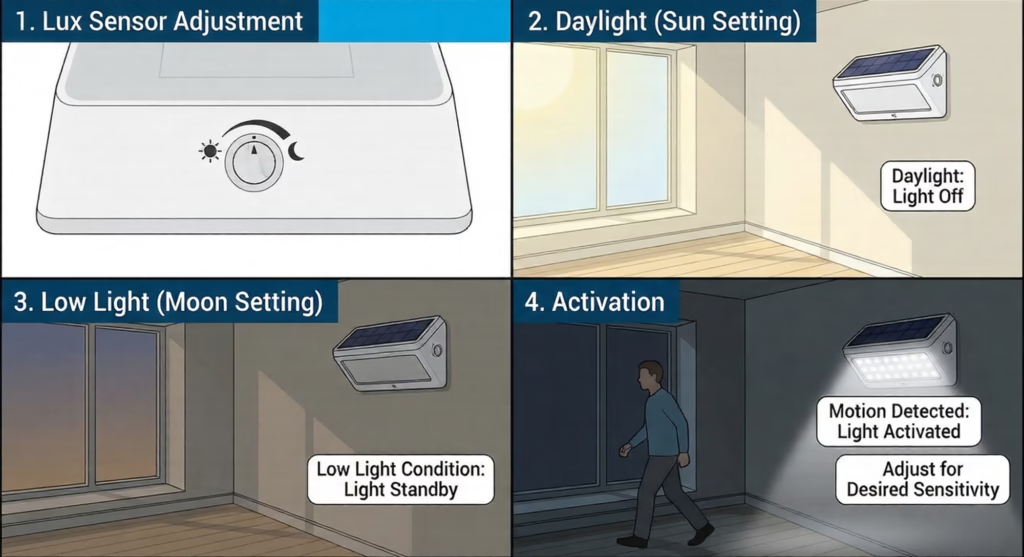
This often happens during daytime testing or at dusk. Users think the motion sensor is not working, but the light is simply locked out by the Lux setting. For reliable performance, the Lux control should be set toward the night or low-light position and adjusted gradually after testing.
5.2: Mounting Height Creating Blind Zones
PIR sensors in solar indoor lights have an optimal mounting height, usually between 6 and 8 feet. When mounted higher than this, detection range may increase slightly, but sensitivity drops. More importantly, a blind zone forms directly below the sensor.
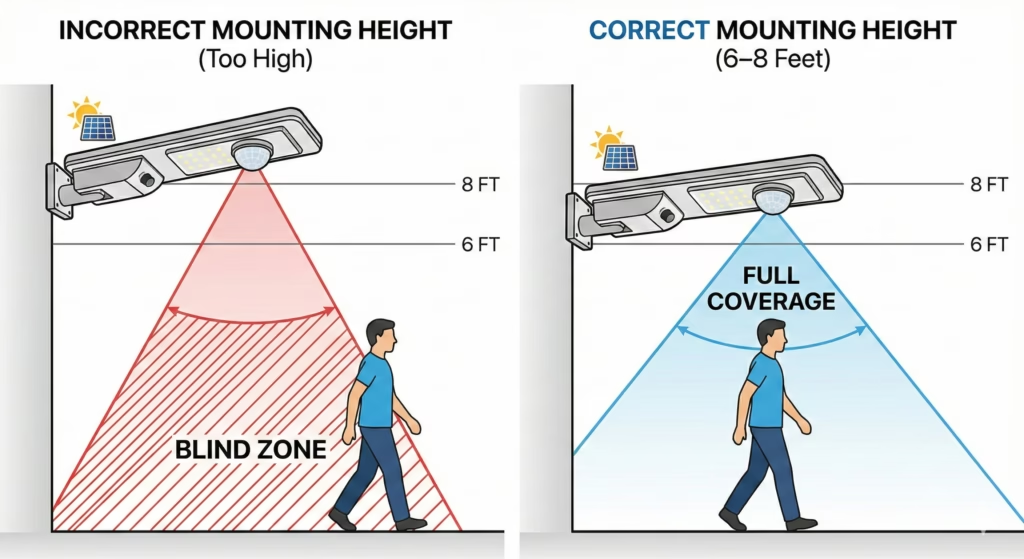
If someone walks close to the wall or stands under the light, the sensor may not detect them at all. This leads to the false impression that the motion sensor is broken, when the real issue is mounting height. Lowering the light or angling the sensor downward often restores proper detection.
5.3: Poor Sensor Angle and Direction
PIR sensors detect motion best when heat moves across their field of view. If a solar indoor light is aimed straight at a doorway or hallway, a person walking directly toward the sensor may not trigger it.
Side-to-side movement across the sensor zones creates a stronger infrared change. For indoor spaces like garages, sheds, or workshops, angling the light slightly across the walking path improves detection and reduces missed triggers.
6: Environmental Factors That Affect PIR Sensor Performance
6.1: Room Temperature Close to Body Temperature
PIR motion sensors rely on temperature contrast. When the room temperature is close to human body temperature, the sensor struggles to see movement. This is common in warm indoor spaces during summer.
In these conditions, solar indoor lights may fail to trigger unless movement is slow or very close. Improving airflow, lowering room temperature, or increasing sensitivity can help restore detection.
6.2: Airflow and Moving Warm or Cold Air
Air movement from fans, heaters, or air conditioners can confuse PIR sensors. Moving air with a temperature difference can look like motion to the sensor, causing false triggers, or mask real motion by creating constant background changes.
Placing solar indoor lights away from vents and fans improves stability and reduces sensor errors.
6.3: Seasonal and Temperature Extremes
Very cold or very hot environments affect PIR sensor electronics. Cold temperatures can slow sensor response, while excessive heat reduces infrared contrast. Since solar indoor lights depend on stable battery output, extreme temperatures also impact power delivery to the sensor.
In unheated spaces like sheds or cabins, sensor performance may change with the season. This is normal behavior and not a defect. Adjusting sensitivity or repositioning the light is usually enough to compensate.
7: How to Test and Adjust Motion Sensors Properly
7.1: Start With a Simple Walk Test
Before changing anything else, test the motion sensor using a basic walk test. Make sure the battery is charged and the sensor lens is clean. Walk normally across the room and observe when the solar indoor lights turn on.
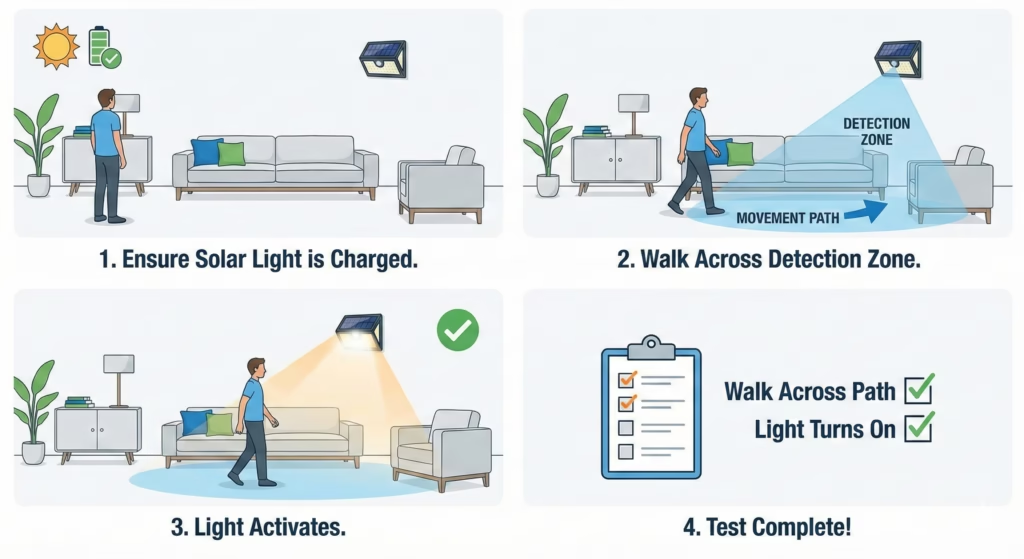
Pay attention to distance, angle, and speed. If the light only triggers when you are very close, sensitivity is likely too low or the mounting height is wrong. If it triggers randomly without movement, sensitivity may be too high or the sensor is facing a heat source. Correct Adjustment Order for Reliable Results
Adjusting settings in the right order prevents confusion and wasted time.
- Clean the PIR sensor lens
- Set the Lux control to the lowest light level (night mode)
- Increase motion sensitivity to maximum
- Perform another walk test across different angles
- Gradually lower sensitivity until false triggers stop
This process helps isolate whether the issue comes from settings, placement, or environmental interference.
7.2: Fine-Tuning Placement and Angle
If adjustments do not fix detection issues, reposition the light. For best results, mount solar indoor lights at mid-wall height and angle the sensor so motion passes across its field of view rather than straight toward it.
Small changes in angle can make a large difference in detection reliability. Always retest after moving the light.
8: When the Sensor Design Is the Real Problem
8.1: Limits of Built-In PIR Sensors
Not all PIR sensors are equal. Many solar indoor lights use basic, low-power sensors with limited range and narrow detection zones. These sensors may struggle in larger rooms or areas with complex airflow and temperature changes.
If a light consistently misses motion even after proper setup, the sensor design may simply be inadequate for the space.
8.2: Signs the Sensor Itself Is Failing
Some issues point to sensor failure rather than setup problems:
- Detection range continues to shrink over time
- Light triggers only intermittently with no pattern
- Sensor stops responding even with full battery
- Aging electronics and long-term heat exposure can degrade PIR sensor performance in solar indoor lights.
8.3: When Replacement or Upgrade Makes More Sense
In cases where adjustments no longer help, replacing the unit is often more practical than repair. For larger indoor spaces, consider solar indoor lights with higher-quality motion sensors or external sensor options.
Advanced systems that combine PIR with other detection methods offer better reliability and fewer false triggers, especially in workshops, garages, and commercial indoor spaces.
9: Advanced Fixes and Upgrade Options
9.1: Replacing or Upgrading the PIR Sensor
For users comfortable with basic electronics, replacing the PIR module can solve persistent issues in solar indoor lights. Some lights use standard PIR boards that can be swapped with higher-quality sensors offering wider detection angles and better stability.
Upgrading the sensor helps when:
- Detection range is too short for the room
- False triggers persist despite correct setup
- The original sensor has degraded over time
This option is more common in DIY solar lighting systems used in sheds, cabins, or workshops.
9.2: Using External Motion Sensors
In larger indoor areas, the built-in sensor may not be enough. Adding an external motion sensor wired to the light’s control circuit improves coverage and reduces blind spots.
External sensors allow:
- Better placement for detection
- Adjustable angles independent of the light
- More consistent performance in complex spaces
This approach is useful for garages, storage rooms, and commercial indoor environments.
9.3: When a Full Replacement Is the Better Choice
For many users, replacing the entire unit is more practical than modifying it. Newer solar indoor lights often include improved PIR sensors, better charge controllers, and higher-capacity batteries.
If a light shows repeated sensor issues along with battery problems, replacement usually delivers better long-term reliability and lower maintenance.
10: Final Checklist to Fix Motion Sensor Problems Fast
Quick Fix Checklist for False Triggers
- Clean the PIR sensor lens
- Reduce sensitivity slightly
- Move the light away from heat sources
- Check for airflow from vents or fans
- Re-aim the sensor across walking paths
Quick Fix Checklist for No Motion Detection
- Set Lux control to low-light mode
- Increase sensitivity temporarily
- Adjust mounting height to 6–8 feet
- Angle the sensor downward slightly
- Test movement across the sensor’s field of view
Knowing When to Stop Adjusting
If all checklist steps fail and performance does not improve, the sensor design or electronics are likely the problem. At that point, replacing or upgrading the solar indoor lights is the most efficient solution.