Struggling with solar indoor lights that go dim or stop working? Learn battery lifespan, replacement timing, upgrade options, and how to fix most issues fast.
1. Why Batteries Are the Weakest Link in Solar Indoor Lights
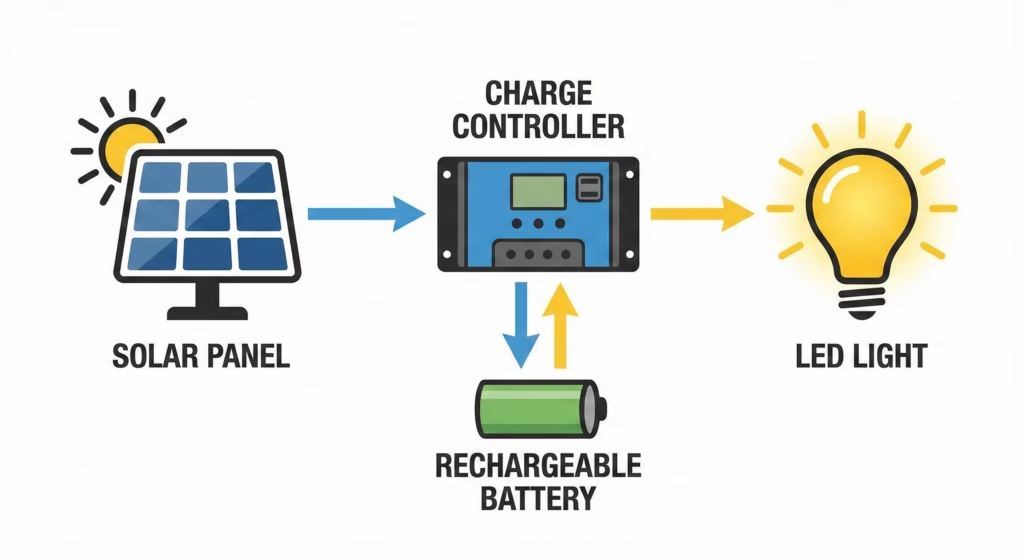
When solar indoor lights stop working, most people assume the LED has failed. In reality, LEDs are usually the last thing to break. Modern LEDs are designed to last tens of thousands of hours, often well over ten years, especially in the best solar indoor lights for home. The real problem almost always comes down to the battery. Solar indoor lights depend entirely on rechargeable batteries to store energy collected during the day and release it at night. Over time, these batteries wear out. Once that happens, the light may turn dim, shut off early, or stop working altogether, even though the solar panel and LED still look fine.
This is why battery failure is responsible for a large share of “dead” indoor solar lights. In many cases, simply replacing the battery brings the light back to life. That makes battery health the first thing anyone should check before replacing the entire unit.
Another reason batteries fail early is cost-cutting. Many low-priced indoor solar lighting systems use small-capacity rechargeable batteries with basic charge control. These batteries degrade faster, especially when exposed to heat, partial charging, or daily charge and discharge cycles. As a result, the battery becomes the weakest link in an otherwise functional solar light.
Understanding how long solar light batteries last, and what affects their lifespan, helps explain why so many solar indoor lights fail earlier than expected.
2. How Long Do Solar Indoor Light Batteries Really Last?
The lifespan of a solar indoor light is closely tied to the type and quality of battery it uses. Not all rechargeable batteries age the same way, and this difference has a major impact on performance and long-term reliability.
2.1: Average Lifespan by Battery Type
Most budget solar indoor lights rely on NiMH (Nickel-Metal Hydride) batteries. These typically last 2 to 5 years under normal conditions. In cheaper models, the lifespan can be closer to the lower end of that range due to small capacity and poor charge management.
Higher-quality indoor solar lights increasingly use LiFePO₄ (Lithium Iron Phosphate) batteries. These batteries are far more durable and can last 10 to 15 years when properly managed. They handle frequent charging cycles better, tolerate temperature changes more effectively, and maintain stable performance over time.
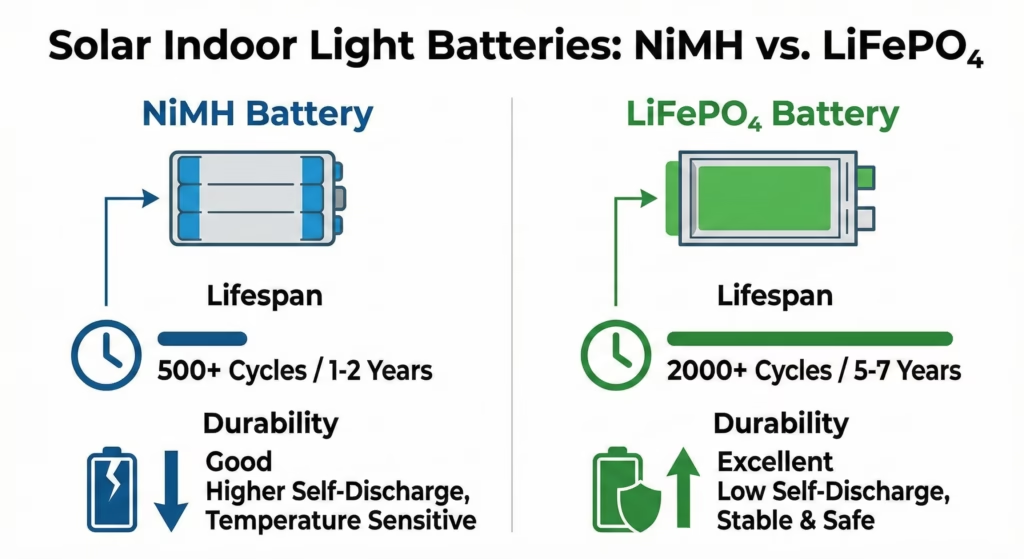
Here is a simple comparison in real-world terms:
- NiMH batteries: shorter lifespan, lower efficiency, common in budget solar indoor lights
- LiFePO₄ batteries: longer lifespan, higher efficiency, found in premium or newer designs
2.2: What Shortens Battery Life in Solar Indoor Lights
Even a good battery can fail early if conditions are not ideal. Several common factors reduce battery lifespan in indoor solar lighting systems:
- Daily charge and discharge cycles: Every night the battery drains and recharges the next day. Over time, this natural wear adds up.
- Incomplete charging: Indoor solar lights often receive limited sunlight through windows or indirect exposure, which prevents full charging and stresses the battery.
- Heat buildup: Batteries installed in sheds, attics, or enclosed spaces degrade faster due to higher temperatures.
- Poor charge controllers: Basic or low-quality controllers overcharge or deep-discharge batteries, speeding up failure.
- Low-capacity batteries: Smaller mAh ratings mean deeper daily discharge, which shortens battery life.
3. Signs Your Solar Indoor Light Battery Is Failing
When solar indoor lights start acting up, the battery usually gives warning signs before it fails completely. Knowing these signs helps you fix the problem early instead of replacing the entire light.
One of the most common symptoms is short runtime. If an indoor solar light used to last all night but now shuts off after one or two hours, the battery has likely lost a large portion of its capacity. This happens as rechargeable batteries age and can no longer store the same amount of energy.
Another clear sign is dim or weak brightness. When the battery can’t deliver enough power, the LED runs at a lower output. The light still turns on, but it looks noticeably weaker than before, even after a sunny day.
Some solar indoor lights only work properly after very bright or sunny days. If the light performs well occasionally but fails on cloudy days, the battery may be near the end of its life. A healthy battery should handle moderate sunlight without major drops in performance.
Flickering or inconsistent lighting is also a warning sign. This often means the battery voltage is unstable, especially during the early evening when the light first turns on.
Finally, many users assume a light is “dead” when it stops turning on completely, even though the solar panel looks fine. In reality, battery replacement fixes roughly 40 percent of non-working solar indoor lights, making it the most effective first step in troubleshooting.
If the panel is intact and the light has no visible damage, the battery is almost always the problem.
4. Solar Indoor Light Battery Types Explained
Not all rechargeable batteries behave the same way, and the type used inside solar indoor lights plays a major role in lifespan, runtime, and reliability.
4.1: Common Battery Types Used in Solar Indoor Lights
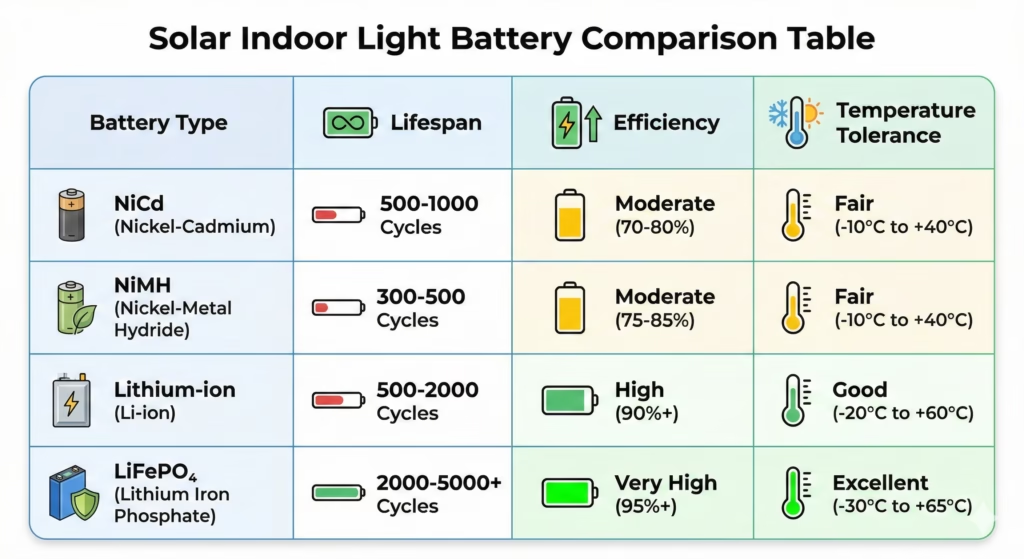
| Battery Type | Typical Lifespan | Efficiency | Temperature Tolerance | Common Use |
| NiCd | 1–3 years | Low | Moderate | Older, very cheap models |
| NiMH | 2–5 years | Medium | Fair | Most budget solar indoor lights |
| Lithium-ion | 5–8 years | High | Good | Mid-range indoor solar lights |
| LiFePO₄ | 10–15 years | Very high | Excellent | Premium and long-life models |
4.2: Which Battery Type Is Best for Solar Indoor Lights?
NiMH batteries are still common because they are inexpensive and easy to source. They work reasonably well but degrade faster, especially in indoor setups where sunlight exposure is inconsistent.
Lithium-ion batteries offer better efficiency and longer life, but they are more sensitive to heat and overcharging if the charge controller is poorly designed.
LiFePO₄ batteries are currently the best option for indoor solar lighting. They last significantly longer, handle daily charging cycles better, and perform more reliably in both hot and cold environments. This makes them ideal for solar indoor lights installed in sheds, garages, or enclosed spaces.
NiCd batteries are largely outdated. They have short lifespans, lower capacity, and environmental drawbacks. In most cases, they should be avoided unless replacing batteries in older systems designed specifically for them.
Choosing the right battery type has a bigger impact on long-term performance than brightness ratings or extra feature.
5. Why Battery Capacity (mAh) Matters More Than You Think
When comparing batteries for solar indoor lights, many people focus only on the battery type and ignore capacity. Capacity, measured in milliamp hours (mAh), plays a huge role in how long an indoor solar light can run each night.
In simple terms, higher mAh means more stored energy. It does not make the light brighter, but it allows the light to stay on longer. Two solar indoor lights using the same LED can perform very differently if one has a higher-capacity battery.
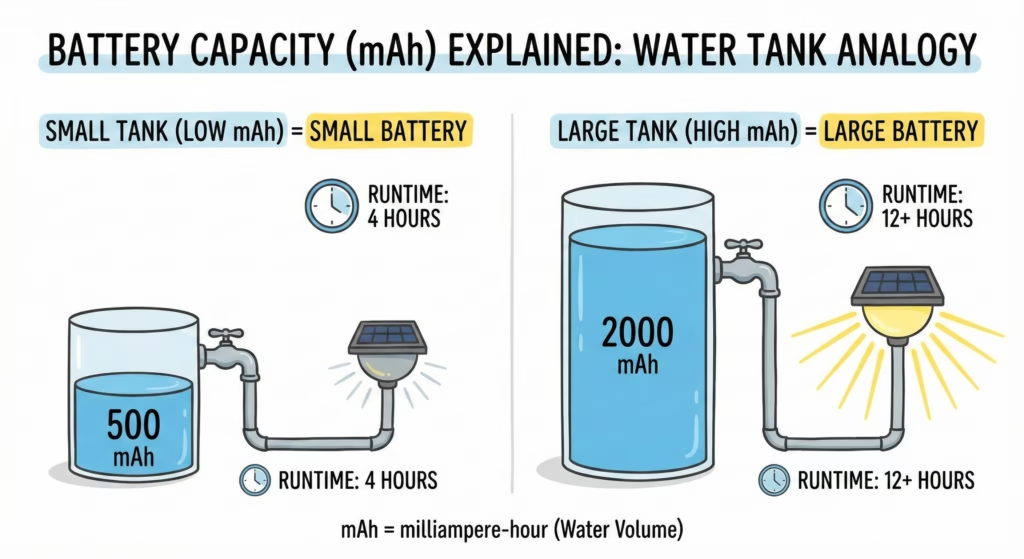
For example, a solar indoor light with a 600 mAh battery may only last a few hours after sunset. The same light with a 2000 mAh battery can often stay on most of the night under similar charging conditions. This difference becomes even more noticeable on cloudy days or during winter.
Low-capacity batteries also experience deeper daily discharge, which accelerates wear. When a battery drains close to empty every night, it loses capacity faster. Higher mAh batteries discharge more gradually, which helps extend overall lifespan.
This is why many budget indoor solar lights fail early. They use small batteries that are constantly pushed to their limits. Choosing solar indoor lights with higher battery capacity, or upgrading the battery where possible, can dramatically improve runtime and reliability.
6. How Often Should You Replace Solar Indoor Light Batteries?
There is no single replacement schedule that fits all solar indoor lights. Battery replacement depends on battery type, usage, and charging conditions, but there are clear guidelines that help avoid performance issues.
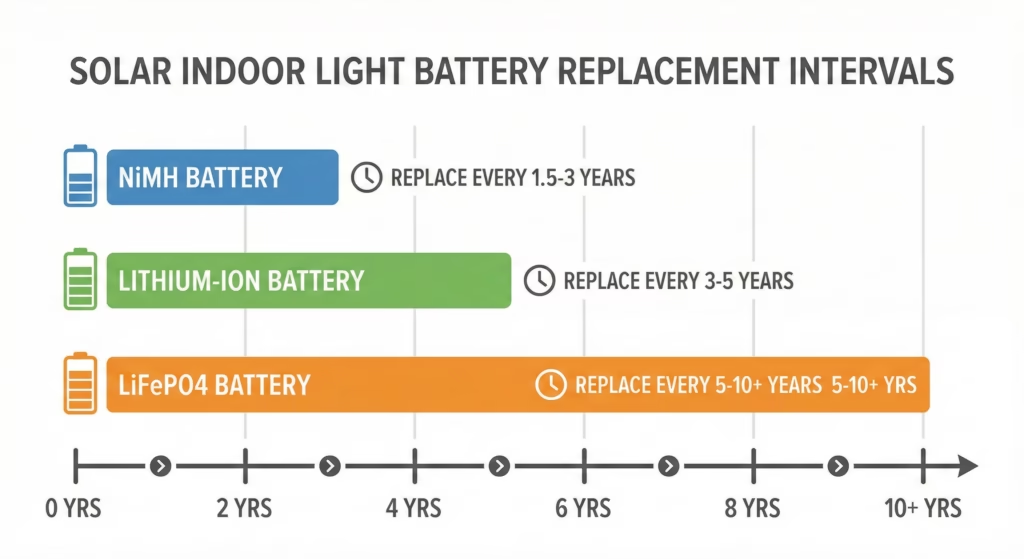
- For NiMH batteries, replacement is usually needed every 2 to 4 years. In indoor setups with limited sunlight, replacement may be required even sooner. When these batteries start losing capacity, performance drops quickly.
- Lithium-ion batteries typically last 5 to 8 years, provided the light has a decent charge controller and isn’t exposed to excessive heat.
- LiFePO₄ batteries last the longest. In well-designed solar indoor lights, they can function reliably for 10 years or more before replacement becomes necessary.
Waiting too long to replace a failing battery can cause additional problems. Deeply degraded batteries place extra strain on the charging circuit and may reduce charging efficiency over time. Replacing the battery early often restores full performance and protects the rest of the system.
A good rule of thumb is simple:
If your solar indoor light no longer lasts through the night after a full sunny day, battery replacement should be the first step, not the last.
7. Can You Upgrade the Battery Instead of Replacing the Light?
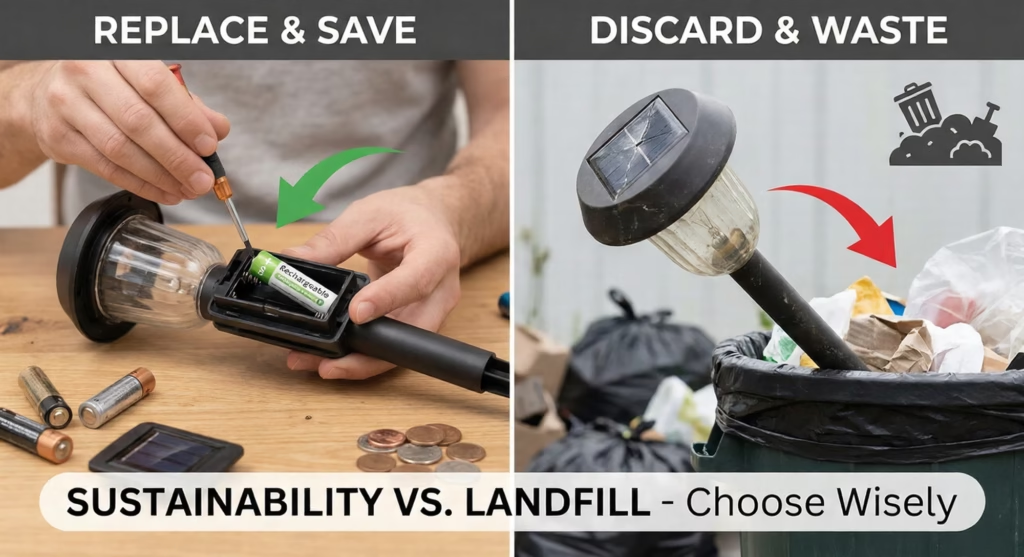
In many cases, upgrading the battery makes more sense than replacing the entire solar indoor light. Since LEDs and solar panels often outlast the battery, a simple upgrade can extend the life of the light by several years.
7.1: When Battery Upgrades Make Sense
Upgrading the battery is a smart option when:
- The solar indoor light still turns on or worked well in the past
- The solar panel is intact and not cracked or heavily discolored
- The battery is removable or accessible
- The replacement battery matches the same voltage as the original
For example, upgrading from a low-capacity NiMH battery to a higher-capacity NiMH battery of the same voltage can noticeably improve runtime. In some designs, moving from NiMH to LiFePO₄ is also possible, but only if the charge controller supports it. When done correctly, this kind of upgrade can dramatically improve reliability and nighttime performance.
Battery upgrades are especially useful for solar indoor lights installed in sheds, garages, or cabins where replacing the entire fixture would cost more and add unnecessary waste.
7.2: When Upgrading Is Not Worth It
Battery upgrades are not always the right choice. Replacing the whole unit is often better when:
- The battery is sealed and not designed to be replaced
- The light uses a very basic or unstable charge controller
- There is corrosion, water damage, or heat damage inside the housing
- The light struggled even when it was new
In these cases, upgrading the battery may only offer a short-term improvement. Investing in a newer solar indoor light with a better battery system is usually the smarter long-term solution.
8. How to Replace a Solar Indoor Light Battery (Beginner-Friendly Steps)
Replacing a battery in solar indoor lights is usually simple and does not require technical skills. Following the right steps helps avoid damage and ensures the new battery performs as expected.
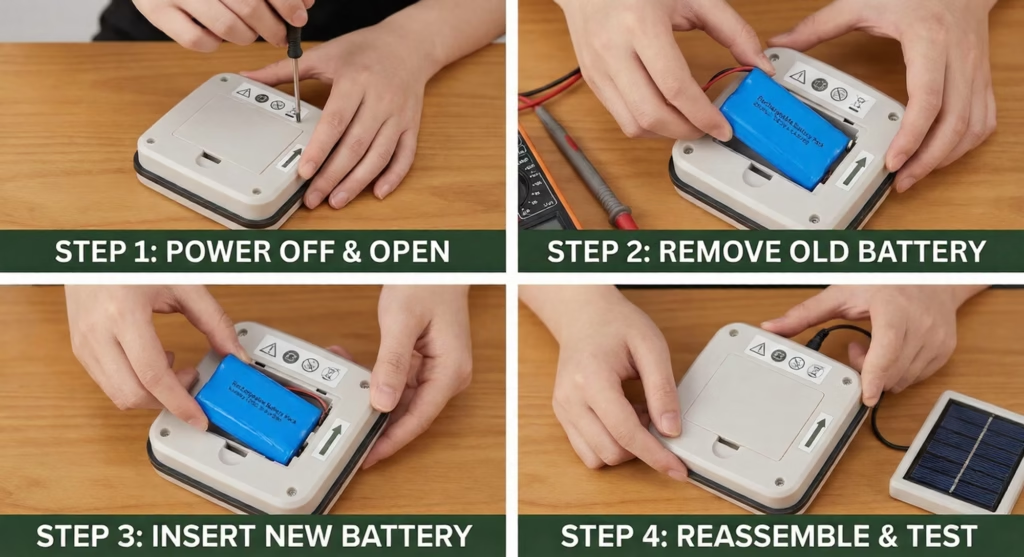
- First, make sure the light is switched off and, if possible, disconnected from the solar panel. Open the battery compartment carefully and remove the old battery.
- Always replace the battery with a rechargeable battery only. Never use standard alkaline batteries, as they are not designed for charging and can leak or fail quickly. Match the voltage and size of the original battery exactly. Capacity (mAh) can be higher, but voltage must remain the same.
- Insert the new battery with the correct polarity, close the compartment securely, and place the solar panel in direct sunlight. Allow the light to charge for a full day before judging performance. Many solar indoor lights need one complete charge cycle to stabilize after battery replacement.
- If the light does not turn on immediately, this does not always mean the replacement failed. Give it one or two full sunny days to recharge fully, especially if the battery shipped partially charged.
Replacing the battery is often the fastest and most cost-effective way to restore solar indoor lights. Before assuming a light is beyond repair, this simple step is almost always worth trying.
9. Choosing Better Solar Indoor Lights to Avoid Battery Problems
If battery issues keep coming up, the problem may not be maintenance. It may be the design of the solar indoor light itself. Some models are simply built to fail sooner than others.
When choosing solar indoor lights, battery quality should matter more than brightness claims or extra features. Lights that use lithium or LiFePO₄ batteries tend to last much longer than those relying on small NiMH cells. These batteries handle daily charging cycles better and lose capacity more slowly over time.
Another important feature is a battery management system (BMS). A good BMS protects the battery from overcharging and deep discharge, which are two of the biggest causes of early battery failure. Many cheap indoor solar lights skip this entirely to cut costs.
Replaceable batteries are also a big advantage. Solar indoor lights with accessible battery compartments allow easy maintenance and extend the usable life of the product. Sealed designs may look cleaner, but once the battery fails, the entire light often becomes waste.
USB or hybrid charging is another useful feature. In areas with limited sunlight or long cloudy periods, the ability to top up the battery manually helps keep the light reliable year-round.
In short, well-designed solar indoor lights focus on battery durability first, not just LED output.
10. Battery Replacement vs Buying a New Solar Indoor Light
When a solar indoor light stops performing well, the decision usually comes down to replacement or repair. In many cases, replacing the battery is far more cost-effective.
Battery replacement typically costs a fraction of buying a new light and often restores full functionality. This is especially true when the solar panel and LED are still in good condition. For many users, battery replacement solves the problem immediately and extends the light’s life by several years.
Buying a new solar indoor light makes more sense when:
- The battery is sealed and non-replaceable
- The light has internal corrosion or heat damage
- Performance was poor even when the light was new
- The cost of battery replacement approaches the price of a better-quality model
Upgrading to a newer light with a lithium or LiFePO₄ battery can also reduce long-term costs by avoiding frequent battery changes.
The key takeaway is simple: always try battery replacement first. It is usually the cheapest, fastest, and most effective fix.
11. Final Thoughts: Fix the Battery Before You Replace the Light
Most problems with solar indoor lights are not caused by faulty LEDs or broken solar panels. They are caused by worn-out batteries. Understanding battery lifespan, capacity, and replacement timing makes indoor solar lighting far more reliable.
In many cases, a light that appears completely dead can be restored with a simple battery replacement. Choosing higher-capacity batteries, upgrading where possible, and selecting better-designed solar indoor lights all help reduce future failures.
If a solar indoor light no longer lasts through the night, the battery should always be the first thing to check. Fixing that one weak link often brings the entire system back to life and saves money in the process.