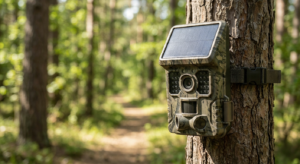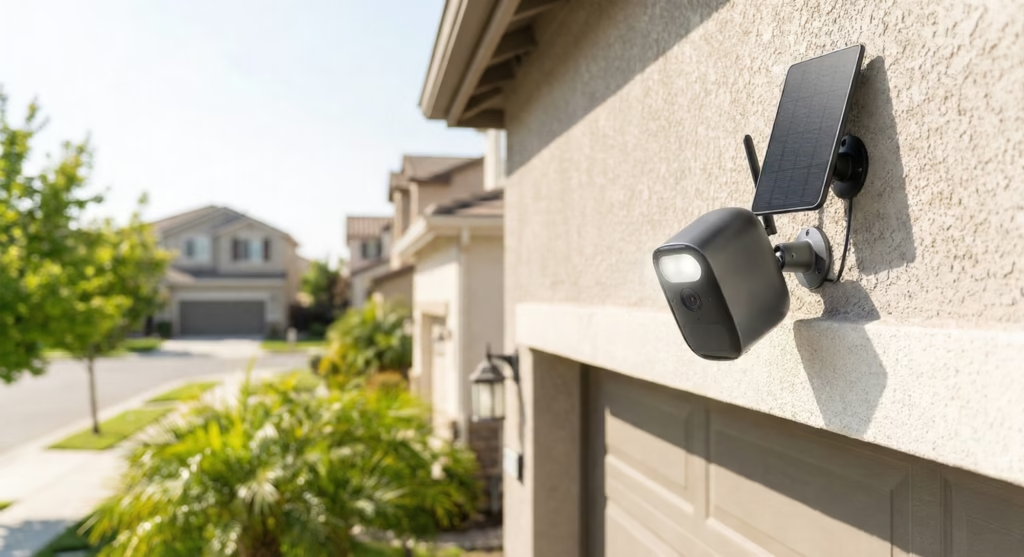
Learn how a solar security camera works step by step, including solar panels, batteries, motion detection, connectivity, and real world performance facts. Perfect for beginners and buyers.
1. How Does a Solar Security Camera Work?
A solar security camera is a smart surveillance device that uses sunlight instead of grid electricity to stay powered. It combines a small solar panel, a rechargeable battery, and a wireless camera unit to monitor an area without hard wiring. This makes it a practical choice for homes, farms, cabins, construction sites, and other off grid locations.
Interest in solar powered security cameras has grown fast because people want flexible installation and lower running costs. Since these systems generate their own energy, they can keep recording even during power outages. Most modern wireless solar security cameras also connect through WiFi or 4G, so users can view live footage and receive alerts directly on their phone.
2. What Is a Solar Security Camera?
A solar security camera is an outdoor or semi outdoor monitoring camera that runs on solar energy instead of being plugged into household power. It is designed to be self-sufficient. The system generates, stores, and uses its own electricity.
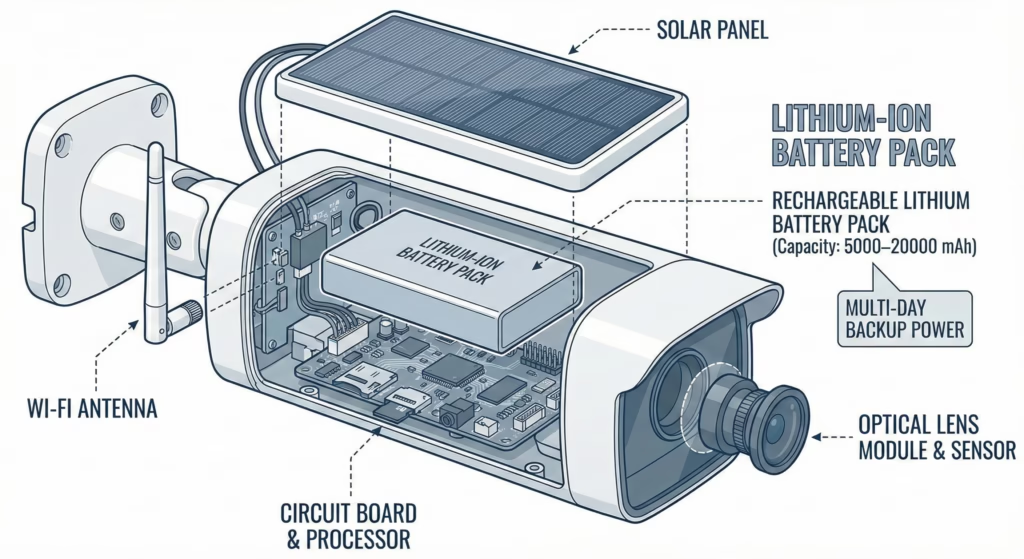
Most solar powered surveillance cameras are built around four main components:
- Solar panel that captures sunlight
- Rechargeable battery that stores power
- Camera unit with lens and image sensor
- Wireless module for WiFi or 4G connectivity
Because there is no need for electrical wiring, a solar powered outdoor security camera can be installed in places where traditional cameras are difficult or expensive to set up. This includes gates, fences, barns, parking areas, remote buildings, and temporary job sites.
2.1. How It Differs from Traditional Security Cameras
A wired camera depends on constant grid power and often needs professional installation. A solar CCTV camera works differently:
- No trenching or cable routing required
- Lower installation time
- Works during grid outages
- Easier to reposition later
Battery powered cameras without solar panels also exist, but they must be recharged manually. A solar battery security camera keeps topping up its battery automatically using sunlight, which reduces hands on upkeep.
2.2. Typical Use Cases in the Current Market
Based on general market adoption, solar WiFi security cameras and 4G solar security cameras are commonly used for:
- Home perimeter monitoring
- Driveways and entrances
- Farms and livestock areas
- Construction sites
- Remote property surveillance
- Off grid homes and cabins
These cameras usually include motion detection, night vision, and mobile app alerts. Many also support local storage with SD cards plus optional cloud backup.
3. Core Working Principle: From Sunlight to Video Recording
At its core, a solar security camera system follows a simple energy flow. Sunlight is captured, converted into electricity, stored in a battery, and then used to run the camera and its smart features. Even though the process is straightforward, modern systems use smart control circuits to keep power stable and efficient.
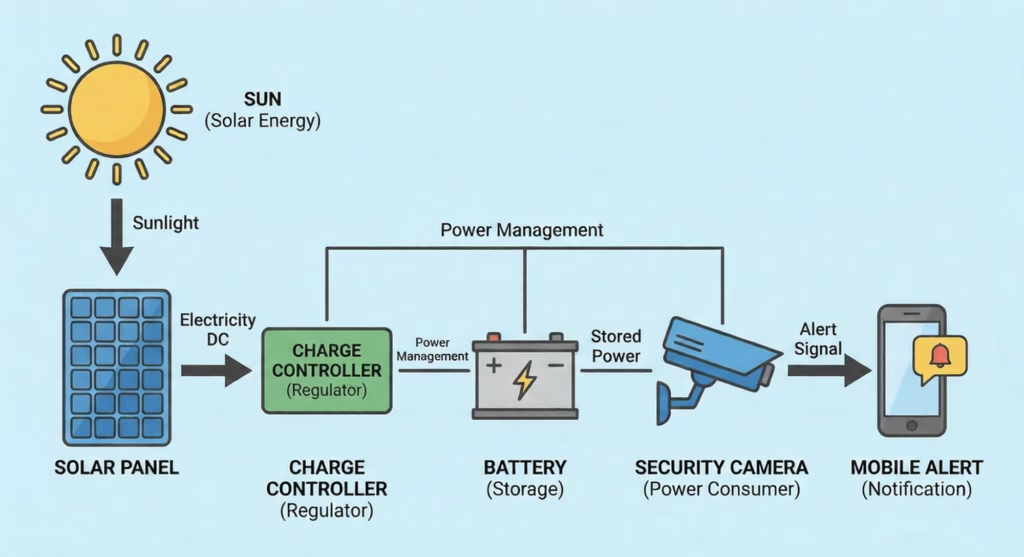
Here is the step by step working process behind most solar powered security cameras:
Step 1. Sunlight Hits the Solar Panel
The attached solar panel absorbs sunlight through photovoltaic cells. These cells generate direct current electricity when exposed to light. Higher quality panels produce more power in limited space, which is why most outdoor solar security cameras use high efficiency cell designs.
Step 2. Power Is Regulated by the Charge Controller
The raw electricity from the panel is not sent directly to the battery. A built in charge controller regulates voltage and current. This protects the battery from overcharging and overheating and improves long term battery health.
Step 3. Energy Is Stored in the Rechargeable Battery
The regulated power charges the internal battery pack. Most solar battery security cameras use lithium based batteries with capacities commonly ranging from about 5,000 mAh to over 20,000 mAh. This stored energy is what keeps the camera running at night and during cloudy weather.
Step 4. Camera Runs in Low Power Standby Mode
To save energy, a wireless solar security camera usually stays in sleep or standby mode. In this state, only the motion sensor and core control chip are active, drawing very little power.
Step 5. Motion Detection Triggers Recording
When the PIR motion sensor detects body heat or movement, the camera wakes instantly. It starts recording, turns on night vision if needed, and sends an alert through the app.
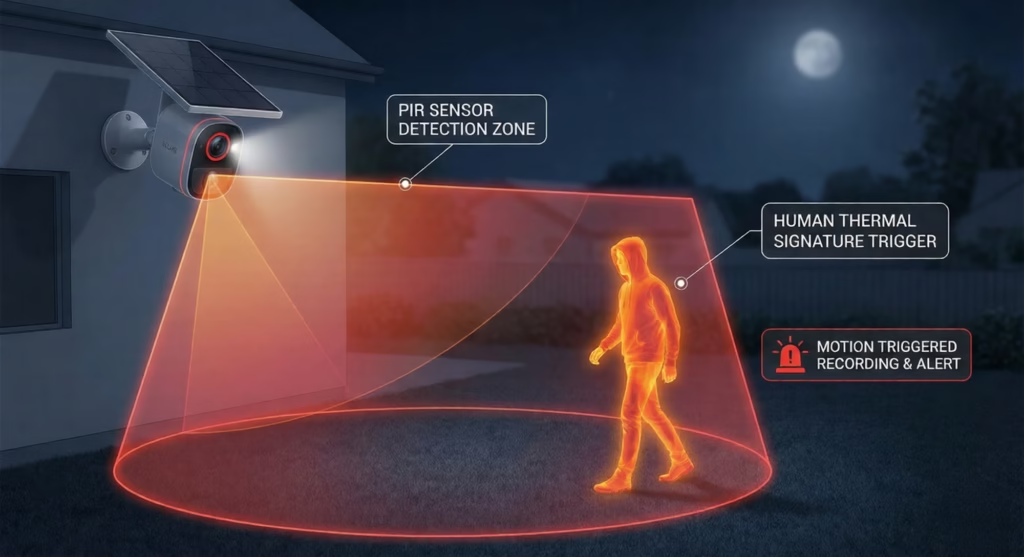
This event based recording model is one of the main reasons solar surveillance cameras can run for months without manual charging.
Step 6. Video Is Stored and Sent Wirelessly
Recorded clips are saved to local storage like a microSD card and or uploaded to cloud storage. Depending on the model, the solar WiFi security camera connects through home WiFi, while a 4G solar security camera sends data through a cellular network.
In short, the system keeps repeating this cycle daily: charge in daylight, operate from battery anytime.
4. Solar Panel Technology in Security Cameras
The solar panel is the power plant of a solar powered surveillance camera. Its size, efficiency, and placement directly affect how reliably the camera runs year round.
4.1. Panel Type Used in Most Solar Cameras
Most modern solar powered outdoor security cameras use monocrystalline solar panels. These panels are preferred because they offer:
- Higher efficiency in small surface area
- Better performance in limited sunlight
- Longer service life
- More stable output in temperature changes
Typical real world efficiency for these panels falls around 15 to 25 percent, depending on cell quality and lighting conditions.
4.2. Typical Panel Power Ratings
Solar panels paired with cameras are much smaller than rooftop panels. Common ranges include:
- About 5W to 10W for compact home cameras
- Around 15W to 40W for larger or PTZ solar camera systems
Under good sunlight, these panels can generate enough daily energy to both run the camera and recharge the battery. Many manufacturers intentionally oversize the panel by roughly 30 to 50 percent compared to average daily consumption. This gives a safety margin for cloudy days.
4.3. How Much Sunlight Does a Solar Security Camera Need?
General field performance data shows most solar security cameras for home are designed around:
- About 4 to 6 hours of direct sun per day for stable charging
- Partial charging still happens in bright cloudy conditions
- Heavy cloud cover reduces output but usually does not stop charging completely
Season also matters. Winter and high latitude regions can see noticeably lower charging rates, which is why battery capacity and panel angle become more important.
4.4. Placement and Angle Facts That Affect Charging
Panel positioning has a measurable effect on performance:
- South facing direction in the northern hemisphere gives best yearly output
- Tilt angle close to local latitude improves exposure
- Shade can cut output dramatically, even if only part of the panel is covered
- Dirt and dust can reduce output by 10 to 20 percent if not cleaned
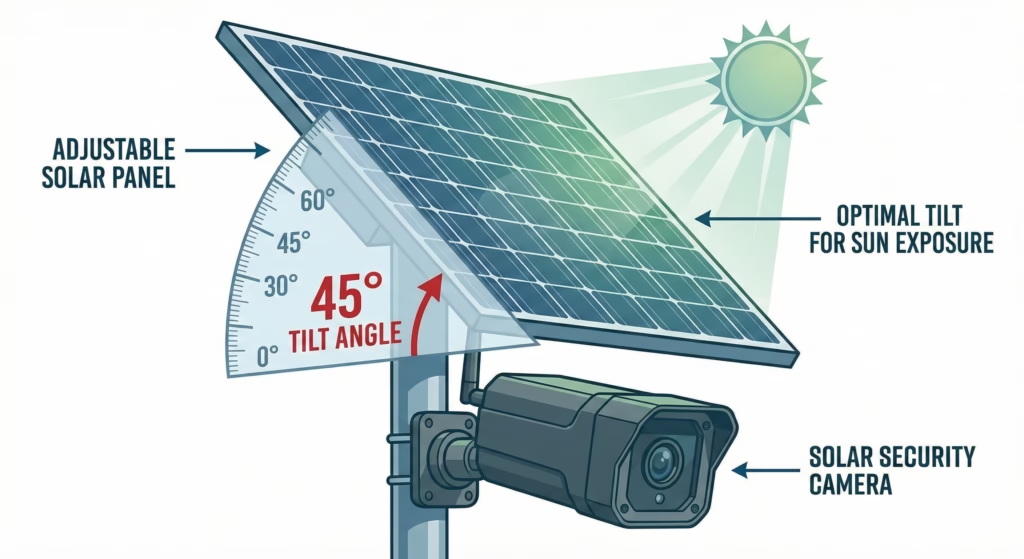
For best results, a solar panel security camera should be mounted where it receives open sky exposure for most of the day.
5. Battery Storage: How Solar Security Cameras Run Day and Night
A solar security camera does not run directly from the panel. It runs from stored energy. The solar panel’s main job is to keep the internal battery charged. That battery then powers the camera 24 hours a day, including at night and during bad weather.
Battery design is one of the most important factors in how reliable a solar powered security camera system will be.
5.1. Common Battery Types Used
Most modern solar battery security cameras use lithium based batteries. The two most common types are:
- Lithium ion
- LiFePO4 (lithium iron phosphate)
LiFePO4 is becoming more popular in newer solar powered outdoor security cameras because it handles heat and cold better and supports more charge cycles over its lifetime.
5.2. Typical Battery Capacity Ranges
Across the general market, battery capacity usually falls between:
- 5,000 mAh to 8,000 mAh for compact models
- 10,000 mAh to 20,000+ mAh for larger or advanced models
Higher capacity means more backup time when sunlight is limited. A larger battery also supports extra features like spotlights, sirens, and continuous event recording.
5.3. Real World Runtime Facts
With motion based recording and efficient standby modes, a wireless solar security camera can stretch battery life surprisingly far:
- Light traffic areas can see 2 to 4 months runtime on battery alone
- Moderate motion activity still allows many weeks of operation
- With regular solar charging, runtime becomes effectively continuous
That is why motion detection is standard in almost every solar surveillance camera. Continuous recording would drain even large batteries too quickly.
5.4. Battery Lifespan Expectations
Battery longevity depends on chemistry and temperature, but general ranges are:
- Around 3 to 5 years typical service life
- LiFePO4 packs often rated for 3,000+ charge cycles
- Capacity slowly drops over time, not suddenly
Most designs include built in protection for overcharge, deep discharge, and overheating to extend battery health.
6. Power Management and Energy Saving Design
Power management is what makes a solar powered surveillance camera practical. Without smart energy control, even a large panel and battery would not be enough. Manufacturers focus heavily on reducing power use at every stage of operation.
6.1. Sleep Mode and Standby Consumption
Most solar WiFi security cameras spend the majority of their time in ultra low power sleep mode.
In sleep state:
- Main processor is mostly off
- Image sensor is idle
- Only the motion sensor and control circuit stay active
- Power draw drops to a very low level
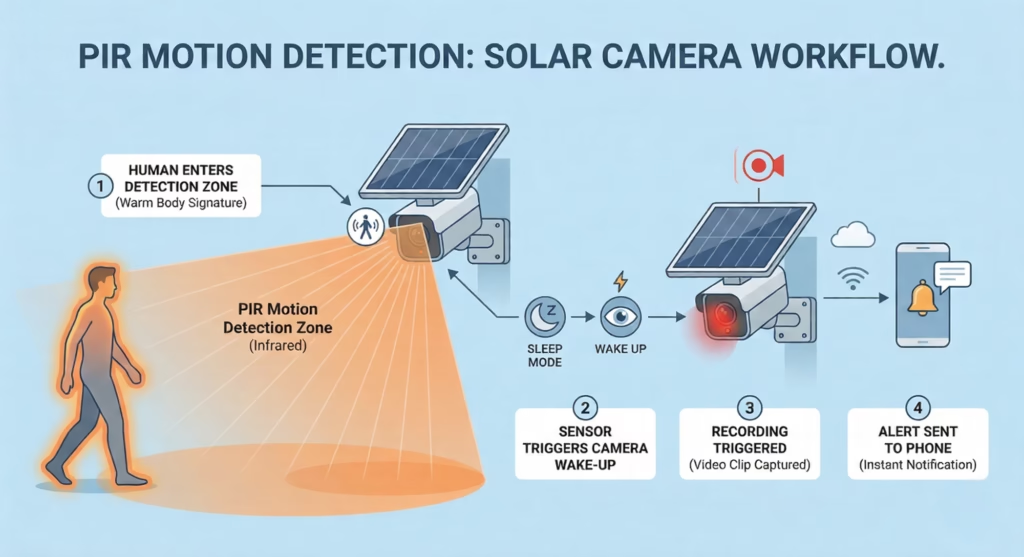
This allows the camera to “wait” for activity instead of recording nonstop.
6.2. PIR Motion Detection Saves Energy
A key feature in almost every solar CCTV camera is the PIR sensor, short for passive infrared. Instead of analyzing video pixels all the time, PIR detects heat movement from people, animals, or vehicles. This approach:
- Uses very little power
- Reduces false alerts from shadows or leaves
- Instantly wakes the camera when needed
Because of PIR triggering, a motion detection solar camera only records when there is something worth capturing.
6.3. Event Based Recording vs Continuous Recording
Most solar camera models use event based recording:
- Record short clips when motion is detected
- Send instant mobile alerts
- Return to sleep after the event
Continuous 24/7 recording is rare in small off grid security camera setups unless they use very large batteries and panels. Event recording is far more energy efficient and matches how most users review footage anyway.
6.4. Smart Charging and Thermal Protection
Modern solar panel security camera systems include built in safety controls:
- Smart charge controllers regulate incoming solar power
- Temperature sensors pause charging if heat is too high
- Cold weather charging protection prevents battery damage
These controls improve both safety and long term performance.
7. Camera and Video Technology in Solar Security Cameras
A solar security camera uses the same core imaging technology as a wired security camera, but it is tuned for low power use. The goal is to deliver clear video while keeping energy consumption under control.
Modern solar powered security cameras now offer high resolution, wide viewing angles, and strong night performance, even though they run on battery and solar charging.
7.1. Video Resolution Trends
In the current market, common resolution levels include:
- 1080p (Full HD) — still widely used and efficient
- 2K or 3MP to 4MP — now very common in mid range models
- 4K or 5MP+ — growing in premium solar camera systems
Higher resolution gives better face and license plate detail, but it also increases storage use and power draw. That is why many solar surveillance cameras balance resolution with smart recording length and compression.
7.2. Field of View and Lens Range
Most solar powered outdoor security cameras are built with wide angle lenses so one unit can cover more area. Typical field of view ranges:
- About 110° to 160° viewing angle
- Wide enough for driveways, yards, and entry points
Some advanced models include pan and tilt motors. A PTZ solar security camera can rotate and change angle remotely, though it needs a larger battery and panel to support motor movement.
7.3. Night Vision Capabilities
Night monitoring is handled through built in infrared or low light systems. Most solar night vision security cameras use:
- Infrared LEDs for black and white night video
- Typical IR range of about 30 to 50 feet
- Automatic switching between day and night mode
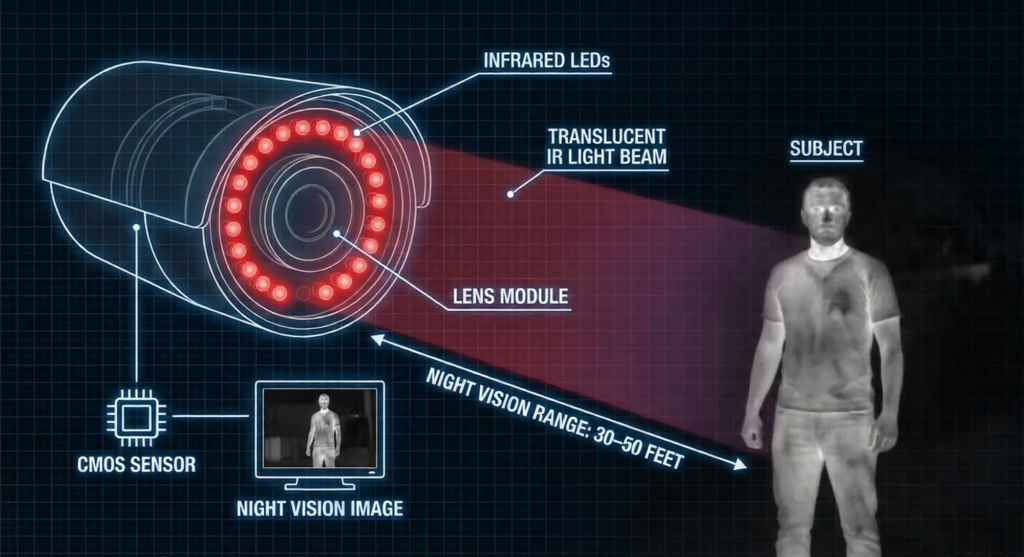
Newer models also offer:
- Color night vision using white spotlight LEDs
- Low light image sensors that improve dusk and dawn clarity
Night mode is usually motion activated to save power, instead of running high intensity lighting all night.
7.4. Smart Video Features
Many wireless solar security cameras now include software features such as:
- Motion zones
- Human detection filters
- Vehicle detection
- Snapshot previews in alerts
- Two way audio
These features are designed to improve usefulness without keeping the camera fully active all the time.
8. Connectivity and Storage: How Solar Cameras Send and Save Footage
A solar security camera system is not just about capturing video. It also needs a reliable way to send alerts and store footage. Since these cameras are usually wire free, they rely on wireless connectivity and flexible storage options.
8.1. WiFi Solar Security Cameras
The most common type is the solar WiFi security camera. Key points:
- Connects to home or office WiFi
- Usually works on 2.4 GHz networks for longer range
- Supports live view and instant motion alerts
- Good fit for houses and buildings with internet access
WiFi models are popular because they avoid monthly data fees and are easy to link with mobile apps.
8.2. 4G and LTE Solar Security Cameras
For remote locations, a 4G solar security camera is often the better choice. These models:
- Use a SIM card and cellular data
- Work where no WiFi exists
- Are common on farms, job sites, and remote property
- Support live streaming and alert uploads over mobile networks
Market demand for solar cellular security cameras has been rising because they make true off grid surveillance possible.
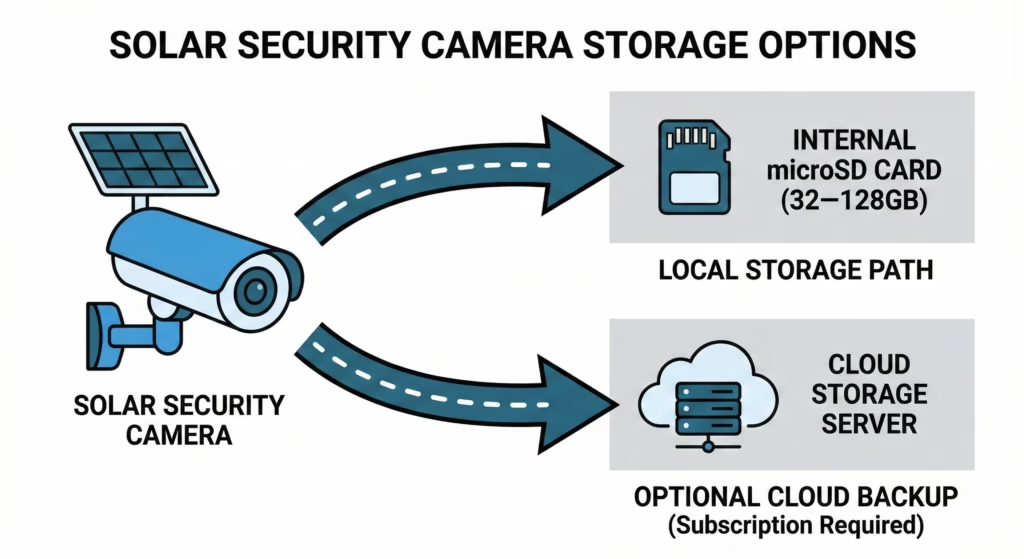
8.3. Local Storage with SD Cards
Most solar powered surveillance cameras support local storage through microSD cards. Typical specs include:
- 32 GB to 128 GB card support
- Loop recording that overwrites oldest clips
- Event based clip saving instead of nonstop recording
Local storage keeps footage available even if the internet goes down.
8.4. Cloud Storage Options
Many brands also offer cloud storage plans for solar camera systems. Common features:
- Optional subscription plans
- Encrypted online backup
- Remote playback from anywhere
- Theft protection if the camera is stolen or damaged
Users often choose a hybrid setup, using both SD card and cloud backup for extra safety.
9. Performance in Cloudy Weather and Winter Conditions
One of the most common questions about a solar security camera is whether it still works when the weather is bad. The short answer is yes, but performance changes based on sunlight levels, panel placement, and battery capacity.
10. Maintenance Requirements and Real World Upkeep
One reason many people choose a solar security camera system is low maintenance. With no power cables, no trenching, and no electrical dependency, ongoing upkeep is minimal compared to wired setups.
Still, a few simple habits help keep a solar powered security camera running at its best.
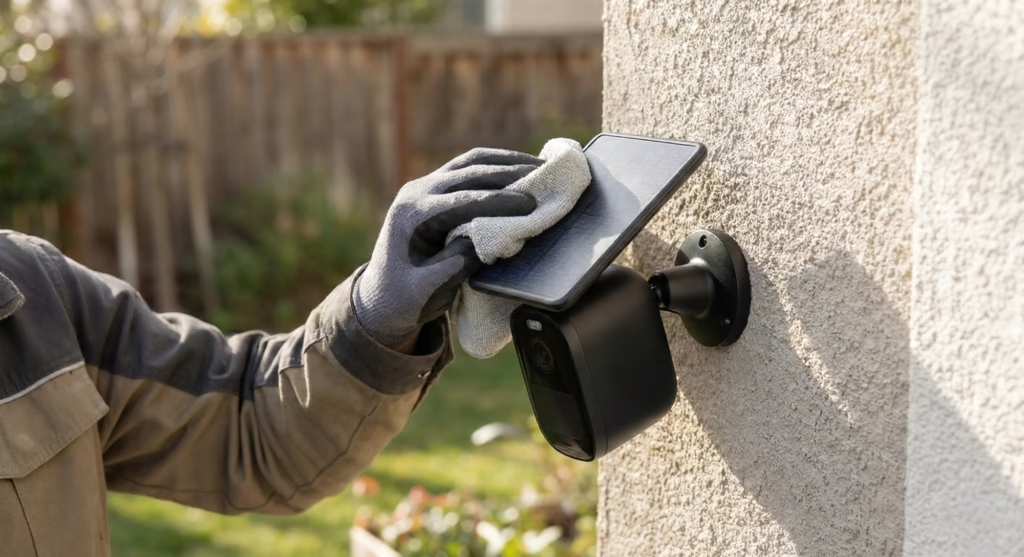
10.1. Solar Panel Cleaning and Inspection
The panel must receive light efficiently to keep the battery charged. Basic maintenance facts:
- Dust and dirt can reduce panel output by 10 to 20 percent
- Cleaning once or twice per year is usually enough
- In dusty or coastal areas, cleaning may be needed more often
- Snow or leaf buildup should be cleared when visible
- A quick wipe with water and a soft cloth is normally sufficient.
10.2. Battery Replacement Cycle
Even high quality batteries wear down over time. Typical expectations for solar camera batteries:
- Average service life around 3 to 5 years
- LiFePO4 batteries often last longer than standard lithium ion
- Capacity slowly decreases rather than failing suddenly
Some solar WiFi security cameras have user replaceable batteries, while others are sealed units.
10.3. Mounting and Angle Checks
Panel angle and camera position should be reviewed occasionally. Best practice checks:
- Make sure the panel still faces open sky
- Watch for new shade from tree growth or new structures
- Confirm mounting brackets remain tight
- Adjust tilt if seasonal sun angle changes are extreme
10.4. Software and Firmware Updates
Many wireless solar security cameras receive app and firmware updates that improve:
- Motion detection accuracy
- Power efficiency
- connectivity stability
- security features
Keeping firmware updated helps maintain performance and safety.
11. Market Trends and Technology Evolution in Solar Security Cameras
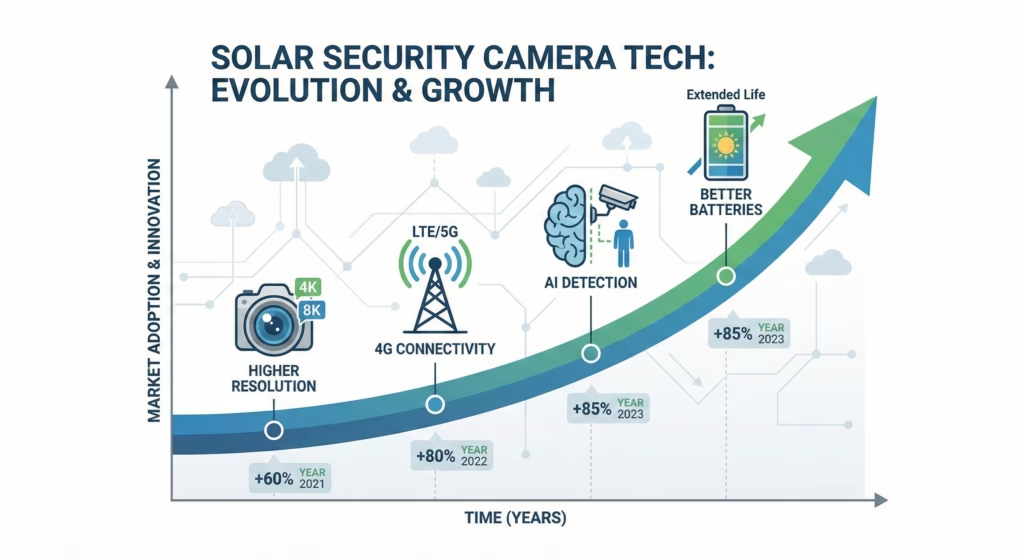
The solar security camera market has moved from a niche product category to a fast growing segment of the surveillance industry. Improvements in solar panel efficiency, battery chemistry, and wireless connectivity have made these systems more practical and more powerful than earlier generations.
Current market data and product trends show steady growth driven by off grid use, smart home adoption, and lower hardware costs.
11.1. Market Growth Snapshot
General industry reports place the global solar powered surveillance segment at roughly:
- Around 1.5 to 1.6 billion USD market size in the mid 2020s
- Expected strong double digit annual growth through the early 2030s
- Rising demand in residential, agricultural, and construction sectors
Growth is strongest where wiring is expensive or unreliable. That includes rural properties, temporary job sites, and perimeter monitoring.
11.2. Resolution and Video Quality Trends
Product specs across the solar powered security camera category show a clear shift toward higher resolution:
- 1080p is now entry level
- 2K and 3–4MP cameras are mainstream
- 4K and 5MP+ solar cameras are increasing in premium models
Better compression and smarter event recording help offset the extra power and storage needs of higher resolution video.
11.3. Connectivity Trends
Connectivity is also expanding quickly. Common directions include:
- More 4G LTE solar security cameras for remote use
- Built in SIM support becoming standard in off grid models
- Hybrid WiFi plus cellular fallback designs
- Early movement toward low power 5G modules in high end units
This shift supports true anywhere monitoring without local internet.
11.4. Battery and Power Technology Improvements
Battery and charging systems continue to improve:
- Wider use of LiFePO4 batteries with longer cycle life
- Smarter charge controllers for better low light harvesting
- More accurate battery health monitoring
- Better cold and heat protection circuits
These upgrades directly improve the reliability of a solar battery security camera system over multiple years.
11.5. AI and Smart Detection Features
Software is becoming just as important as hardware. Newer smart solar security cameras often include:
- Human only detection filters
- Vehicle detection
- Custom motion zones
- On device AI screening to reduce false alerts
The key design goal is to add intelligence without increasing constant power draw.
12. Advantages and Limitations of Solar Security Cameras (Fact Based Summary)
A solar security camera system offers clear benefits, but it also has practical limits. A balanced view helps readers decide whether this type of system fits their situation.
Main Advantages
- No wiring required
- No trenching or electrical routing
- Faster installation
- Lower setup labor cost
- Works during power outages
- Independent from grid electricity
- Continues running when wired cameras go offline
- Flexible placement
- Ideal for remote and off grid areas
- Easy to relocate if coverage needs change
- Low ongoing maintenance
- Minimal service needs
- Panel cleaning once or twice per year usually enough
- Efficient operation model
- Motion based recording saves power
- Long standby times measured in weeks or months
These strengths make solar powered outdoor security cameras especially useful for perimeter and remote monitoring.
Real Limitations
- Sunlight dependent charging
- Performance tied to sun exposure
- Poor placement reduces reliability
- Winter and heavy cloud impact
- Charging drops in short day seasons
- Runtime windows can shrink by 15 to 50 percent without good panel angle and battery capacity
- Not ideal for nonstop 24/7 recording
- Most models are optimized for event recording
- Continuous recording requires much larger panels and batteries
- Battery aging
- Batteries typically need replacement after about 3 to 5 years
- Higher upfront cost vs basic wired cameras
- Hardware price can be higher
- Often offset by lower installation cost
| Feature | Typical Range |
| Solar panel size | 5W to 40W |
| Panel efficiency | 15% to 25% |
| Battery capacity | 5,000 to 20,000+ mAh |
| Sunlight needed | 4 to 6 hours direct sun daily |
| Night vision range | 30 to 50 feet |
| Storage support | 32GB to 128GB microSD |
| Battery lifespan | 3 to 5 years |
| Recording mode | Motion triggered |