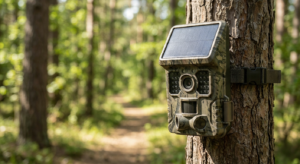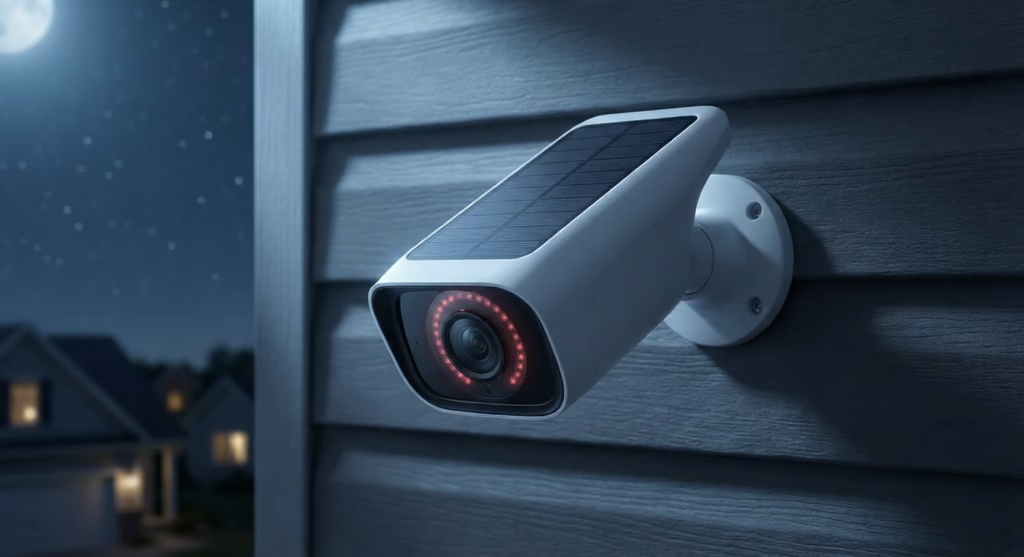
“If there’s no sun, how can a solar camera work?” It’s the most common question we hear from anyone considering solar powered security cameras. After all, if the device depends on sunlight for power, what happens when darkness falls?
Here’s the straightforward answer: Yes, solar security cameras work very effectively at night.
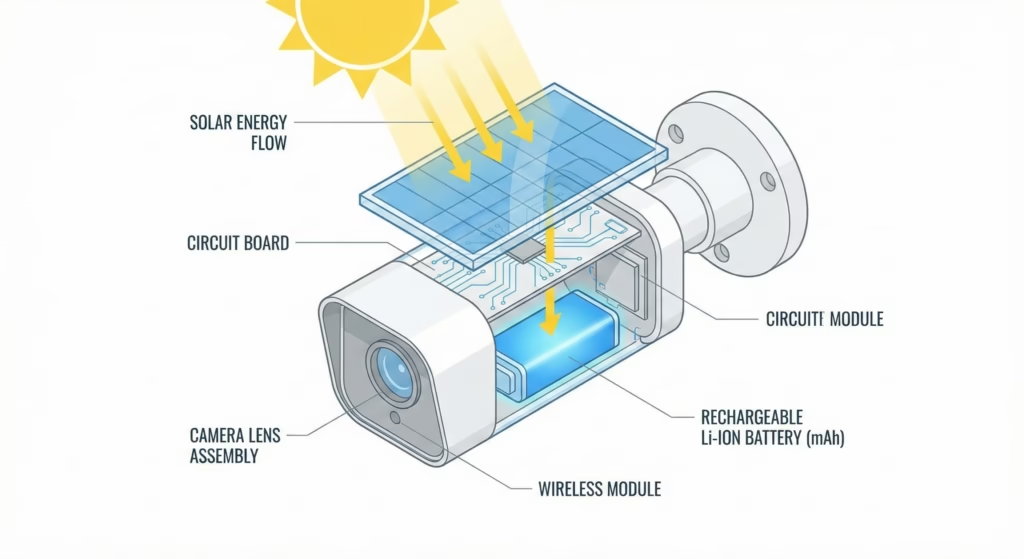
The key to understanding this lies in a simple but clever mechanism called “Store-and-Use.” Solar cameras don’t run directly off the sun at night they run off a battery that was charged by the sun during the day. As long as the battery has stored sufficient power, the camera functions exactly like any other wireless security camera after dark. The solar panel charges the battery during daylight hours, and that stored energy keeps your camera running through the night. This depends on you by choosing the best solar security camera.
1. How Power Works When the Sun Goes Down
Solar cameras rely on a rechargeable battery bank, not the solar panel itself, to operate at night. The panel’s only job is to recharge that battery during daylight hours.
The Battery Bank
Most standard solar security cameras use rechargeable Lithium-ion batteries with capacities ranging between 5,000 mAh and 16,000 mAh. Modern premium models like the eufy 4G LTE Cam S330 feature a robust 9,400 mAh battery, while high-capacity professional models such as the Vosker V300 Ultimate pack a massive 14,000 mAh removable battery for extended off-grid operation.
Battery capacity directly determines how long your camera can operate without new sunlight. Higher-capacity batteries aren’t just luxury features—they’re essential for locations with limited sun exposure or high activity levels.
Endurance Stats
A fully charged battery can typically last 1 to 6 months without any new sunlight, depending on the model and usage patterns. This assumes standard usage of approximately 10-20 motion events per day. For instance, users of the eufy SoloCam S340 have reported maintaining 95%+ battery throughout winter months, with some not seeing it dip below 85% for over six months.
However, this endurance assumes the camera operates in motion-detection mode rather than continuous recording. The battery drains much faster with 24/7 recording enabled (more on this critical limitation later).
The “Sunlight Rule”
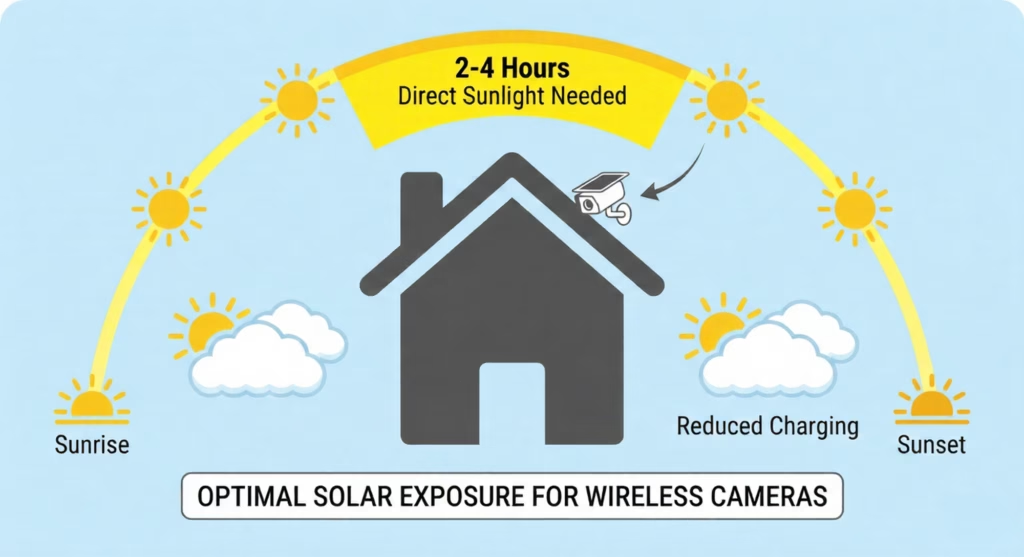
To maintain a full charge loop for nightly use, most solar cameras need 2 to 4 hours of direct sunlight per day. This isn’t an excessive requirement—even locations with moderate sun exposure can easily meet this threshold.
Modern solar panels have improved dramatically in efficiency. Panel efficiency has increased from 15% to over 22% in consumer security cameras, enabling operation with minimal daily sunlight. Some models can maintain charge even on cloudy days, though prolonged periods without direct sun will eventually deplete the battery.
Power Conservation: Sleep Mode
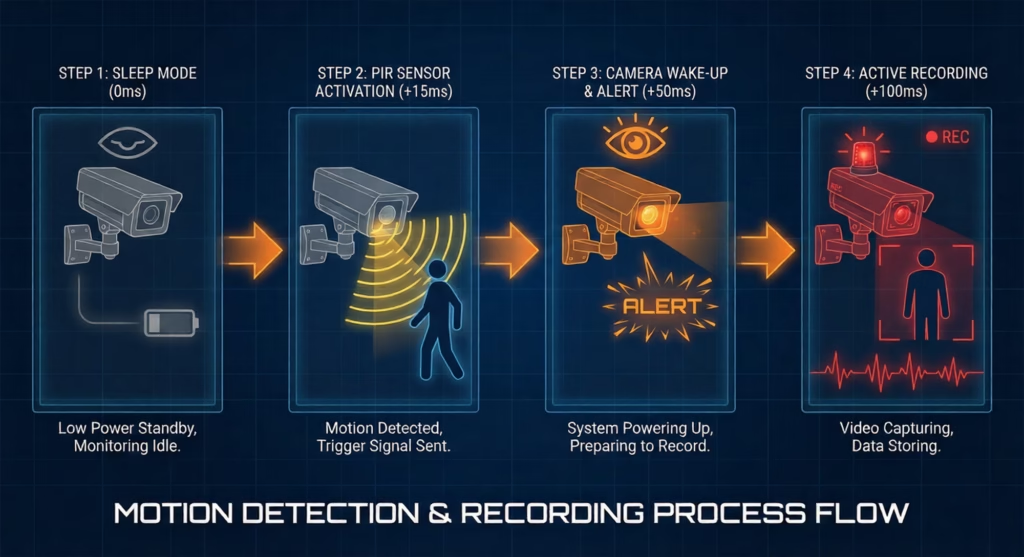
At night, solar cameras enter a “sleep mode” to conserve energy, waking up only when motion sensors trigger them. This intelligent power management is what allows a relatively small battery to power the camera for months on end.
2. Night Vision Technologies: How It “Sees” in the Dark
Solar cameras use specific sensors and technologies to capture clear footage in total darkness. The range and clarity depend heavily on which technology the camera employs.
Infrared (IR) Night Vision (The Standard)
How It Works:Infrared night vision is the most common technology in solar cameras. The camera uses built-in IR LEDs that emit invisible infrared light to illuminate the area. The camera sensor detects this reflected infrared light and converts it into a crisp black-and-white image.
Range: Typically 30 – 100 feet, depending on the number and power of the IR LEDs. Standard models offer 30-50 feet of clear identification range, while premium models with enhanced IR arrays can reach 75-100 feet or more.
Pros:
- Discreet operation—the infrared light is invisible to the human eye, so intruders aren’t alerted
- Uses less battery power compared to spotlight-based systems
- Excellent for clear identification in total darkness
- No light pollution for you or your neighbors
Cons:
- Footage is limited to black-and-white
- Can attract insects to the camera at night, potentially triggering false motion alerts
- Won’t work properly if placed behind glass windows due to IR reflection
Most modern solar cameras feature IR LEDs operating at either 850nm wavelength (which emit a faint red glow) or 940nm LEDs (completely invisible but with slightly shorter range). Advanced models incorporate Smart IR technology that automatically adjusts illumination intensity based on object distance to prevent overexposure and provide balanced images.
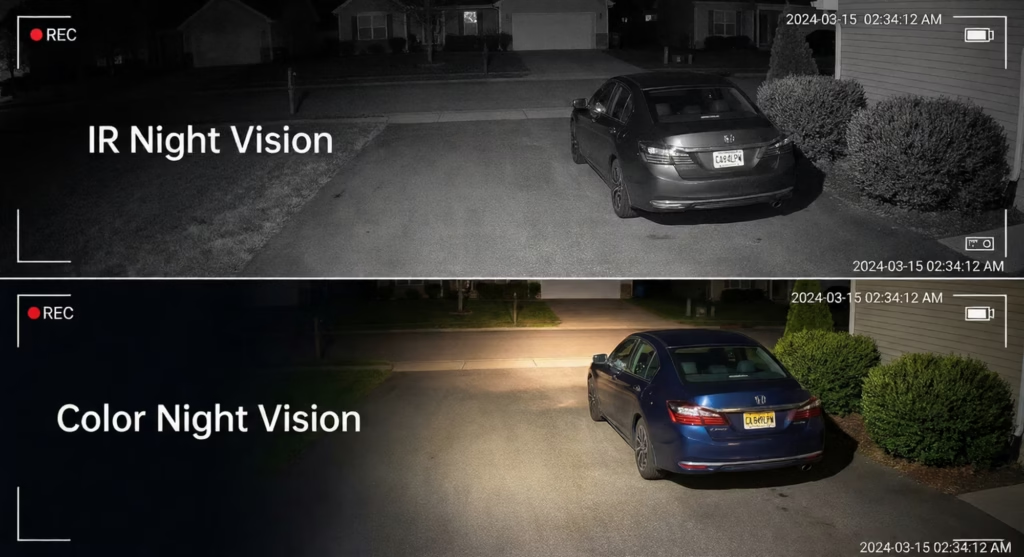
Color Night Vision (The Upgrade)
How It Works: Color night vision systems use a built-in spotlight combined with starlight sensors or low-light image enhancement technology. When motion is detected, the camera triggers a spotlight to illuminate the scene, allowing it to record in full color rather than black-and-white.
Range: 20 – 50 feet for optimal color capture. The effective range is shorter than IR because it depends on the spotlight’s illumination power.
Pros:
- Captures critical details like car color, clothing color, or license plate information
- Can act as a deterrent—the sudden illumination may scare off potential intruders
- Provides more natural, detailed footage that’s easier for humans to interpret
- Some models like the eufyCam S3 Pro feature MaxColor Vision technology that delivers full-color video at night without blasting your yard with constant spotlights
Cons:
- Drains battery significantly faster than IR night vision
- The visible light may be considered intrusive by neighbors
- Less effective in larger areas due to limited spotlight range
- Requires more frequent recharging or longer daily sun exposure
Color night vision is best reserved for areas where you have abundant sunlight hours to compensate for the extra power drain, or where capturing specific color details is crucial for security purposes.
Thermal Imaging (The Professional)
How It Works: Thermal cameras detect heat signatures rather than visible or infrared light. Every object emits infrared radiation as heat, and thermal cameras can pick up these signatures and display them as different color gradients.
Range: 100+ feet, significantly longer than standard IR or color systems.
Pros:
- Functions in complete darkness without any light source
- Can detect humans and animals through fog, smoke, or light vegetation
- Excellent for perimeter monitoring of large properties
Cons:
- Rare in consumer solar cameras due to high cost
- Used mostly for high-end commercial or industrial applications
- Doesn’t provide the detail needed for facial identification
- Significantly more expensive than IR or color systems
3. The Critical Limitation: Recording Behavior
This is the most common misunderstanding about solar cameras at night and the single most important thing to understand before purchasing.
Motion vs. Continuous Recording
Approximately 95% of solar cameras do NOT record 24/7. To conserve battery power for nighttime operation, they only record “events”—meaning they wake from sleep mode when motion is detected. If nothing moves in the camera’s field of view, nothing is recorded.
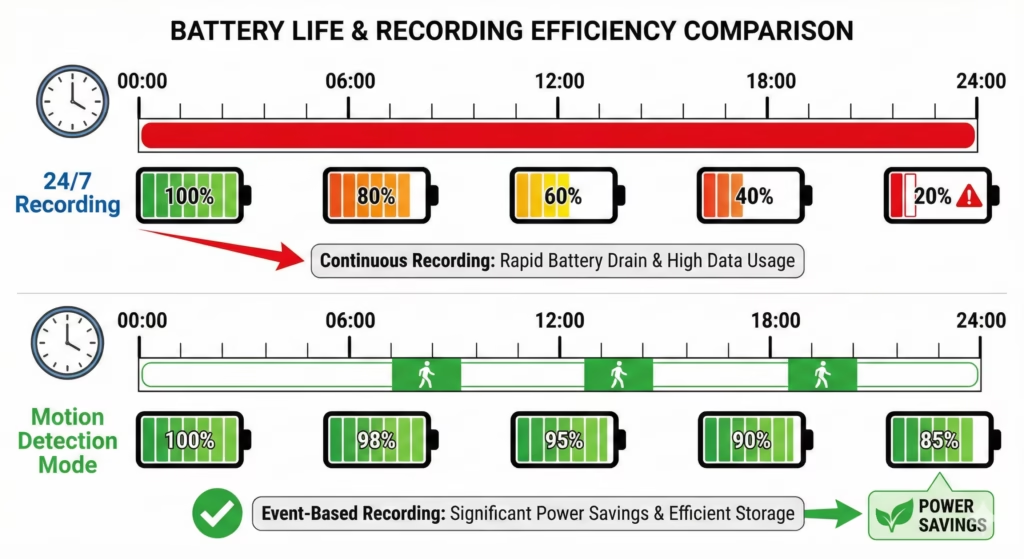
This is fundamentally different from wired security cameras, which typically offer continuous recording options. With a solar camera, there’s always a brief moment when the camera detects motion, wakes up, and begins recording. While this wake-up time is measured in milliseconds and is generally negligible, it does mean the camera could theoretically miss the very first second of an event.
The “Wake Up” Speed
Modern solar cameras feature passive infrared (PIR) sensors or advanced radar + PIR combinations that detect motion and wake the camera almost instantaneously. The eufy SoloCam S340, for instance, combines dual-lens technology with motion tracking and 360° panning to ensure movement doesn’t slip by unnoticed.
The Exception: High-Capacity Continuous Recording
A few emerging high-end models now offer 24/7 recording capability, but they require much larger solar panels and massive battery banks to sustain that constant power draw through the night. Examples include specific Reolink or Eufy units with enhanced solar systems.
These continuous-recording solar cameras are rare and expensive because they need:
- Solar panels rated at 3-5 watts or higher (vs. the standard 2-3 watts)
- Battery capacities of 16,000+ mAh
- Optimal placement with 4-6 hours of direct sunlight daily
For most users, motion-activated recording provides adequate security coverage while maximizing battery life and requiring minimal maintenance.
4. Real-World Challenges Affecting Night Performance
Even the best solar cameras face certain environmental challenges that can impact their nighttime effectiveness.
Temperature Drop: The Cold Weather Problem
Lithium-ion batteries experience significant performance degradation in freezing temperatures. If the temperature drops below 32°F (0°C), several issues can occur:
- The battery may drain significantly faster at night as chemical reactions slow down
- The battery may refuse to accept a charge the next morning
- Overall battery efficiency can drop by 20-30% in sustained cold weather
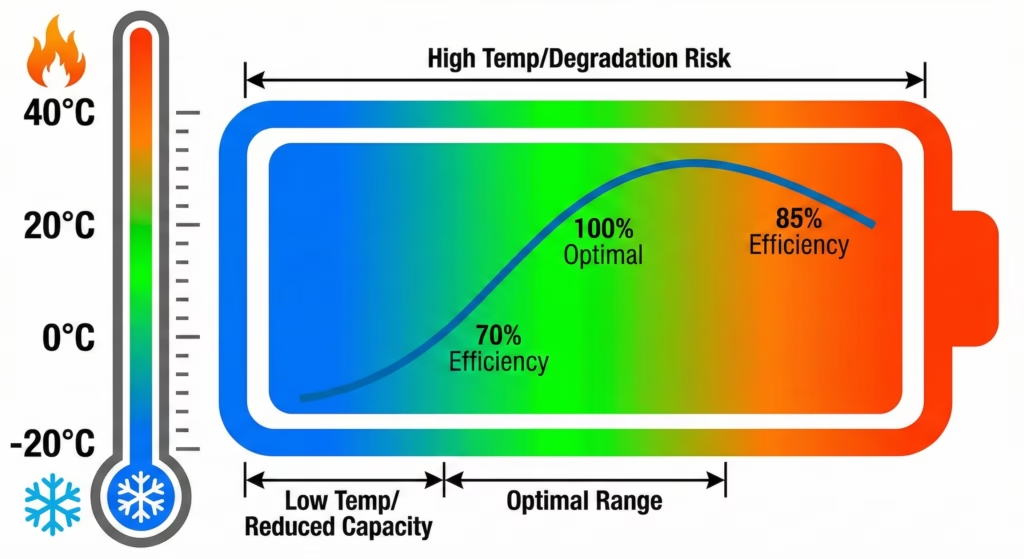
However, users have reported success even in harsh climates. One user noted their eufy S340 maintained 95%+ battery throughout a Canadian winter, demonstrating that well-designed solar cameras with quality batteries can perform reliably even in challenging conditions.
For cold-climate installations, look for cameras specifically rated for sub-zero operation and consider models with larger battery capacities to compensate for winter efficiency losses.
Placement Mistakes: The IR Reflection Problem
One critical installation error can completely disable your camera’s night vision capabilities: placing the camera behind a glass window while trying to look outside.
When IR LEDs emit infrared light, that light reflects off the glass surface and bounces back into the camera lens, creating a blinding effect called “IR reflection.” Instead of seeing outside, the camera sees only a bright, washed-out glare.
The Solution: Always mount solar cameras on the exterior of buildings, never behind windows. If you absolutely must monitor through glass, disable IR night vision and rely on ambient outdoor lighting—but be aware this significantly compromises the camera’s low-light performance.
5. The “Bug Problem”: False Alarms from Insects
Infrared LEDs emit light that attracts insects, particularly flying bugs like moths and mosquitoes. As these insects fly close to the camera lens, they trigger the motion sensors, causing the camera to wake up and record.
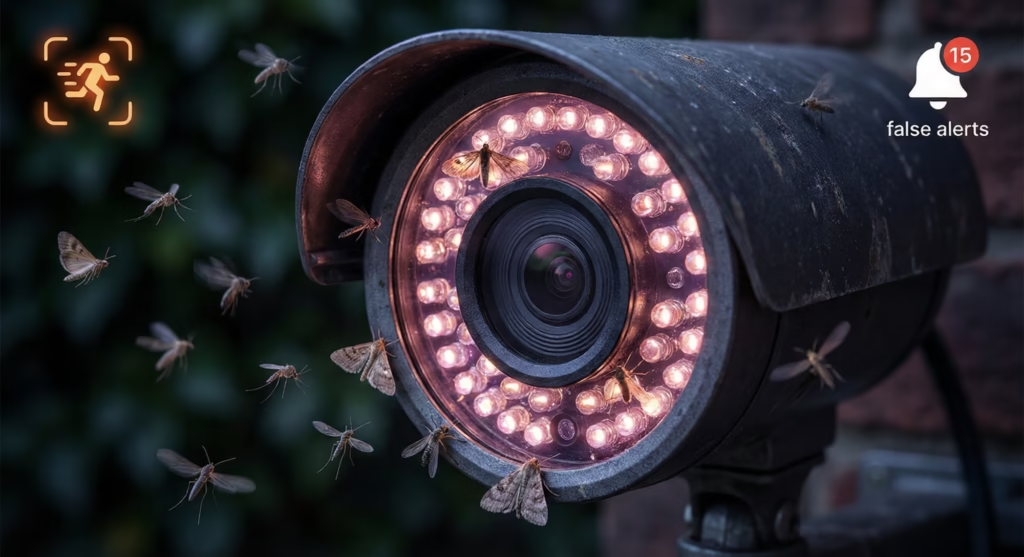
This creates two problems:
1. Your phone gets flooded with false motion alerts throughout the night
2. The constant wake/record cycles drain the battery much faster than expected
Solutions:
- Position cameras away from other outdoor lights that attract insects
- Adjust motion sensitivity settings to reduce false triggers
- Consider cameras with advanced AI detection that can distinguish between insects and actual threats
- Keep the camera lens clean, as dirty lenses can create false motion triggers
6. Cloudy Weather and Battery Depletion
While modern solar panels can charge even on overcast days, prolonged periods of cloudy weather will eventually deplete the battery. Most cameras are designed with 80% battery capacity reserved specifically to cope with extreme continuous cloudy weather.
For optimal reliability, batteries should be able to be fully recharged in approximately 20% of available days. This means if your camera can run for 15 days on a full battery, the solar panel should be able to fully recharge it in about 3 days of adequate sunlight (approximately 15 hours of charging time total).
7. Buying Advice
Solar security cameras are reliable, effective solutions for nighttime security—provided you have good daytime sun exposure and understand their operational characteristics.
Summary of Key Facts
– Night Operation: Solar cameras work at night via battery power that was stored during the day
– Vision in Total Darkness: Yes, typically up to 30-100 feet for clear identification depending on technology
– Recording Type: Most record only when motion is detected, not continuously 24/7
– Battery Life: 1-6 months without sunlight, depending on usage and capacity
– Sunlight Needs: 2-4 hours of direct sun daily to maintain full charge
Checklist for Buyers
When shopping for solar security cameras for night use, consider these essential factors:
Battery Capacity: Look for at least 9,000-10,000 mAh battery capacity for heavy night use or locations with limited sunlight. Models like the eufy 4G LTE Cam S330 (9,400 mAh) or Vosker V300 Ultimate (14,000 mAh) offer extended operation periods.
Night Vision Type:
– Choose standard IR night vision if battery life and discreet operation are priorities
– Choose Color Night Vision only if you have high daily sunlight hours to recharge the extra drain and need color details for identification
Solar Panel Wattage: A 2-3 watt panel is standard and sufficient for most motion-activated cameras. If you need 24/7 recording, look for 4-5 watt panels minimum.
Temperature Rating: If you live in a region with cold winters, verify the camera is rated for operation below freezing and features high-quality batteries designed for temperature extremes.
Motion Detection Intelligence: Advanced AI-powered motion detection that distinguishes between people, vehicles, and animals will reduce false alerts and conserve battery life.
Cloud vs. Local Storage: Cameras with local storage options (microSD card support) eliminate recurring subscription costs and ensure your footage remains accessible even without internet connectivity.
8. Final Verdict
Solar security cameras represent an excellent wire-free solution for driveways, perimeters, remote properties, and any location where running electrical wiring is impractical or expensive. They deliver reliable nighttime performance that rivals traditional wired cameras—provided you accept that most models operate in motion-detection mode rather than offering 24/7 continuous recording.
For the vast majority of residential security applications, motion-activated recording provides completely adequate protection. The rare moments you might miss (like someone walking through your yard without stopping) are generally outweighed by the convenience of never worrying about wiring, power outages, or battery changes.
If you need absolute certainty of 24/7 coverage, either invest in the small subset of high-capacity solar systems designed for continuous operation, or consider hybrid solutions that combine solar cameras for perimeter monitoring with wired cameras for critical high-traffic areas.
The technology has matured significantly—solar camera market growth of 340% over recent years demonstrates that consumers have found these systems genuinely reliable and effective. With proper placement, adequate sunlight exposure, and realistic expectations about recording modes, solar security cameras will keep watch over your property night after night, year after year, with minimal maintenance and zero electrical costs.