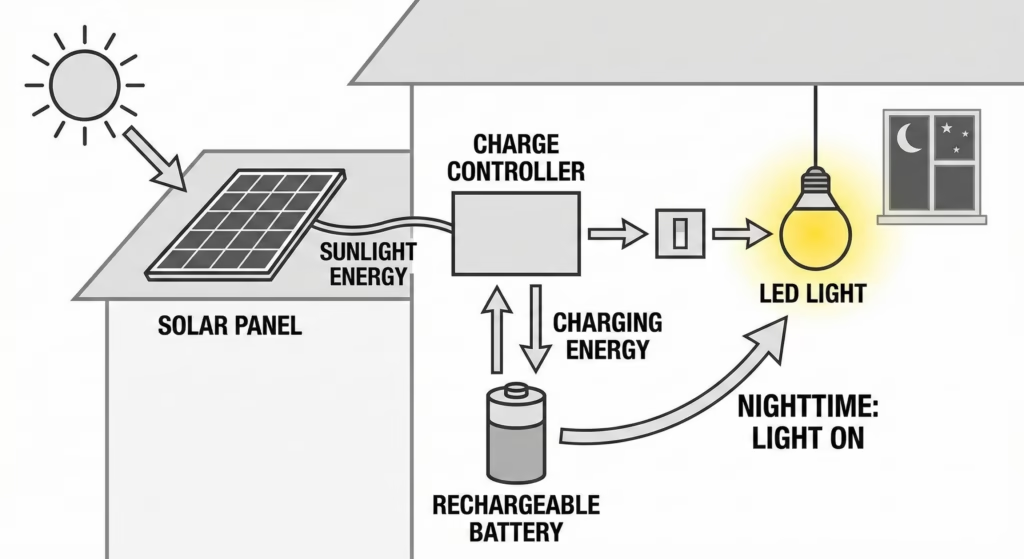
Solar indoor lights (also called solar shed lights or solar garage lights) rely on an exterior solar panel and rechargeable battery to power LED bulbs inside. In a typical setup, the solar panel is mounted outside (often facing south) while the LED fixture hangs indoors. Under ideal conditions, a full day’s sun can yield 6–8 hours of illumination, but in practice, many lights appear quite dim at night. This article examines the common reasons when why your best solar indoor lights lose brightness and how to fix them.
Common Reasons Solar Indoor Lights Are Dim
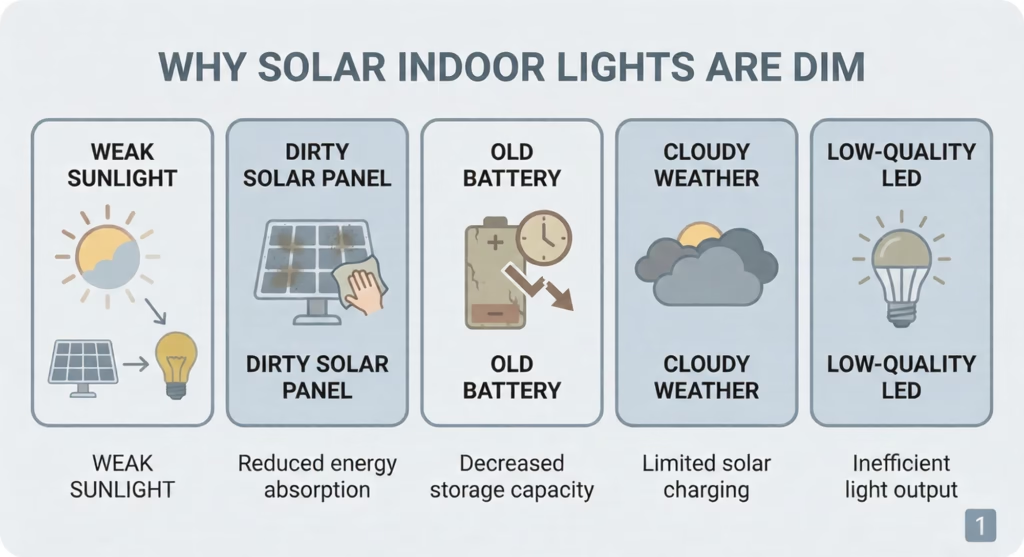
Weak or Aging Battery: Most solar lights use AA/AAA NiMH or Li-ion cells that degrade over time. A NiMH battery might hold a full charge for just ~1–2 years, and a Li-ion battery ~3–5 years. After that, it can only power bright LEDs for a short time before dimming significantly. Cold weather worsens this (freezing temperatures can cut available capacity by ~20–40%), so an old or cold battery often yields a very dim light.
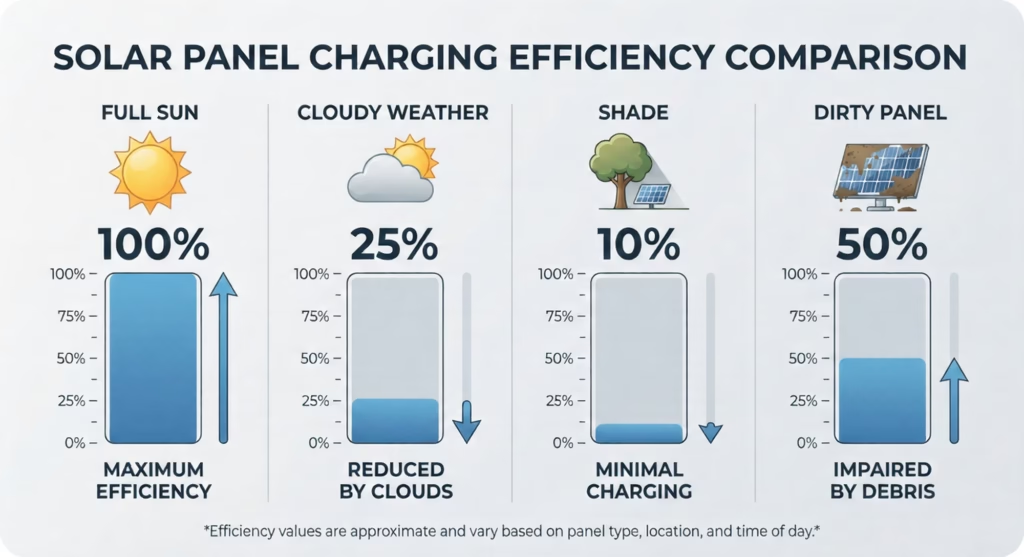
Insufficient Sunlight/Charging: Solar panels need hours of direct sunlight to charge the batteries. Most panels require ~6–8 hours of strong sun each day. Indoors or on cloudy days, a panel may produce only 10–25% of its normal power. For example, a panel receiving just 3–4 hours of weak sunlight might charge the battery to only ~50–60%. Limited charging means the LEDs must run at reduced brightness or turn off early.
Dirty or Blocked Panel: Even light dirt on the panel drastically reduces output. A thin layer of dust or grime can cut charging efficiency by 20–50%. In real use, leaf, pollen, or dust buildup on the panel can double the charging time. If the panel is not kept clean, the light will remain dim even on sunny days.
Weather or Seasonal Effects: Bad weather and short days also play a role. Solar panels on overcast days may work at only 10–25% of their usual capacity. In winter, even a perfect panel collects far less energy due to low sun angles and shorter daylight. A streak of rainy or snowy days can leave batteries undercharged, making lights appear very weak.
Clouded Covers or LED Quality: The clear plastic cover over the panel (or the LED lens) can yellow or get dirty over time. A cloudy cover blocks much of the light (studies show 30–60% loss). Additionally, some fixtures use low-output LEDs or have poor circuitry. If the hardware is subpar (yellowed plastics or cheap diodes), the light will never be as bright as when new.
How to Fix Dim Solar Indoor Lights
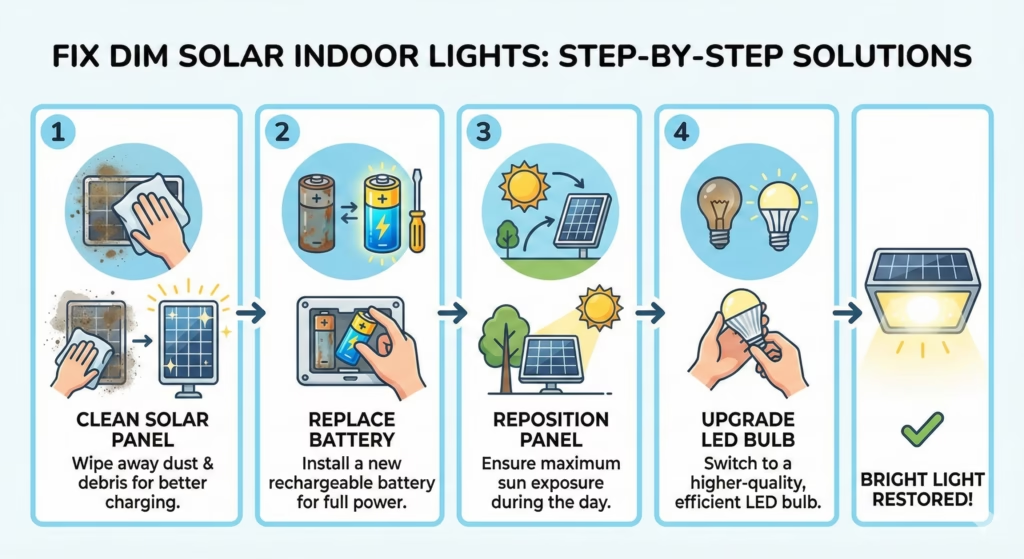
Clean and Maintain the Panels/Covers: Start by cleaning every solar surface. Wipe the solar panel and any plastic cover or lens with a soft cloth and mild soap. Even a bit of dirt can cut output drastically. After a quick wash (rinse and dry thoroughly), you should notice stronger light output. Also, clean or replace any yellowed covers or diffusers on the LEDs. Brightening the panel and LEDs often restores most of the lost brightness.
Replace or Upgrade the Battery: A fresh battery often makes a big improvement. Install a new rechargeable cell of the correct voltage (and remove any insulating pull-tab on it). Make sure it’s a high-quality battery. For even longer runtime, use a higher-capacity (mAh) battery if it fits – a larger mAh rating means more stored energy. Just verify that the solar panel can fully recharge the bigger battery.
Optimize Sun Exposure: Position the panel for maximum sun. Ensure it gets 6+ hours of direct sunlight (face it south in the Northern Hemisphere). Avoid shade from trees or buildings. Even shifting the panel a few feet or adjusting the tilt can significantly increase charging. Some kits allow the panel to be mounted several feet from the light; putting it in a truly sunny spot can dramatically boost brightness.
Add or Upgrade Panels: If sunlight is very weak where you live, consider using a larger or additional panel. A bigger panel (for example, 6W instead of 3W) can roughly double the energy collected. Some systems even let you wire two panels in parallel for more output. More panel area means more battery charge and thus brighter LEDs.
Use High-Efficiency LEDs: If possible, install brighter LED bulbs. Modern LEDs produce about 75–110 lumens per watt, far more than older diodes. Upgrading to a high-output LED module (at the same voltage) can make the most of each charge. In other words, each watt drawn yields more light, so your lights will be noticeably brighter.
Check Connections and Settings: Finally, verify all connections. Make sure the panel’s cable and connectors are intact and corrosion-free. Confirm the LED’s light sensor (if any) isn’t covered or shaded. Some lights have motion or dimming modes – set yours to full bright (steady) mode when you want maximum light.
By addressing these issues, solar indoor lights can often be brought back to near-original brightness. In practice, steps like replacing the battery, cleaning panels and lenses, and maximizing sun exposure can transform a dim light into one that shines like new. Even manufacturers note that a higher-capacity battery and efficient LEDs translate directly to brighter output. With proper maintenance and the fixes above, your solar lights should gleam brightly again.