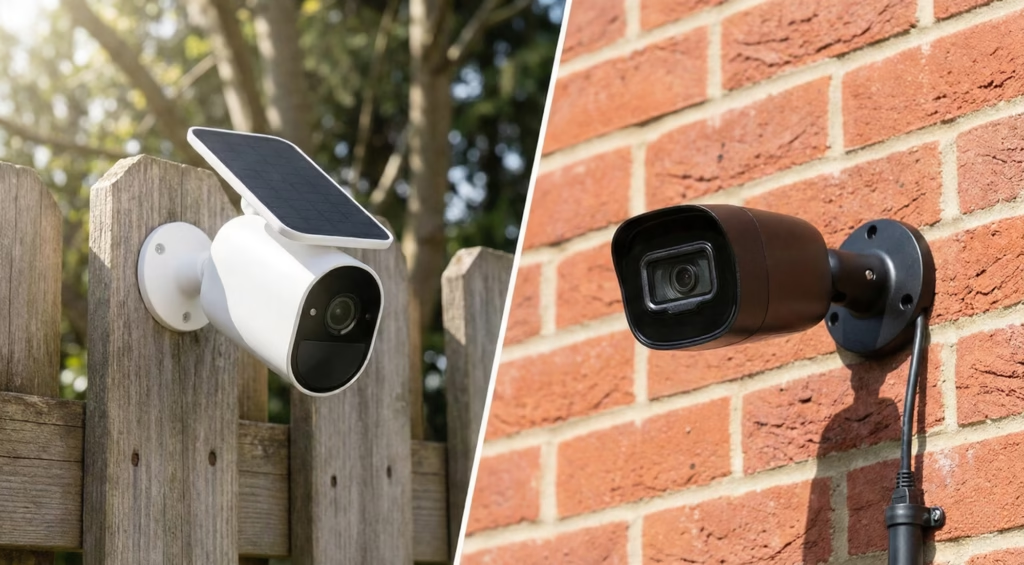
You want to protect your home or property, but you’re stuck between two options: drilling holes and running wires everywhere, or going with a modern solar security camera that you can install in minutes.
It’s not just about keeping your stuff safe anymore. It’s about doing it without turning your weekend into a construction project or hiring an expensive installer. Here’s the good news: solar security camera technology has gotten really good. Better batteries, smarter sensors, and panels that work even on cloudy days mean you don’t always need those messy wires anymore.
But wired cameras still have their place, especially if you need to record everything 24/7 without worrying about batteries or sunlight.
This article breaks down the real costs, the actual performance differences, and who should buy what. No fluff, just the facts you need to make the right choice.
1. The Core Difference: How They Actually Work
Before we dive into comparisons, let’s understand what you’re really buying.
1.1. Wired Security Cameras (PoE/DVR Systems)
These cameras plug into your home’s electrical system. They use either Power over Ethernet (PoE) cables or coaxial cables that connect to a central recording box (called an NVR or DVR). Think of it like this: every camera is permanently connected to a power source and a recorder. The cables do two jobs at once, they send power to the camera and send video back to your recorder.
The result? Your cameras never run out of power, and they can record non-stop, 24 hours a day, 7 days a week.
1.2. Solar Security Cameras (Wireless Systems)
A solar security camera is completely independent. It has three main parts:
- A small solar panel (usually built-in or attached)
- A rechargeable lithium battery inside the camera
- A Wi-Fi connection to your phone or cloud storage
The solar panel charges the battery during the day. The battery powers the camera at night. And your Wi-Fi lets you watch live footage or get alerts on your phone.
The beauty here is simple: no drilling through walls, no cables to hide, and you can mount it anywhere the sun can reach it on a tree, a fence, a shed, or even 100 feet from your house.
2. Head-to-Head Comparison: What Really Matters
Let’s get into the details that actually affect your daily life.
2.1. Installation & Flexibility: The DIY Factor
Wired Cameras: High Effort, Low Flexibility
Installing a wired system is a real project. You need to:
- Drill holes through exterior walls
- Run cables through your attic or crawl space
- Mount a central recorder box
- Connect everything properly
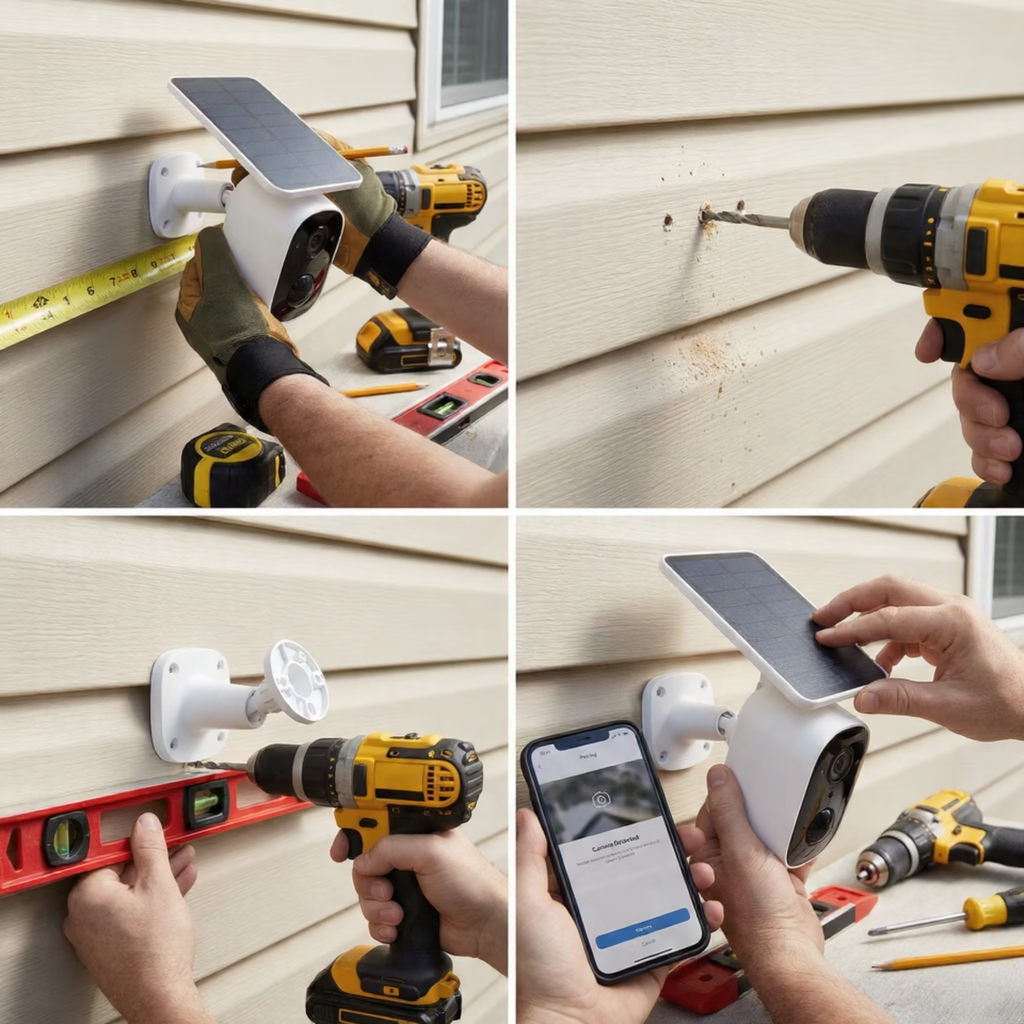
Most people hire a professional, which adds $100 to $200 per camera to the total cost. Even if you do it yourself, expect to spend 4 to 8 hours just getting everything set up.
Once they’re installed, they’re permanent. Moving them means drilling new holes and running new cables.
Solar Security Cameras: Quick Setup, Total Flexibility
A solar security camera takes about 20 to 30 minutes to install. Seriously! You mount the camera where you want it (using screws or even strong adhesive mounts), angle the solar panel toward the sun, connect it to your Wi-Fi, and you’re done.
Need to move it next month? Just unscrew it and put it somewhere else. No wires to relocate, no holes to patch.
This is perfect for renters, people with detached garages or sheds, or anyone who wants security at the edge of their property where running wires would be impossible.
2.2. Reliability & Recording: The “Always On” Question
This is where the big difference shows up.
Wired Cameras: Always Recording, Never Miss a Thing
Wired cameras record continuously. Every second of every day is captured and stored on a hard drive.
Why does this matter? Because you never miss anything. If someone walks by your house at 3 AM and doesn’t trigger motion, a wired camera still caught it. If you need to prove exactly when something happened, the footage is there.
Uptime reliability: 99% or higher. As long as you have electricity, these cameras work.
Solar Security Cameras: Motion-Only Recording
Here’s the tradeoff with a solar security camera: to save battery life, it only records when it detects motion.
The camera stays in a “sleep mode” most of the time. When something moves, it wakes up, starts recording, and sends you an alert.
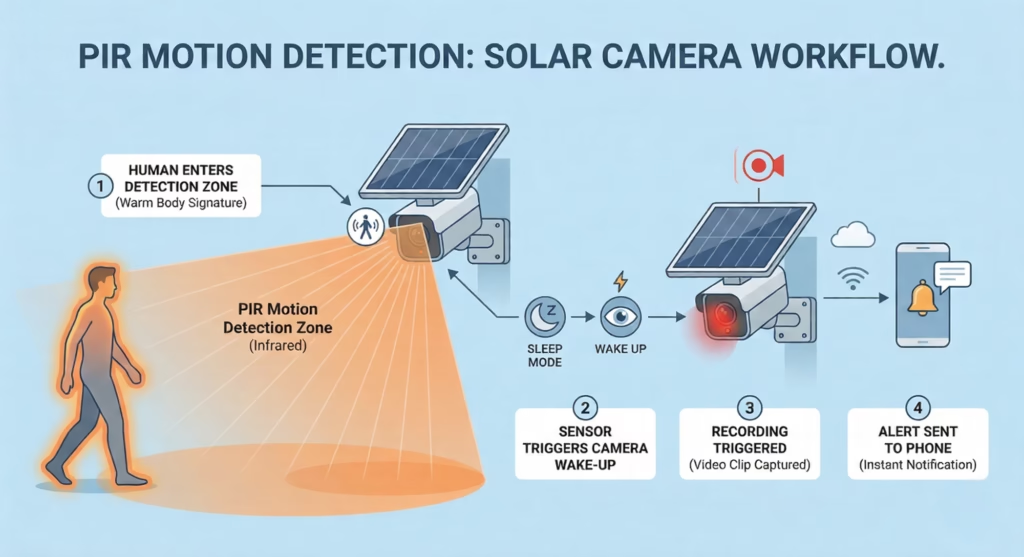
This works great most of the time, but there are two limitations:
1. The first second problem: Sometimes the camera misses the very first second of action because it takes a moment to wake up from sleep mode.
2. Subtle motion: If someone moves very slowly or stays just outside the detection zone, the camera might not trigger at all.
Battery-powered cameras simply can’t record 24/7. If they tried, the battery would die within hours, even with a solar panel.
Your reliability depends on two things: how much sunlight your panel gets (at least 3 to 4 hours of direct sun per day is ideal), and how strong your Wi-Fi signal is at the camera location.
The Bottom Line: Wired cameras give you constant recording. Solar security cameras give you smart recording that saves power but might miss rare edge cases.
2.3. Video Quality & Night Vision
Wired Cameras: Maximum Quality, Powerful Night Vision
Because wired cameras have unlimited power, they can:
- Stream full 4K video without compression
- Run powerful infrared (IR) night vision LEDs all night long
- Send video over Ethernet without worrying about Wi-Fi dropouts
If you’ve ever seen grainy security footage on the news, it wasn’t from a modern wired 4K camera. These things are crystal clear.
Solar Security Cameras: Good Quality with Smart Compromises
Most solar security cameras offer 2K or 4K resolution, which is plenty sharp for identifying faces and license plates.
But here’s the catch: to save battery and bandwidth, the video is usually compressed a bit. It’s still very good, just not as perfect as wired. Night vision works well on solar cameras, but using it heavily drains the battery. If your camera is in a spot with motion all night (like a busy street), expect shorter battery life.
Also, remember that solar cameras rely on Wi-Fi. If your signal is weak at the camera’s location, you might get lag or disconnections. Wired cameras don’t have this problem.
2.4. Cost Breakdown: What You’ll Really Spend
Let’s talk money, both upfront and over time.
Upfront Costs
– Solar security camera: $40 to $200 per camera for a quality unit. Budget models start at $30, but expect fewer features. You can buy one camera at a time and expand as needed.
– Wired camera system: $150 to $400 per camera, including installation if you hire someone. You also need to buy a central recorder (NVR/DVR) that costs $100 to $300 depending on storage capacity.
Winner for low upfront cost: Solar security cameras.
Monthly Operating Costs
– Solar security camera: $0 for electricity. However, many solar cameras charge $3 to $10 per month for cloud storage if you want to save your footage online. Some models support local SD card storage for free.
– Wired cameras: Minimal electricity cost (these systems use very low voltage). Storage is included—you save footage locally on a hard drive (1TB to 4TB), which holds weeks of footage from multiple cameras. No monthly fees.
Winner for long-term savings: Wired cameras (no subscriptions).
Hidden Costs
– Solar security camera: You’ll need to replace the battery every 3 to 5 years. Replacement batteries cost about $20 to $50. You should also clean the solar panel a few times a year to keep it efficient.
– Wired cameras: Occasionally you might need to replace a hard drive in your recorder (every 5 to 7 years) or repair a damaged cable. But generally, it’s “set and forget.”
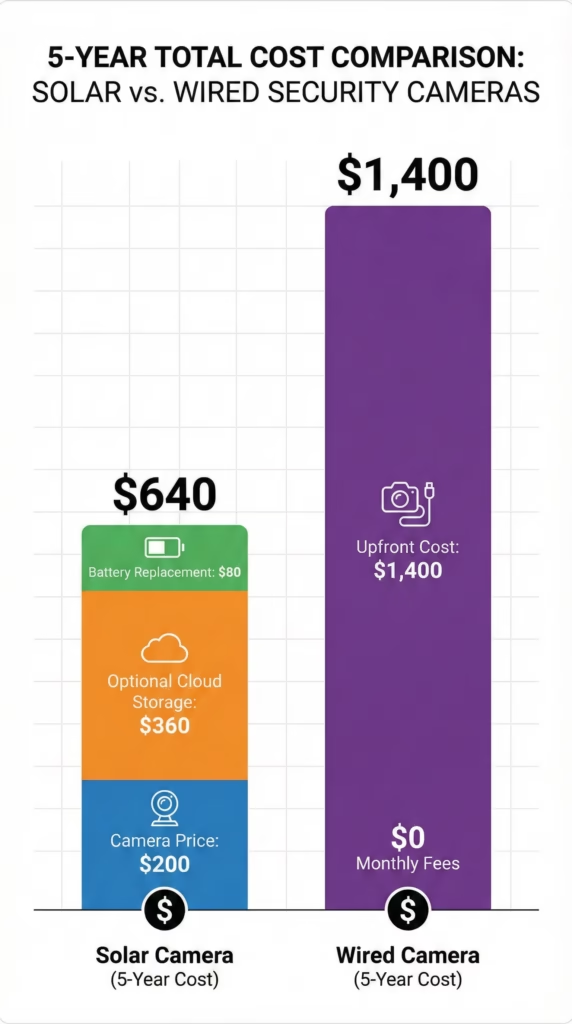
Total Cost Over 5 Years (Example with 4 Cameras)
– Solar security cameras: ~$600 cameras + $360 cloud storage (optional) + $80 battery replacements = **$1,040**
– Wired cameras: ~$1,400 cameras + install + recorder = **$1,400 upfront**, $0 monthly
If you skip cloud storage and use SD cards with solar cameras, the costs are very close. But wired systems save you from monthly fees.
3. The Verdict: Who Should Buy What?
Let’s make this simple.
Choose a Solar Security Camera If:
- You’re renting and can’t drill holes or run wires
- You need cameras in remote spots like a barn, shed, long driveway, or gate with no power outlets nearby
- You want a quick DIY setup that takes less than 30 minutes
- Motion-based recording is good enough for your needs
- You have reliable Wi-Fi coverage where you want the camera
- You get at least 3 to 4 hours of sunlight per day at the camera location
Best for: Homeowners who want flexibility, DIYers, rural properties, and anyone who values convenience over 24/7 recording.
Choose Wired Cameras If:
- You own a business that needs constant monitoring
- You need 24/7 continuous recording for legal evidence or insurance purposes
- You have a large property and want multiple cameras all recording to one central system
- Your Wi-Fi is unreliable outdoors
- You’re okay with a more complex installation (or hiring a pro)
- You never want to worry about batteries or charging
Best for: Business owners, large homes with professional installation, and anyone who needs “Fort Knox” level security with zero gaps in recording
4. Quick Comparison Table
| Feature | Solar Security Camera | Wired Security Camera |
| Power Source | Solar panel + battery | Hardwired electricity or PoE |
| Installation Time | 20–30 minutes (DIY) | 4–8+ hours (usually professional) |
| Recording Type | Motion-only | 24/7 continuous |
| Uptime Reliability | Variable (depends on sun/Wi-Fi) | 99%+ (constant power) |
| Upfront Cost | $40–$200 per camera | $150–$400 per camera + install |
| Monthly Costs | $0–$10 (cloud storage optional) | $0 (local storage) |
| Battery Replacement | Every 3–5 years (~$30) | None |
| Best For | Remote areas, renters, DIY | Businesses, 24/7 monitoring |
| Camera Lifespan | 5–7 years | 7–10+ years |
5. Final Thoughts
The choice really comes down to what matters most to you.
Wired cameras are like having a guard who never sleeps, never takes a break, and never misses a second. They’re perfect when you absolutely need complete coverage and you’re willing to deal with installation complexity.
Solar security cameras are like having a smart assistant that only pays attention when something’s happening. They’re perfect when you want modern convenience, easy setup, and cameras in places where wires just don’t make sense.
For most homeowners, a solar security camera offers the best balance of cost, ease, and performance. For businesses or high-security situations, wired is still king.
The good news? You don’t have to choose just one. Many people use wired cameras for their main entrances and a solar security camera for that detached garage, side gate, or far corner of the property where running wires would cost a fortune.
Pick the system that fits your lifestyle, your property, and your peace of mind.